

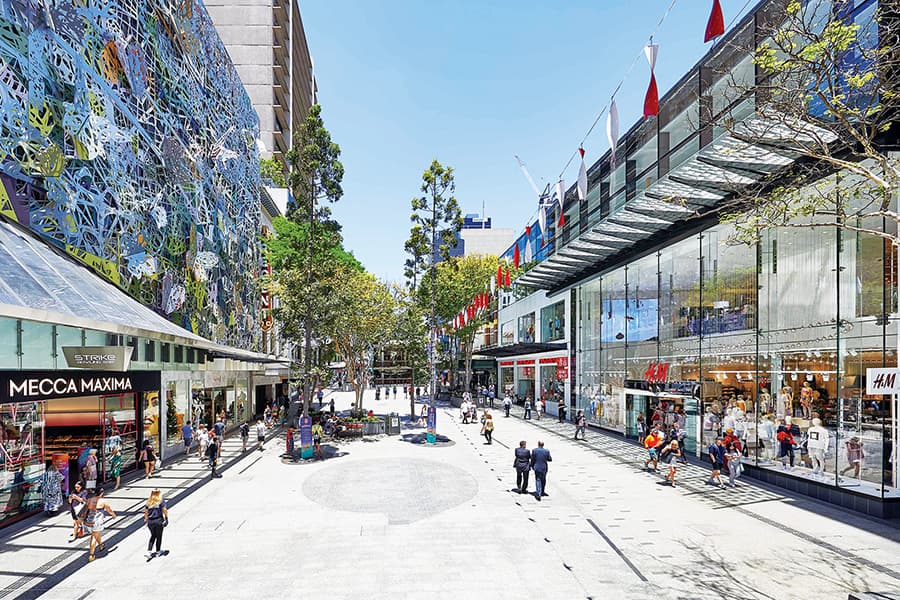


As owners of retail real estate look to navigate their way through a challenging period, are we working through a ‘normal’ property cycle or are we seeing a structural shift in the way retail property will be valued, utilised, operated and experienced going forward?
Recent numbers from the MSCI Returns Index for the six months to December 18 show commercial / office based assets leading the returns charge having experienced an exceptionally strong past 12 months. Pure retail funds are currently sitting at the back end of the table having being hit by flat or diminishing asset values and reducing operating income. Wind the clock back a few years and retail was the standout asset class.
It is likely the challenges currently facing retail are not singularly cyclical or structural, but a combination of the two. Economically, retail continues to face a tough environment with high household debt, utilities, education and health costs again on the rise, falling house prices and anaemic wages growth leaving less in the customer’s wallet. This current economic malaise will shift, but our industry can no longer be reliant on working through the ebbs and flows of cyclical market changes and needs to look closer at the growing structural changes that confront us now, such as a rapidly growing online environment, evolving consumer habits and advancements in technology all of which will shift what owners of retail real estate need to offer, how they operate and who they partner with.
There are a number of areas where a traditional shopping centre should be looking to evolve from so as to remain relevant for existing and future consumers against the backdrop of these structural changes.
Shopper insights
As competition grows from non- traditional threats, both retailers and landlords need to review their in-store /centre infrastructure and digital engagement strategy. The opportunity stores and centres have is they can offer a physical connection to the customer that cannot yet be replicated online. This physical connection can be amplified with greater digital interaction in centre to learn more about the customer’s needs and preferences. Through these insights, the whole shopping experience can be tailored to be more personal.
The key to providing a shopping experience that delights and surprises customers is through personalisation. Personalisation can only be driven via the insights gained from data. The experience within our shopping centres must compete with the online experience and we must exceed the benefits of the personalised online shopping experience to draw greater patronage through our centres and stores.
There is research to show customers will spend more when their experience is personalised and will often be frustrated and likely to spend less when they are fed irrelevant material. To better understand your customer’s needs, data insights has to be a pillar of any retail strategy. This will assist retailers and landlords in curating space tailored to an individual’s or community’s needs. We as an industry can no longer be serving up sameness at our centres.
For ISPT, we are actively working on new opportunities and pilots that align with more insightful connections with our shoppers and hope to trial, in partnership with our retailers, over the year. Structurally, we see this area of the industry as a big shift in how we operate now and into the future.
Additional shopper services
There is a growing expectation from consumers to want better and better service across all retail interactions. A portion of this service expectation is the need for faster, more efficient and convenient delivery and access to goods. Online has not yet mastered this, despite large capital investments, and there is an opportunity for shopping centres to play an important part in improved service functionality.
We see customer frustrations in home deliveries including inflexible delivery times, security issues with goods being delivered and left unattended along with the annoyance of needing to return goods if damaged or not the right item. There is also the inability for customers to have the face-to-face interaction that is often sought.
There is the opportunity for centres where there is often surplus space or the ability to re-purpose space to develop a proposition that provides a ‘one-stop-shop’ collection hub that facilitates the flow of goods in and out between customers and retailers. Such a hub could overcome some of the frustrations experienced with online.
This opportunity could see centres partnering with leading edge logistics businesses and utilising often large retail portfolios across the country that are located in the heart of the catchments they are trying to service. The opportunity to improve margins on goods by potentially reducing expensive logistics costs could be a possibility along with providing a more convenient and safe service to the shopper. The ability for some type of face-to-face interaction may also present itself as an option and likely welcomed by the shopper. ISPT see this as an area where it can compete in some form with online and will look to pilot, test and review in the coming future.
A sustainable future
Whilst there has been focus on big industry for some time about the part played in protecting the planet, during the past few years, this has grown significantly and probably for the collective good.
Many of our industry’s key stakeholders from investors to the day-to-day customers are demanding we do more to positively impact the environment rather than just minimise that impact. Certainly within our investment universe with Industry Superannuation Funds, locally and globally, the attention on ethical investing and ensuring we are actively managing our asset base for continuous improvement in this space is paramount. In 2018, the controlling bodies that drive behaviours of boards and company directors listed climate change as the number one risk for all business. This means business can no longer knowingly invest in a company that does not address its impact on climate change through its business activities. This will present some challenges for retail but challenges that need to be addressed.
We are also seeing a real driving force from the consumer, particularly those in the 20-35 year old bracket who are demanding industries shift focus to greater and more sustainable business practices. As this cohort become our key and largest consumer in the next few years, it is essential we listen to their concerns and take action. In some recent conversations with university students in this space, the strategies a shopping centre and a retailer set or don’t set are playing a big part in where they decide to spend. In one example, a student did mention if a centre does not exhibit ‘real’ sustainable practices, they and their friends are unlikely to go to these centres. Even to the point where if a centre does not provide separate waste options with bins, they will look at alternate centres.
Some students are even going further and looking at where waste from centres is ending up. Separating our waste is important but if we are then just shifting this problem to others, it is not seen as doing enough to positively impact the issue. There are many reports out now which have highlighted how shifting the problem, often to third world countries continues issues in those countries around poverty and health. The dumping of organic waste into landfill is being measured for its direct impact on climate change. The sheer volume of plastic going into land and oceans (recent campaigns around plastic straws) is being seen as a tipping point. Much of the waste mentioned is being driven from shopping centres. Turning waste from a problem to a resource will be a focus within ISPT to better improve our collective way of life.
Whilst these examples and views will not yet be widespread amongst all consumers, it will not be long before they are and landlords and retailers should be planning now together how we adjust our current practices.
ISPT sees some opportunities to test our centres around areas such as reduction and removal of organic landfill, looking at energy from a cost to an asset and partnering with our retailers to assist with a more proactive approach to sustainable business solutions. It needs to be driven by the whole end-to-end logistics chain if we are to make a positive impact with our consumers.
Shopping is still shopping
In a recent report by the Gensler Research Institute in the US, despite the many moving parts and likely recalibration required to the traditional shopping centre and what it offers, they found that “shopping is still shopping – ultimately great experiences and wow moments only work if customers’ basic needs are met; intuitive navigation, easy checkout, lighting and product, display and great staff are all baseline.”1. These are all well and truly areas where an owner of real estate and retailers who occupy the space can control and influence to achieve improved outcomes. These however should only be seen as a ticket to the game. Inherit in this should be how landlords and retailers sustainably operate these businesses to more align with the changing consumer needs and look at what other services over the baseline should be provided to enhance this experience and compete and excel in a changing market.
Retail will never stand still and nor should it and this is why, despite a current tough market and the numerous structural shifts before us, it is a sector that will always challenge us to think beyond the norm. This has to be a good thing to keep customers engaged.
1. Gensler Research Institute – Retail Experience Index 2018 United States.

About ISPT
ISPT is one of Australia’s largest unlisted property funds managers, with more than $15 billion of funds under management through our investments in office, retail, industrial and residential property. Founded in 1994 as an unlisted property trust by four leading industry superannuation funds, we now have 31 institutional investors representing a diverse base including industry superannuation funds, public sector super and investment funds.
ISPT invests the retirement savings of more than 50% of Australian workers into property.



Add comment