This article by Sam Curry, General Manager Retail Services, ISPT, forms part of an annual CEO Outlook feature, published in SCN’s 2023 Big Guns edition. My thoughts on 2023 centre on it being a stabilising yet transitionary year for retail. Stabilising in the sense of operating in a more consistent and less disrupted year than recently experienced and transitionary, where we do see shifts in the retail landscape around the uncertain economic environment and the key function and purpose of
shopping centres.
The ISPT retail portfolio which, consists of about 66 assets nationally across a diverse range of CBD, super-regional, sub-regional and neighbourhood-based assets, are well-placed to deliver and adapt in this changing environment. Our core locations in strong growth catchments in key cities and towns, allows us to work in with these communities to meet their changing needs and place our capital for growth opportunities.
Stabilising through 2023 but cautionary over economic conditions
It is clear when you talk to our retail partners and retail teams who work on our portfolio, they are all looking forward to a more stabilised operating year. We are expecting the supply chain issues of the past two years to abate somewhat, with some improved pricing and optionality as a result. This will assist with more certain capital planning and programming of works at our assets, be it centre amenity upgrades or critical tenancy refits. We expect the labour shortages to also improve through 2023 with a return of greater numbers of overseas workers to fill the all-important hospitality and services sector, which have been hit hard in recent years. It has been quite difficult to watch retailers work so hard to get stores ready to open, only to have limited or no staff to operate them. Chart 1 provides some promise for 2023, highlighting the gradual uptick of monthly arrivals to Australia to alleviate the labour shortages.
Chart 1
Inflation will no doubt continue to play a role in the retail economy through 2023. We saw services inflation continue to rise in Q42022 while goods inflation remained stable as noted in Chart 2. The retail trade figures reflect a shift away from retail goods spending and more towards services. This will impact our centres and what the consumer looks to spend on throughout the year. At our ISPT assets, we have seen a strong focus on shifting towards more service-based offers over the past five years and believe our assets can also move further into this space with larger scale service offers.
Chart 2
We have seen consumer inflation for goods show signs of stabilising as supply chain pressures ease, commodity prices fall and demand slows. However, services inflation has picked up, driven by stronger wages growth. Wages growth is expected to soften as the unemployment rate rises, along with an increase in labour supply from net overseas migration, which will reduce the bargaining power of workers at the moment. The new migrants are also expected to boost retail spending in the months ahead, which is a positive, given retail spend has begun to slow as cost of living pressures begin to bite.
What has happened to online spend?
We have seen online spend through the back half of 2022 retract from the heights of the pandemic. While some had predicted online to remain at these lockdown levels, it was very clear people wanted the choice and made the choice to go back to the benefits of face-to-face shopping. The social engagement and interaction people naturally have was always going to play a part in stabilising online spending.
Chart 3 shows from the core of the pandemic highs at 15.3% in September 2021, online spend has decreased and is now at 10.4% through December 2022. However, the spend lift in November highlights the strength of the now month-long Black Friday sales, which are being executed very well by all retailers that operate physical and online stores. We expect online sales will continue to grow through 2023 and beyond but not at the levels just seen and they are certainly way behind many of our peer international countries. The cost implications still play a major role in how quick online can grow.
Chart 3
CBDs have changed
Office workers, student populations and tourism – which drive retail spending in CBDs – are still below pre-pandemic levels, but there has been positive trajectory over the past six months.
Office utilisation has recovered to a varying extent across Australian capital cities, but a common theme is the large gap in utilisation between peak and low occupancy days. More flexible working conditions have persisted, with the public sector in particular displaying below average office utilisation. This current trend is impacting overall CBD retail performance.
The strong return in all overseas arrivals since December 2021 (up to 60% of 2019 levels) is supporting growth in retail spend in CBDs. ‘Temporary visa’ and ‘temporary student visa’ categories remain 45% to 60% lower than 2019 due to the absence of Chinese visitors. Visitation is expected to improve in 2023 with a new academic year, a recent policy change in China’s stance on lockdowns and student visitation to Australia, and overall improved diplomatic relations. We saw a 15% increase in footfall to our CBD assetsfrom December 2021 to December 2022.
We expect 2023 will continue to be challenging for CBD retail markets (economic environment aside) as the sector awaits recovery in footfall numbers from office workers, students and tourists. The team’s 2023 focus will be a continued examination of reducing our CBD retail footprint through conversion of existing retail space to other uses such as office, education and health.
Chart 4
Beyond 2023
While we stabilise through 2023, our focus also needs to be on 2024 and beyond so we can plan and respond now. I am still a firm believer in our assets being more than what they are now. ISPT owns well-located parcels of land, which for now, in the retail space, act as shopping and community precincts. The opportunity to diversify the current income streams with alternate uses that serve a wider community purpose is something that needs to be unlocked with capital, sound planning and consultation with local and state governments and other like-minded public and private operations.
The aggregation of services around retail space has so much potential and will be something ISPT looks to unlock over the years. For now though in 2023, let’s celebrate a return to a more normalised operating environment with an eye to the challenges of the broader market economy.
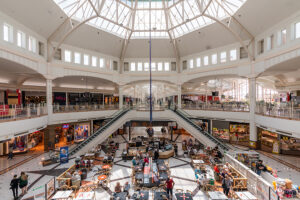
The Strand, Melbourne
About ISPT
For more than 25 years our properties have been meaningful places for the retailers, companies, government departments and communities that use them. We generate returns for our Investors, which are some of Australia’s largest industry superannuation funds, and ultimately the 50%+ of working Australians who have their retirement savings invested in property through us. ISPT’s $22.2 billion portfolio invests in and develops office, retail, industrial, warehousing and residential property in Australia.
The ISPT story begins with three simple words – people not properties. It’s what the foundations of our business were built on and it’s as important now as it was at inception. We’ve expanded in scope, size and value but our founding principle remains. We’ll continue to create growth for people and places through property and achieve tangible returns for our investors and their members.






Add comment