

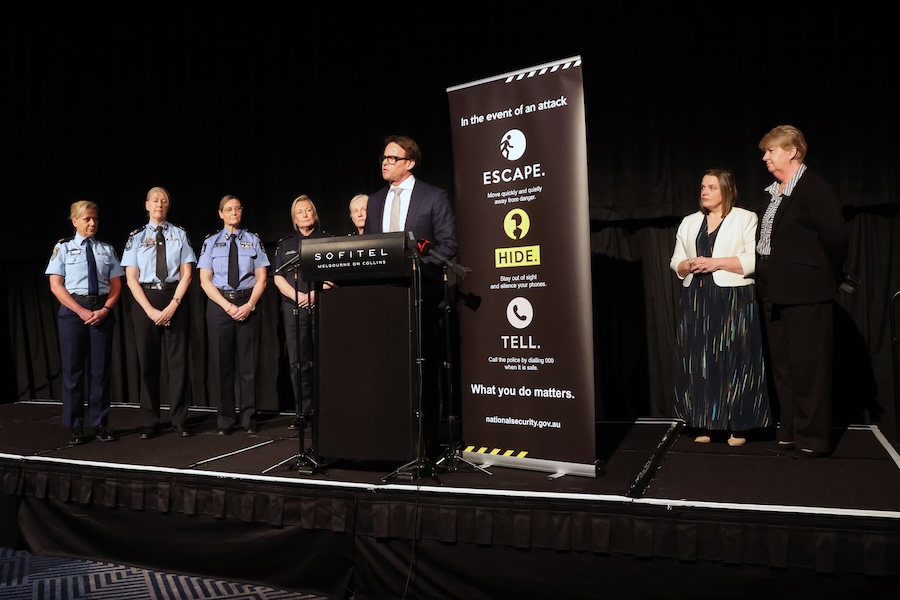

To raise awareness of community safety, the Shopping Centre Council of Australia (SCCA) has supported fresh emergency guidelines for shoppers and tenants, a plan dubbed ‘Escape. Hide. Tell’, offering clear and inclusive advice in the event of an armed attack.
In partnership with the SCCA, the materials have been updated and delivered to all Australians, including First Nations people and people living with disabilities.
“The first priority of all Australian governments is to keep our community safe from people who seek to do us harm. While there is no increase in the threat level, it’s important that every Australian has access to information that could help them in an emergency,” said Ciara Spencer, Department of Home Affairs spokesperson.
The safety advice is based on the three words: ‘Escape, hide, and tell’:
- Escape – move quickly and quietly away from danger, but only if it is safe to do so.
- Hide – stay out of sight and silence your mobile phone.
- Tell – call the police by dialling Triple Zero (000) when it is safe.
The enhanced version of the advice includes translations in multiple languages and an animated video to improve understanding and recall, to improve awareness and memorisation among Australians.
The updated materials are also included and delivered in major crowded places, aside from shopping centres, such as stadiums, transport hubs, and universities, with a particular focus on incorporating them into these organisations’ emergency procedures and staff training.
“By knowing what to do, people can act calmly, make informed decisions and increase their chances of staying safe,” said Cheryl Scanlon, deputy commissioner of Queensland Police Service.
“The development of the new ‘Escape. Hide. Tell’ package has been a strong and positive collaboration between the Government, the police and the industry. We encourage all crowded place owners and operators to promote ‘Escape. Hide. Tell’ across their public and customer messaging platforms to help raise public awareness, and to integrate as part of their critical incident procedures.”


Add comment