

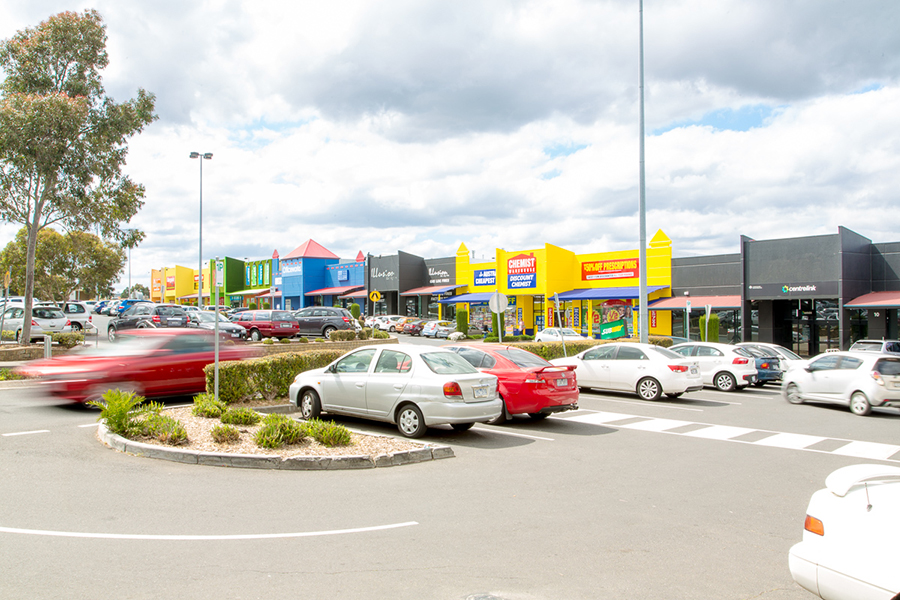

From its past ‘big box’ reputation, Australia’s Large Format Retail (LFR) sector has grown to account for 35 per cent of the nation’s total retail floor space, generating nearly a quarter of all national retail sales, according to data.
Philippa Kelly, CEO of the Large Format Retail Association (LFRA), told a recent Ray White webinar that Australia now boasts 21.6 million square metres of LFR floor space, an area more than 110 times the size of the retail component of Chadstone Shopping Centre.
However, Kelly noted that the LFR sector’s growth is now navigating a raft of property tax complexities and looming ACCC merger reforms set for this year, which the LFRA is actively contesting to protect member interests.
Julie Ryan, Julie Ryan of Ray White Commercial (RWC) said the sector’s growth is underpinned by the “sticky” nature of its occupants; the sector has become a premier asset class because tenants rarely fluctuate.
“LFR is an asset class of immense attraction because tenants simply don’t want to leave,” Ryan said. “Due to constrained supply, retailers know that if they vacate a prime spot, they may never find another like it. Even when the market shifts, we see ‘rightsizing’ – subleasing a portion of space – rather than total exits. They want to stay where their customer base is established.”
Strong consumer demand for connected devices – the average Australian household now has 32 Wi-Fi-enabled items, the webinar heard – is bolstering the durability for LFRs.
However, the path to this lifestyle-centric future is met with significant development hurdles. Alex Capra, head of development and leasing at Harvey Norman Holdings, believes developers are increasingly squeezed by competition from residential and industrial sectors.
Planning constraints, inconsistent zoning definitions across states, and rising construction costs have driven economic rents for new developments to be 20 to 40 per cent higher than existing market rates. Capra and Kelly both emphasised that for LFR to thrive, regional and metro councils must recognise its role as critical community infrastructure rather than just “bulky goods” storage.
Phil Shutrop, principal at Buchan Architects, said consumer demand is forcing a radical rethink of physical design. He believes the future of LFR lies in “human-scale” environments rather than sprawling asphalt strips. The industry is moving toward a cluster of lifestyle uses, integrating experiences like climbing gyms, surf parks, and bike hubs to give customers multiple reasons to visit.
“Australia is leading the way globally in integrating these centres with the community,” he concluded. “Showrooms are becoming smaller, high-experience spaces that rely on off-site fulfilment for delivery rather than on-site inventory.”




Add comment