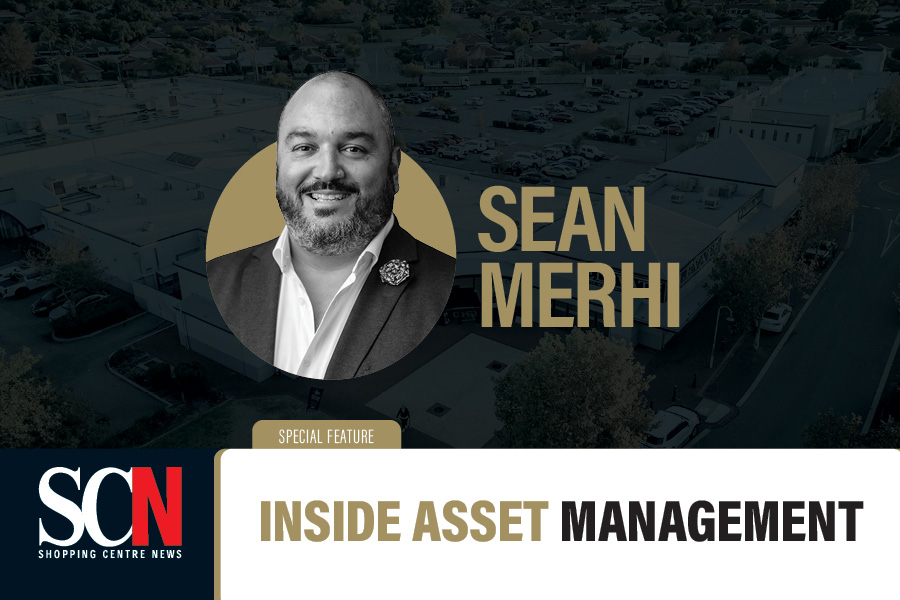
Sean Merhi’s transition from residential real estate to retail leasing and, ultimately, asset management has given him a different perspective on the business of property. Today, as part of Banna Property Group’s leadership and acquisition team, he works across a portfolio of convenience-led neighbourhood centres and retail properties. Here, Sean discusses the importance of understanding the local catchment, making targeted improvements rather than always pursuing major redevelopment, and bu
ilding assets around the everyday needs of their communities.
Shopping Centre News (SCN):How did you get started in retail property, and how has your career evolved?
Sean Merhi (SM): My career in property began in Balmain as a real-estate agent. I started in a junior role and worked my way through the business over many years, eventually becoming a director of Richardson & Wrench Balmain.
Residential real estate gave me a strong grounding in property but, more importantly, it taught me how to understand people, negotiate, and build long-term relationships – skills I still rely on every day.
After selling the business in the mid-2010s, I joined Banna Property Group in a retail leasing role, looking for a new challenge and an opportunity to broaden my experience. Retail property introduced me to a very different side of the industry. Rather than completing a transaction and moving on, you’re making decisions that can influence the performance of an asset for many years.
Over the past decade, my role has evolved from leasing to broader asset management, including operations, capital investment, acquisitions and strategic planning. Today, I am part of Banna Property Group’s leadership and acquisition team.
SCN: What types of assets do you currently manage and what are your key priorities?
SM: As an asset manager with Banna Property Group, I’m fortunate to work alongside an experienced, close-knit team across a diverse retail portfolio, including four neighbourhood shopping centres in Sydney, two in Perth, and retail properties within Sydney’s Haymarket precinct.
Harbour Street, Haymarket
Our shopping centres are predominantly convenience-based assets anchored by supermarkets and supported by food, health, services and specialty retail, businesses that form part of people’s everyday routines.
My responsibilities span leasing, financial performance, retailer engagement, capital projects, operations, acquisitions and longer-term strategy. Each area influences the others, so having that broader perspective matters.
Being a family-owned business also means we’re very close to our assets. We spend a lot of time onsite, know our retailers, and can be responsive when we see an opportunity.
SCN: What do you enjoy most about asset management, and what continues to motivate you?
SM: I enjoy the variety most. Asset management requires you to move between leasing, retailer performance, capital projects, operations and longer-term investment decisions, often within the same day.
I particularly enjoy seeing an idea progress from a conversation or strategy into something tangible. That could be securing the right operator, completing an improvement project or seeing an underutilised part of a centre begin to thrive.
There is a real sense of satisfaction in seeing how a series of decisions can collectively improve an asset over time.
Pennant Hills Market Place
SCN: What are the biggest priorities when managing a successful retail asset in today’s market?
SM: Understanding the local catchment is fundamental. What works at one neighbourhood centre will not necessarily work at another, even if they are relatively close geographically.
You need to understand who is visiting, why they’re coming, what’s missing from the offer and how the needs of that community are changing.
Retailers are also an important source of insight. They’re interacting with customers every day and can often identify changes in behaviour before they become evident in reporting.
From there, it’s about getting the fundamentals right – a considered tenancy mix, sustainable occupancy costs, strong presentation, convenient access and investing capital where it will have the greatest impact.
SCN: How do you balance convenience and customer experience when making asset management decisions?
SM: For neighbourhood centres, convenience is a significant part of the customer experience. Customers want easy access, efficient parking and the ability to complete several tasks in one visit.
But convenience alone isn’t enough.A centre should also feel welcoming, well maintained and relevant to the people using it.
We try to look at the experience from the customer’s perspective. The improvements that make the greatest difference aren’t always the largest capital projects. Relatively simple changes can make a centre easier, more comfortable and more enjoyable to use.
Woodlake Village, Ellenbrook
SCN: What metrics do you look at beyond sales and occupancy when measuring the success of a centre?
SM: Customer visitation is an important measure for us, but we look beyond the headline number. We want to understand when people are visiting, how those patterns are changing, and what may be driving those changes.
We also look at tenant retention, occupancy costs, leasing demand, category performance and customer feedback, alongside operational measures such as presentation, maintenance and safety. Data is important, but it tells only part of the story. Spending time at the centres and speaking regularly with retailers provides context that reporting alone can’t always capture.
Bringing those two perspectives together gives us a much clearer picture of how an asset is performing.
SCN: What are the most significant opportunities currently emerging across the retail property sector?
SM: I see a significant opportunity in established neighbourhood centres that have strong fundamentals but may not have evolved at the same pace as their catchment.
Enhancing an asset doesn’t always require a major redevelopment. Meaningful improvements can come from refining the tenancy mix, improving presentation, activating underutilised areas and introducing uses that better respond to the needs of the local community.
We’re seeing this through our recent expansion into Perth, where we’ve acquired established neighbourhood centres with opportunities to invest, strengthen the retail mix, and improve the overall customer experience.
SCN: How do you build strong, long-term relationships with retailers and other stakeholders?
SM: For me, it comes down to communication, consistency, and being prepared to listen.
Taking the time to understand a retailer’s business and the challenges they’re facing helps build trust and leads to better conversations. We may not always agree, but being transparent about our position and following through on what we say is important.
Some of the most useful insights we receive about our centres come directly from retailers. They’re there every day, speaking to customers and seeing first-hand what’s happening within the centre.
Cabramatta Plaza
SCN: Many retail assets are evolving into broader community and mixed-use destinations. How is that changing the asset management function?
SM: The evolution of neighbourhood centres is broadening the way we think about the right tenancy mix.
We’re increasingly seeing uses such as swim schools, Pilates studios, childcare, medical services and learning centres become an important part of neighbourhood centres. They generate regular visitation while providing services the local community values.
It changes the leasing conversation. Rather than simply asking what operator can fill a vacancy, we need to consider what is missing from the local area, what will generate repeat visitation and how that use will contribute to the centre as a whole.
It also influences placemaking, facilities management and capital investment. For asset managers, understanding how people live and use their local area is becoming just as important as understanding traditional retail fundamentals.
SCN: What qualities make an exceptional retail asset manager?
SM: Commercial judgement and strong relationship skills are essential, but I also think the ability to ask the right questions is important.
Why is a particular retailer performing well? Why is a space proving difficult to lease? How is the catchment changing? What are customers looking for that the centre doesn’t currently provide?
You also need to be adaptable and comfortable making decisions that may not produce an immediate result. Sometimes the right decision for the long-term performance of an asset isn’t necessarily the easiest or most obvious one.
Ultimately, a strong asset manager needs to understand the detail while keeping sight of the bigger picture.
This Q&A with Sean Merhi forms part of the Inside Asset Management feature published in the latest issue of SCN magazine






Add comment