

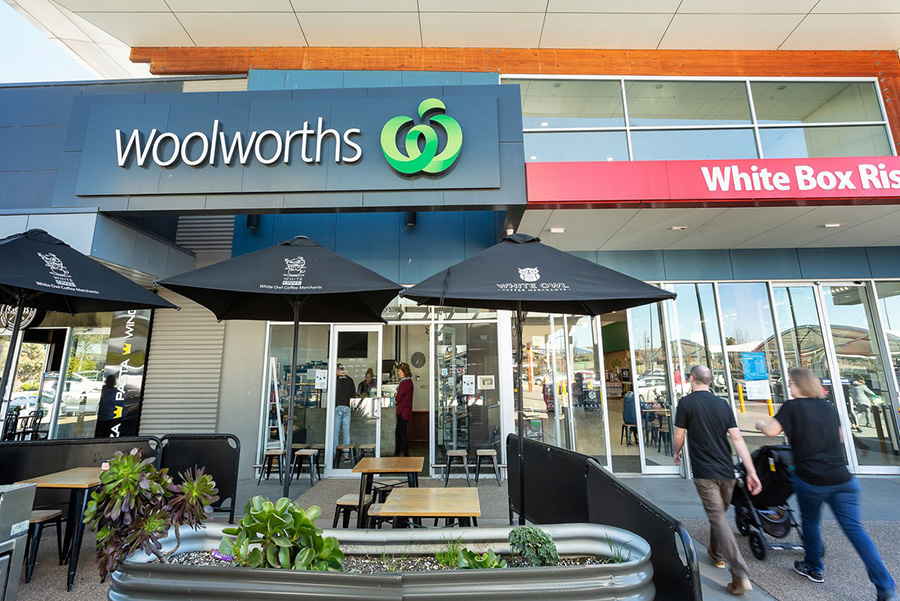


Ever evolving retail environment
The retail environment is constantly changing. For centuries humans have gathered in villages and marketplaces to trade, barter and later purchase their fresh food: meats, cheeses, fruits and vegetables. The way we shop has evolved over the centuries, from the village square to the shopping centre of today and will continue to do so. The only thing we can be certain of is change. With shifting customer behaviour and the ever-accelerating rate of technological innovation, our retail centres will need to continue to evolve. Many believe well before 2050 Australian roads will be filled with autonomous cars and eventually any nostalgic car lover who wants to keep their steering wheel will have to pay for a highly expensive government licence for the privilege.
The self-driving car revolution won’t be limited to moving people. It will fundamentally impact economies all over the globe. Self-driving will impact commerce with autonomous delivery. It will impact freight with long-haul trucking. It will impact groceries, restaurants, entertainment, healthcare and much more. Self-driving technology will shape the world more dramatically than we can possibly predict today.
Shortly after that, we’ll take to the sky and personal drones will take us to the Jetsons era finally – for those Millennials, this was a futuristic cartoon of the ’70s.
Eventually cars and drones will become one and the same. And, we won’t own these machines ourselves rather, we will hail them on demand in an Uber-style sharing economy.
We are also hearing more and more that loneliness is becoming a critical issue. People are looking for human connections, interactions and seeking a sense of community.
At SCA we are focused on building stronger communities. It’s about bringing a sense of belonging and an opportunity for people to engage and interact with each other in person – bringing back the concept of the village square.
With technology has come the advent of platforms, ecosystems and collaborative consumption. The sharing economy will continue to transform the retail environment from clothes, transport and living.
Many of us in the future will not own cars opting for “renting” when we need them. And, even the old great Australian dream of owning your own house might eventually go out the window, particularly given Australia’s cost of housing. New options such as co-living communities and build to rent options already growing in popularity.
Shrinking levels of car ownership will reduce basket sizes even further, making the convenience-based shopping centre even more popular.
Convenience is king, and time is the new currency! We are all looking for ways to save time to spend on things we enjoy.
Consumers will favour time-saving convenience due to less conventional working hours, changing household configurations such as more and more dual-income households and eating out will become even more commonplace than occasional dining continuing the trend towards more takeaway and dining options at neighbourhood shopping centres.
How will social media continue to influence behaviour and, in turn, what does that mean for us? We are already seeing the impact of this “selfie” culture and obsession with how we look changing the retail landscape with new offers such as injectables, fat freezing, and fat cavitation (yes, that really is a thing!)
We are also seeing the rapid introduction of dentists who were not your typical retail usage not so long ago. Barber shops have also had a resurgence. Just five years ago, you would have been hard pressed to find a specialised barber now almost every centre has one with regional centres often having multiple.
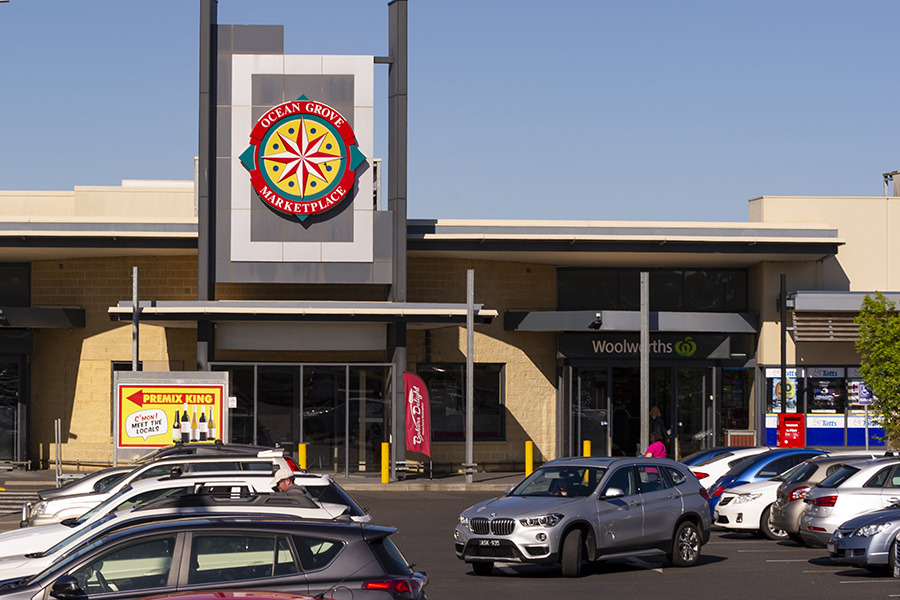
The rise of the conscious consumer means that they increasingly prefer environmentally sustainable products and retailers. Supermarkets have recently banned single use plastics. Online retailers are also looking at how to minimise packaging and just how will consumers feel when it becomes common knowledge just how many online packages returned are sent to landfill as it costs them more to return them to inventory.
Vegetarianism and veganism are on the rise as more people seek to mitigate their personal environmental impact from eating meat.
Life is pretty different now than it was 20 years ago, or even 10 years ago. It’s sort of exciting, and sort of scary. And hold on to your hat, because it’s going to keep changing – even faster than it already has been.
These are but a few of the changing dynamics of society likely to affect the way we work, live and shop. So, just what will the shopping centres of the future look like?
Our every-day needs strategy
One thing that has remained unchanged in this ever-evolving retail landscape is our strategy. Since listing we have focused on convenience-based retail centres that focus on the every-day needs of our customers: groceries, services, health and well-being with a heavy weighting to all those things you can’t do online – a haircut, nails, massage, and going to the gym. Against a backdrop of a softening in the broader retail market, we continue to remain focused on continually improving our tenancy mix biased to non-discretionary categories, maintaining high retention rates reducing vacancy by focusing on difficult long-term vacancies.
This strategy will continue to ensure we have sustainable retailers paying sustainable rents, and ultimately result in generating defensive, resilient cashflows to support secure and growing long-term distributions to our shareholders.
The strength of our strategy is clear in our portfolio’s performance, as our occupancy remains steady at >98%, with our speciality vacancy of <5% and less than 1% of specialities in holdover. Our majors continue to perform well, and our speciality tenants are displaying resilience.
While our results remain robust, we too feel the pressures of the increasing market challenges. In response to the evolving landscape we have made several structural changes to the operations of the business, one of these which included internalising the leasing team. As a result, in the last half we have finalised more deals than ever before, opened more stores, leased more than 20 long-term vacancies, and achieved a sustainable improvement in occupancy and tenancy mix across the portfolio.
Focus on sustainability of our retailers
While we are focused on sustainable tenants paying sustainable rents, this is just one piece of the puzzle. To also assist our retailers in becoming sustainable in this changing environment we need to support our retailers to evolve their businesses.
Working with Woolworths and Coles in rolling out “Click & Collect” and “Parcel Pickup” to their stores, we continue to support their efforts in further enhancing customer convenience. And to support our speciality tenants, whom are mostly your local mum and dad operators, we have recently been working with Australia Post to introduce parcel lockers and Parcel Point by introducing them to our tenants to add to their business offering. In turn, this helps drive traffic to their stores, introduces them to new customers and enhances the overall convenience at our centres.
As our economy becomes more and more a cashless society, “cash only” retailers are becoming a thing of the past. As many of our retailers have limited buying power, we have been assisting our retailers move from cash to cashless by leveraging our portfolio scale to secure lower EFTPOS transaction fees than what our local retailers could otherwise obtain. Achieving these cost savings for our retailers is one small step in helping to make them more sustainable businesses.
We will continue to assist our retailers in becoming more sustainable through considering innovative ways to help them and encouraging them to be thinking of how their businesses might need to evolve into the future.
Building stronger communities – “love local shop local”
Our centres are the hubs, and in many cases the heart, of the community and our retailers are your local mum and dad tenants, who are on first name basis with their customers, so it is important that our teams are also local. Part of our ethos is helping to build stronger communities.
An example of this, is the small but important role we played in the regional town of Ulladulla during the worst bushfire season Australia has ever seen. Our centre had lost power, and many locals/holiday goers were left stranded. However, rather than have it closed, we worked with Woolworths who brought in a generator and we kept the centre open to the queues of people needing supplies. This is an example of how our centres play an important role to the communities in which they reside in.
Future proofing our convenience
Our customers continue to use our centres and supermarkets as their pantry. More than 60% of our customers live within a 15 minute drive from our door, spending on average 20 minutes to complete their shop, before heading off and getting home within the hour. This is the ultra-convenience of our centres.
Given our geographical spread, our location in predominantly regional areas and our centres often being the hub of these communities, we see the logistical ‘last mile’ as a potential opportunity. Could we ostensibly become drone delivery hubs of the future?
With customers’ expectations of convenience increasing, the question on our minds is what will be the new level of expectation from customers, and, what will a typical neighbourhood centre in the future look like? How else will we need to continue to evolve and what other roles can we play?

About SCA Property Group
SCA Property Group (SCP) is the largest owner of neighbourhood and sub-regional shopping centres in Australia. The SCA Property Group invests in shopping centres predominantly anchored by non-discretionary retailers, with long term leases to tenants such as Woolworths Limited, Coles Group Limited and companies in the Wesfarmers Limited group located across Australia. The SCA Property Group is a stapled entity comprising Shopping Centres Australasia Property Management Trust (ARSN 160 612 626) and Shopping Centres Australasia Property Retail Trust (ARSN 160 612 788).



Add comment