

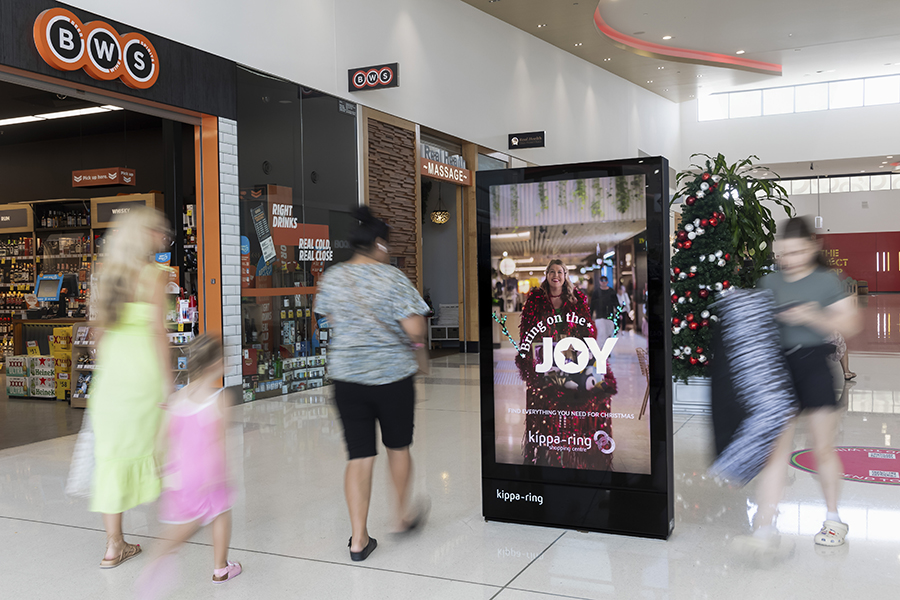

Sally Harding, Head of Alternative Income at QIC, explores how retail media is reshaping shopping centres into data-rich, high-impact environments. With a national rollout of 250-plus digital screens, QIC is giving brands new ways to connect with 1.8 million weekly visitors through targeted, context-driven campaigns.
The retail media revolution has arrived in Australian shopping centres, with the sector projected to reach $2.8 billion by 2027*. At QIC, we are positioning our centres at the forefront of this transformation by creating a sophisticated digital overlay that enriches the entire visitor journey.
McCrindle Research** confirmed a clear pattern: 75 per cent of QIC customers spend between one and three hours per visit, and 87 per cent arrive with multiple missions to fulfil. These findings highlight how Australians are embracing shopping centres as holistic lifestyle destinations and why we are extending media opportunities to reflect and enhance this shift.
Switched-on for success
Following an extensive trial in select neighbourhood centres, we have activated more than 250 small-format digital displays across 12 properties nationally, including major hubs such as Robina Town Centre (QLD), Eastland (VIC) and Castle Towers (NSW), as well as strategic sites like Bathurst City (NSW), Kippa-Ring (QLD), and Pittwater Place (NSW). Alongside our established large-format network with oOh!media, this rollout unlocks digital out-of-home options for connecting with 1.8 million weekly visitors across Queensland, New South Wales, Victoria and the ACT.***
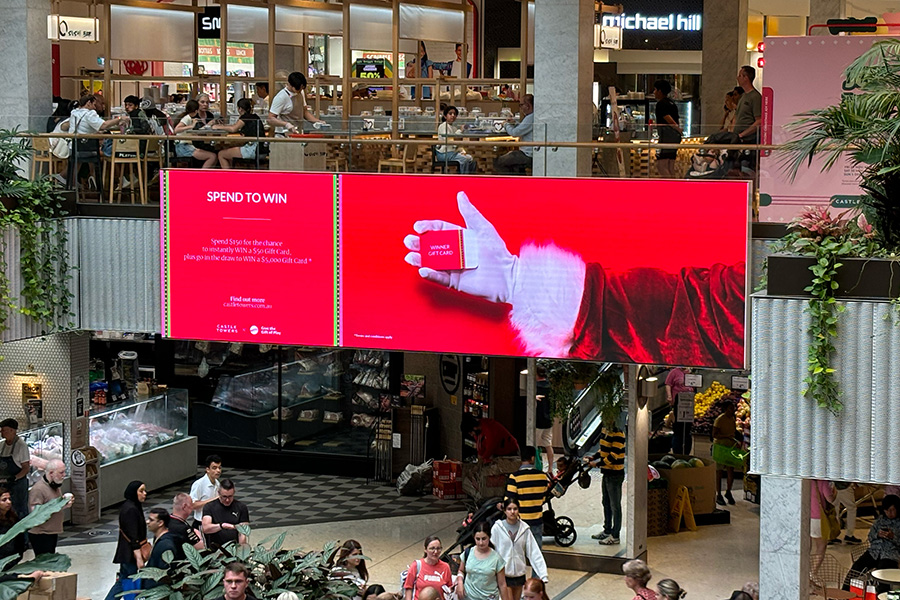
Delivered in close co-ordination with TechMedia and Knox Constructions, the rollout changes the media equation for planners navigating increasingly fragmented audiences and constrained budgets. It delivers cost-effective access to granular local area targeting, empowering businesses to respond to individual centre demographics, local competitive dynamics and specific trade area characteristics.
With message loops capped at a maximum of six advertisers per screen and displays positioned strategically in high-engagement zones, we ensure premium treatment for every brand, regardless of size or sector. Mirroring the mobile interface, these portrait screens consistently deliver stronger returns than social media on a cost-per-engagement basis.
Context that converts
QIC’s portfolio spans a diverse range of retail environments, each shaped to reflect and serve its community. Eastland, for instance, anchors Ringwood’s civic heart, where the town square hosts seasonal markets and cultural events. Castle Towers connects directly to Castle Hill station, creating a natural convergence point for commuters and shoppers alike.
Building on these distinct contexts, our localised pricing and flexible packages are designed to open doors. A suburban accountancy firm can appear at Castle Towers alongside Apple and Adidas. A Melbourne start-up can test creative across three Victorian centres before scaling nationally. A national brand can run hyperlocal initiatives tailored to Canberra Centre’s public service professionals or Robina’s coastal lifestyle audience.
What matters is not budget size but relevance, timing and execution. A well-placed, well-timed message can outperform a generic nationwide campaign. IAB data supports this, showing onsite search ad usage has risen 21 percentage points year on year – clear evidence that customers respond to targeted messaging delivered in situ. For advertisers, this means new ways to amplify presence across the visitor journey, from carpark arrival to food court dining to fashion precinct browsing.
The advantage lies in combining the precision of online media with the impact of real-world retail. Stephen Dewaele, QIC’s General Manager of Property Management, framed this succinctly when he said: “Physical retail spaces must become as data-rich and dynamically targetable as their online counterparts”. By embracing this evolution, we create opportunities not only for retail partners but also for brands that add depth and variety to the centre experience.”
Precision in peak season
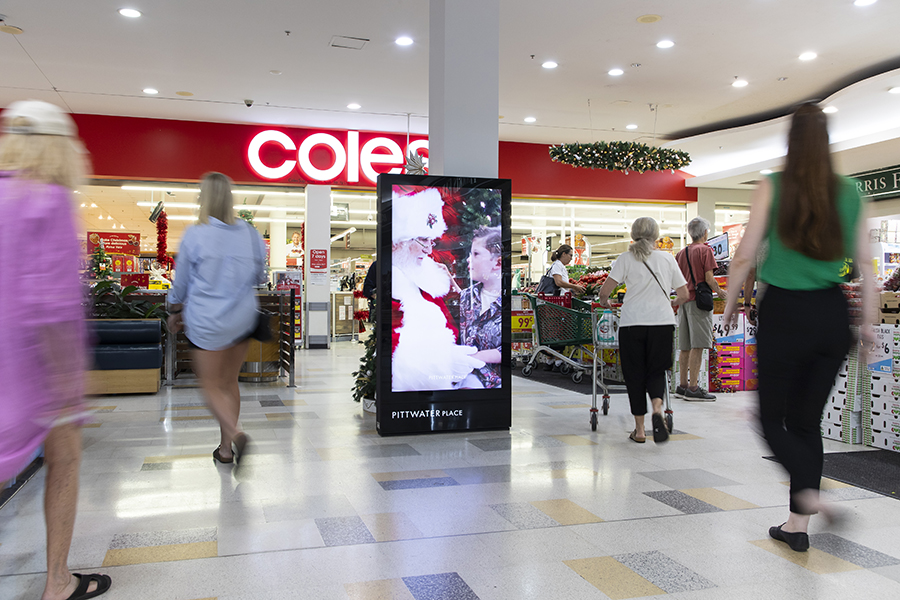
As the festive trading period approaches, shopping centre media offers a distinct advantage: the ability to deliver immersive, cross-category messaging within an environment that is both emotionally resonant and part of holiday ritual – something fleeting, interruptive advertising cannot match.
With predictive commerce capabilities, on-screen artwork can be updated instantly to suit context: cold beverages during a December heatwave, breakfast offers in the morning versus dinner specials by night, or promotions tied to school holiday activities. In the final rush before Christmas, campaign messaging can pivot to highlight available stock, extended trading hours or click-and-collect services.
This flexibility is further enhanced by tailoring campaigns for dwell-time versus transit zones, with QR-enabled activations driving high interaction rates.
Integrated by design
As part of our commitment to driving both immediate sales and long-term loyalty, we consider the entire storytelling arc. Our Brand iQ team can curate bespoke multichannel solutions that co-ordinate messaging across digital screens, traditional in-centre media, pop-up activations, eDMs and social platforms. This end-to-end approach ensures a campaign unfolds as a cohesive narrative from roadside billboards to common mall touchpoints to post-visit digital engagement.
This screen rollout reflects QIC’s broader focus on digital transformation, following innovations such as our industry-first AI-enabled billboard at Hyperdome. For us, digitally enriching the shopping centre environment is not just about technology; it is about maintaining spaces that combine commerce, entertainment and social connection.
That also means making sure advertisers feel supported. We work closely with partners to demystify local markets and help shape strategies that make sense for their goals. Whether it is a small business standing shoulder-to-shoulder with national brands, or larger enterprises wanting more granular control, we are here to make the process accessible and effective.
The momentum speaks for itself: 79 per cent of retail-media advertisers plan to increase spending, underlining the channel’s effectiveness. But more importantly, it is creating space for richer conversations about how digital and physical retail can work together. I look forward to continuing those conversations with industry partners in the months ahead.
Footnotes:
* Morgan Stanley (2023)
** QIC Consumer Insights report based on survey data collected in Sept 2023
*** Based on combined footflow in 11 centres for YE Dec 2024
- This article by Sally Harding, was first published in SCN magazine – Mini Guns 2025 edition


Add comment