



You have to love retail. I think most of us that work in our industry do. I’ve been writing an outlook for almost half a decade now and one theme remains true – retail is change. Every day is different and we are living in a time of great structural shift – the like of which hasn’t occurred since the post war shopping boom and the advent of ‘shopping centres’ as we know them today.
The millennials have arrived
A total of 44% of Australia’s workforce is now Gen Y or Gen Z, collectively referred to as the ‘millennials’. It’s a wide group covering people born from 1980 to the noughties.
In 2018, the millennials took over, and now have bigger buying power globally than Gen X or the baby boomers. It’s a mistake to consider it one homogenous group.
As a millennial myself, I’ve often found the generalisations made about my cohort simplistic. In particular, there are two important myths worth busting:
Myth 1: Millennials dominate online shopping – not true. The shopping habits and split between online and in-store are roughly the same for millennials and Gen X. Convenience is the universal preference.
Myth 2: Millennials are selfish – not true. About 40% of millennials devoted time or monies to charitable pursuits. Over 73% say that they would pay more to ensure what they buy was sustainably and ethically produced from a brand or local provider. In essence we want to know that our decisions are having a positive impact on our habitat, being the earth and we also want connection.
The myths are just that and it is clear that perceptions are different to reality.
At the end of the day, despite the nuances of generational change, convenience and connection are universal.
Convenience and a connection
I didn’t grow up in the city, but rather in the far flung suburbs of Sydney and on the cusp of semi-rural life. Driving was the norm. Your weekly shop was a 20-minute drive away, and your Christmas shop was a 45-60 minute drive – it was an adventure. Going to a nice restaurant was an hour away, Pizza Hut and the local Aussie-Chinese restaurant was a bit closer if your parents didn’t have time to cook – pubs in the burbs weren’t very family friendly back then. My friends, who grew up further out had one shopping outing a year in the ‘big smoke’ and couldn’t believe the selection on offer.
Back then not every regional town had a supermarket, this is no longer the case. Supermarkets are now give or take, in most regional towns across Australia. Our access to great produce means our food options have increased dramatically – both fresh food and catering.
Services and access to health and pharmacies have improved immeasurably on the whole. And now the advent of the internet brings shopping for products to our homes. This is true in metro cities and, to a lesser extent, it broadly holds true for regional Australia.
Still, we can’t get our hair cut or nails done online. We want to interact with people and feel like we are part of a community. We also don’t want to be stuck in traffic. The travel times I quoted above have doubled for me as Sydney has become denser. Above all, convenience continues to become more and more important.
We focus on community
At SCA Property Group, we focus on the importance of communities. We want to interact with our customers and help them feel like they are part of a community.
A total of 39% of our speciality retailers are local mum and dad operators; they are an integral part of their community, and many have grown up in the towns surrounding the centres. They know their customers and our customers know them, and this is the connection we want in our centres and with our retailers.
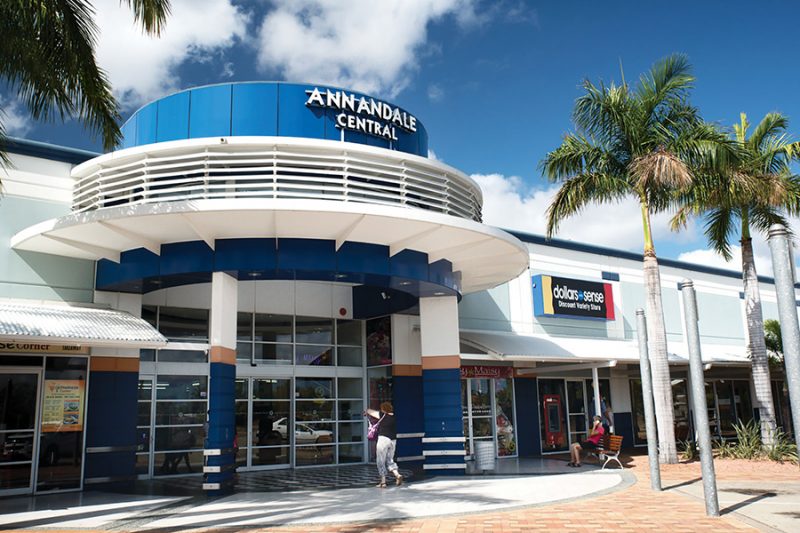
North Queensland was recently devastated by floods, forcing a large number of the local population to evacuate their homes. Our centre Annandale Central in Townsville was unaffected and became a refuge point for many locals. Most of the town was under water and we were the only centre in that part of town that traded through.
As waters rose, evacuation to planned evac centres became dangerous. Our centre and retailers opened their doors, donating their time, resources and skills. One retailer even helped those affected by drying their clothes, hair and even their pets!
The centre also became a place for friends and families to congregate, a community donation point and The Department of Housing and Community Recovery Group also held sessions to assist those affected.
A combined effort from locals, the centre team and retailers was greatly appreciated by the community and we received a vast amount of positive feedback across our social media pages and in person to the local team on site.
This swift action provided our community with a safe meeting place. That is what a community does in a time of need.
Our convenience centres
Our expertise lies in convenience-based shopping centres.
At SCA Property Group we pride ourselves on offering our customers the ultimate convenient shopping experience.
We know 60% of customers drive less than 15 minutes to our centre. They park around 50 metres from the supermarket and dwell between 20-30 minutes at our centres. Our shoppers are time conscious and want to complete their shop as quickly as possible.
We don’t focus on dwell time, we focus on frequency. It’s a different approach but one I’ve been talking about for almost a decade. We know what our centres are and what they’re not. They are your every week habit and so convenient it is easy to duck in frequently.
Our sales results seem to indicate that our customer’s like what we are doing with our centres.
As at December 2018, our supermarkets recorded a MAT growth of 1.7% (excluding recent acquisitions) and our specialty stores sales grew by 3.5% (excluding recent acquisitions).
Our centres continue to consistently perform and our strategy has worked for more than six years since our inception.
Our results
We recently released our half-year results, which have continued to remain strong and robust. Our existing centres continue to perform well, delivering continuing sales growth and a comparable NOI increase of 2.5%.
Furthermore, in the first half of FY19 we acquired 12 convenience based centres, valued at $677.9 million. We believe in convenience retail and buying convenient centres at the right price.
Our investors, both institutional and retail back us. They understand not all retail is created equal.
These assets are so far performing in line with our expectations, however will need some work.
Our aim is to imbue these new centres we have bought with the same community and convenience focus as we always have. As we have always said, we don’t get hung up on definitions like sub regional, neighbourhood etc, the customer doesn’t recognise these definitions. The customer recognises convenience which all our acquisitions, and existing assets, are.
Our people
To work a portfolio like ours well, it always comes down to our people. We have a small but hard working and effective head office team focusing on leasing, asset management and finance.
Our centres have the best local talent with our outsourced agency providers. Our centres remain about local people, in local communities with our local retailers. We try and empower our diverse team from all over the country and do our best to give them the tools to make a difference in the centres they manage.
I’m proud of our teams. We embrace change and hold diverse views and backgrounds. Our customer is continually changing, our retailers and tenants are evolving and we continue to change with them.

About SCA Property Group
SCA Property Group (SCP) includes two internally managed real estate investment trusts owning a portfolio of quality neighbourhood and sub-regional shopping centres located across Australia. The SCA Property Group invests in shopping centres predominantly anchored by non-discretionary retailers, with long-term leases to tenants such as Woolworths Limited, Coles Group Limited and companies in the Wesfarmers Limited Group. The SCA Property Group is a stapled entity comprising Shopping Centres Australasia Property Management Trust (ARSN 160 612 626) and Shopping Centres Australasia Property Retail Trust (ARSN 160 612 788).


Add comment