


Hames Sharley’s Andy Ong, Chris Maher and Mason Harrison explore how thoughtful design, community collaboration and mixed-use planning can transform everyday streets into thriving, people-first places.
The principles of ground-level activity are fundamental to good urban design. They anchor viable, safer and healthier urban landscapes; ground planes, lanes and streets become interesting and walkable. Open space and streets designed for pedestrian priority and slower traffic promote healthy, active lifestyles and spaces, which is all evident in the world’s best commercial and retail developments.
But are we doing enough? Can ground-level activation help promote dense urban living, and create better amenities along with more active urban environments? What types of ground-floor tenancies/activation types can enable this?
Sustaining activity in retail overseas
To help understand the landscape, retail and residential developers in Australia look to overseas models to see how different countries are activating their developments. In Hong Kong, there are examples of multi-level activation and almost ‘full life cycle’ blocks, where someone living in an apartment can eat, play and work in the same building. Although Australia is not suited for this model, which is driven by Hong Kong’s strict density rules, Greater density in Australia seems to be required to create sustainable activated ground (and podium) levels. This is something we can indeed learn from.
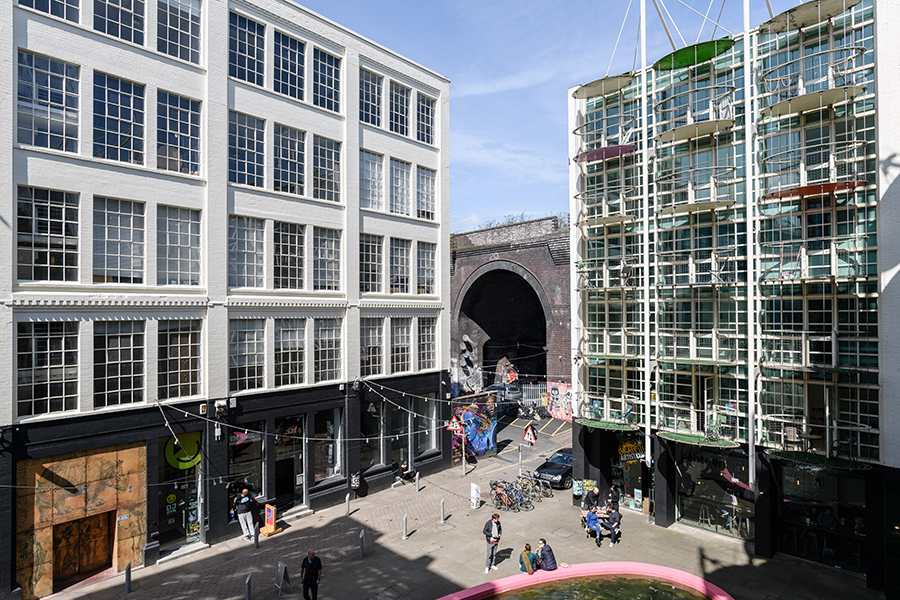
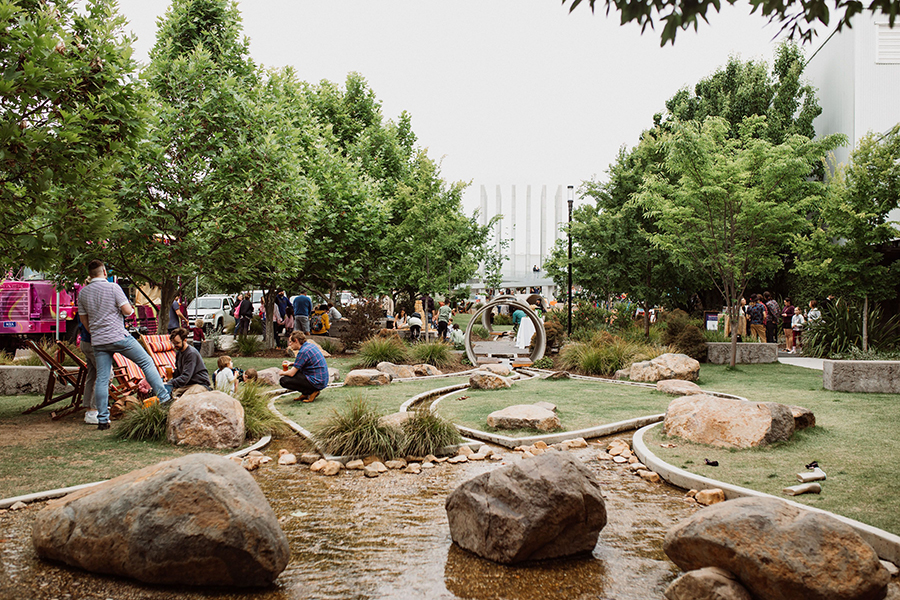
In Georgetown, Texas, population density is comparatively low; however, population growth rates are high. The town has created a ‘community feeling’ by allocating public spaces for people to gather together and use (farmers’ markets, outdoor activities, etc). In the UK, Oxford’s 15-minute city is a low-traffic neighbourhood, designed to favour pedestrians, create more walkable streets, boost small business, attract local shoppers, increase a sense of community, prioritise public transport and cut down on car usage. Also in the UK, The Custard Factory in Birmingham was a once-derelict factory on the edge of a declining CBD, struggling with anti-social behaviour and crime. Through a careful curation and injection of cultural uses, artist spaces, and event venues, it has revitalised a part of the city.
Responding to local context
Within Australia, the circumstances of each city and/or region are often different, and it’s too hard to apply the same approach all over. However, certain aspects from several overseas examples can be used in conjunction, breathing new life into the ground-floor plane of our local developments.
For example, many neighbourhood and urban centres are now mixing and facilitating health, tourism, community, sporting and cultural events, with eclectic and surprising uses. Dairy Road Canberra mixes retail art, food and entertainment precincts on the edge of a wetland habitat, while Melbourne offers urban farming rooftops, such as Burwood Brickworks, and vertical schools in shopping centres. Other exemplars include inner-west Sydney suburb Marrickville, an example of adaptive re-use (in this case, a former industrial space activated day and night to create buzz and life. New and emerging housing typologies such as build-to-rent and multi-level retirement living also benefit from proximity to amenities, including parks, sporting venues, ground-floor retail, food-and-beverage outlets and public transport.


Community and culture
Currently, the greatest shift is embedding community and culture ingredients into the ground levels of retail and residential developments. Once you attract a wider audience of people to the ground level via events and community activity, they’re more likely to return – and spend.
The best outcomes occur when the community is actively involved in place creation, place identity and, where possible, includes the traditional custodians of the land. Careful engagement with the local community can greatly help contextual understanding and the sharing of information and ideas. It can provide gap analysis, and is also essential to the careful staging and integration of future development. Many organisations, like Town Teams in Western Australia, collaborate with and support this local interaction.
Curating events builds stronger links to the community, too, facilitating authentic activity around sport, artistic, cultural and social history, often by integrating and adaptively re-using heritage or industrial buildings. Sometimes, even just acknowledging these adds much to the ground plane, street scapes, and street life of our urban and neighbourhood centres.
Medical and wellbeing
Service tenancies beyond retail also add to the ground plane, including medical and wellbeing offers, which are on the rise. People need to want to inhabit these spaces after work hours and on weekends. The offer must be about convenience, not spaces people travel to for a special experience. Mixed-use development Essence, in Claremont, Perth, offers a mix of retail at ground level and 148 apartments above, but part of its ground level is shared with Amana Living, a not-for-profit providing care and facilities for older people. By providing services to older residents who own within the building, they make it possible for those residents to age-in-place at Essence during their retirement.
Furthermore, spaces without the sole purpose of commerce need to be created and maintained; spaces such as parks with free recreational activities (open-air gyms, etc) where people can dwell in and amongst nature, even within urban settings. The West Village in Brisbane, Queensland, by Sekisui House Australia will offer nearly one hectare of open space, including four leafy laneways and two parks. In Adelaide, Forestville by Peet and Buildtec showcases a market square, rooftop farm and lush green spaces, providing hands-on experiences with nature close to the CBD.


Surprise and delight
We all want to live in places where our streets not only provide for safe pedestrian movement but also ‘reward’ pedestrian movement, through experiences that surprise and delight us, stimulate our journeys and are attractive, safe, sustainable and functional. For example, pocket parks are returning to cities and, within many neighbourhoods, they are helping bring life to our streets. Our cities are evolving, too, to accommodate more public transport, electric vehicles and walkable, pedestrian-focused streets. This adds new ways to interact with the streetscape. More typologies are developing for differing age groups and demographics, such as build-to-rent, retirement living and multi-level education, including universities, which crave activity and incidental connections.
All these changes will provide future opportunities for more carefully located mixed-use and new, exciting, sustainable uses of the ground level and lower levels of future developments and precincts. We can create and facilitate desirable, higher density, and more-activated, safer streets in our future cities and neighbourhoods. We need to undertake the task with the local community and careful consideration of demographics, planning controls, retail dynamics, local context, consumer behaviour, and a clear understanding of all the relevant constraints. In doing so, our cities can become successful, sustainable and joyful places.
- This article by Hames Sharley, was first published in SCN magazine – Mini Guns 2025 edition



Add comment