

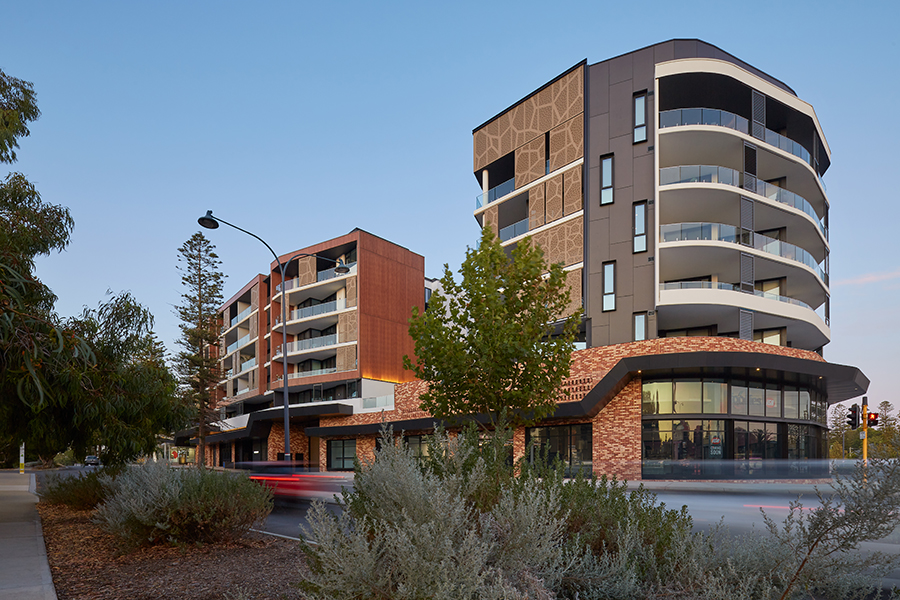

As Australian cities grow more dense, mixed-use developments are redefining the role of retail from convenience add-on to curated community experience. Hames Sharley’s Mason Harrison and Tim Boekhoorn speak with LOCUS Property’s Damian Long about how thoughtful design can turn retail into the heart of connected urban living.
In an era when stand-alone, supermarket-anchored sites are becoming scarce in inner-city areas, developers are reimagining retail as the vibrant amenity of new residential developments. Conversely, traditional residential developments are being asked to introduce retail to add diversity, activation, and community assets – this requires a diverse skill set and execution to ensure its fit for the community, place and feasibility.
By weaving curated ground-plane experiences into mixed-use projects, they’re not just focusing on building high-quality apartments, they’re crafting destinations that enhance daily life, drive sales, and deliver lasting value for tenants and locals.
We sat down with Damian Long, Director of LOCUS Property in Perth, to explore how his latest project exemplifies this aspirational shift: Prioritising community amenity through innovative retail while navigating real-world constraints to create a thriving, integrated precinct.
Hames Sharley: What inspired the vision for your latest project – a coastal, outer-metro infill site – and how does retail fit into the bigger picture of community and residential appeal?
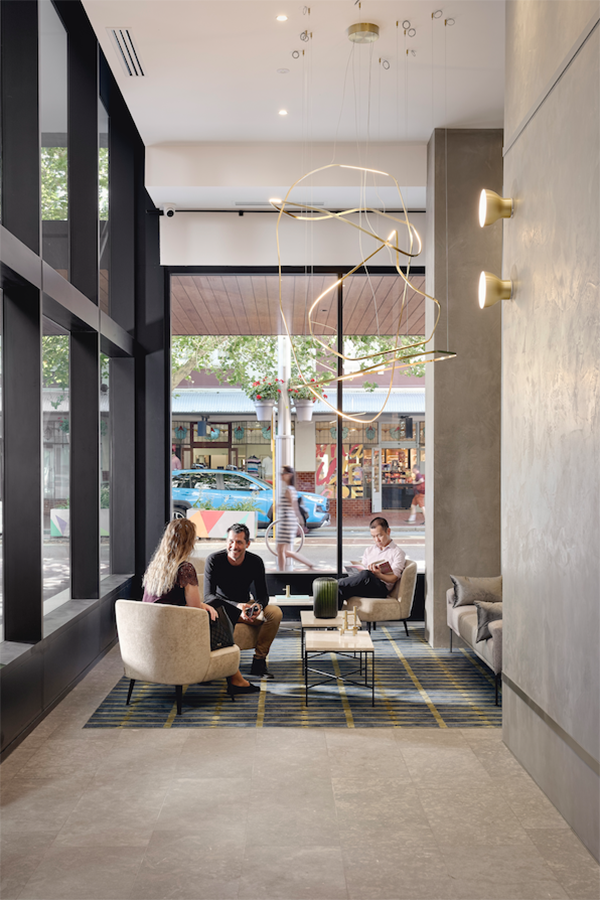
Damian Long: We’re aspiring to build more than just apartments – we want a meaningful retail ground plane that becomes an extension of residents’ homes and a hub for the local community. Our current project is perched alongside Perth’s stunning coastline, so the beachfront location demands a retail offering that feels alive and connected. Retail here isn’t an add-on; it’s the brand’s identity, and we are currently in the process of curating experiences fostering a vibe that draws people in.
An example of this is Essence in Claremont, which has a ground-floor café with a resident DJ spinning tracks. This curation is great for creating emotional connections and a sense of community – and the added benefit that it draws potential buyers who can see themselves living above a buzzing precinct. It also supports tenants by aligning with the catchment’s needs, ensuring the retail thrives as part of the overall development. We will see what works for the local identity of the current project.

Hames Sharley: How has this focus on curation influenced the retail design, especially in moving away from traditional major anchors?
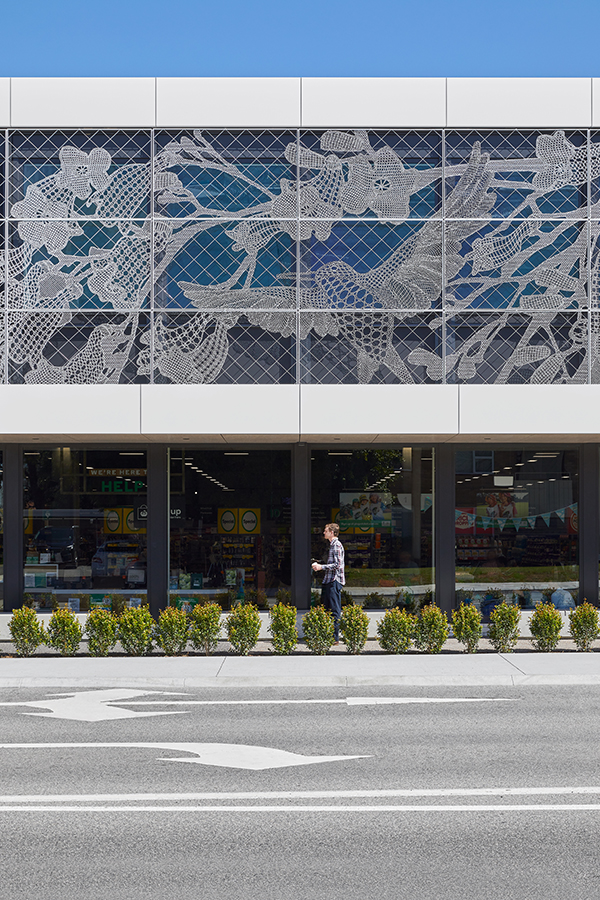
DL: Because of the diversity of uses that bring the entire development together, there is an element that provides flexibility in terms of what we can offer and what moves we can make. For this site in particular, the shallow water table and limited road access ruled out a big-box anchor, so we’re partnering with a smaller, independent supermarket. Without the rigid requirements of a major supermarket – think vast parking ratios, standardised footprints, and prime access – we gain flexibility to experiment. This opens doors to site-responsive tenancies, strategic lobby placements, and dynamic façades visible from multiple angles. Pedestrians, drivers, and residents above all engage with an activated ground plane. It’s about blending tenancy needs with cultural fit: smaller formats allow us to ‘mix up’ the ingredients, creating unexpected arrival points and flow that enhance the resident experience while serving community essentials.
Hames Sharley: Site complexities like the water table and access constraints seem daunting – how did they shape opportunities for a tailored retail outcome?
DL: The beach proximity brings a high water table, minimising what can be achieved in basement levels for parking and then that is compounded with access constraints due to proximity to major roads and roundabouts. These hurdles actually liberated us from locking into major-tenant constraints, as we had to make the choice to have discussions with tenants that could be more flexible.
We’re designing for the site’s realities: elevated retail activation to overcome perceptual barriers around underground parking, and exterior treatments that excite from street-level up. This approach delivers the best residential product – uncompromised amenities and views – while still meeting retail needs. In a pure retail opportunity, a major might have been non-viable, but here, the mixed-use model absorbs those trade-offs, prioritising community service through a nimble operator.
Hames Sharley: Shifting customer behaviours around parking and access is key. How are you addressing expectations to make this work?
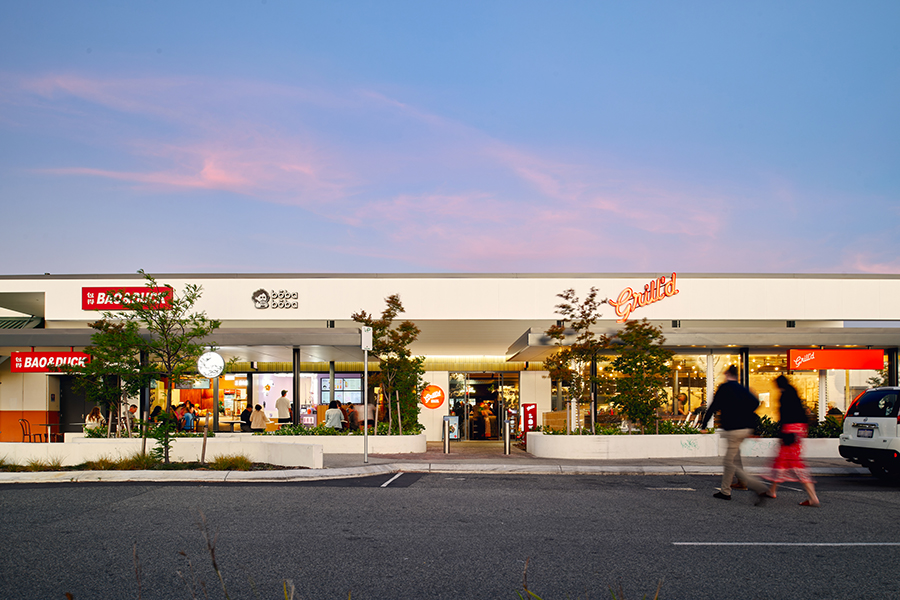
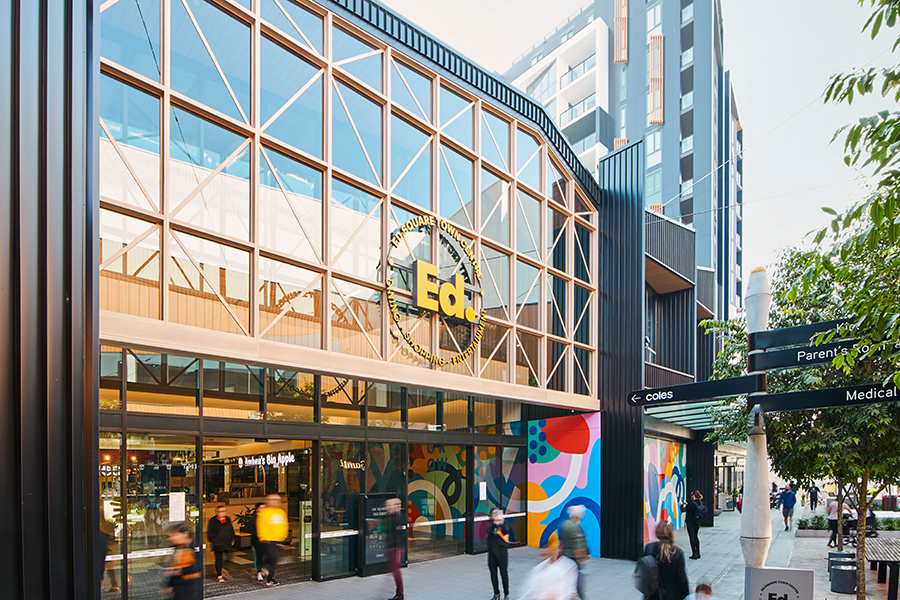
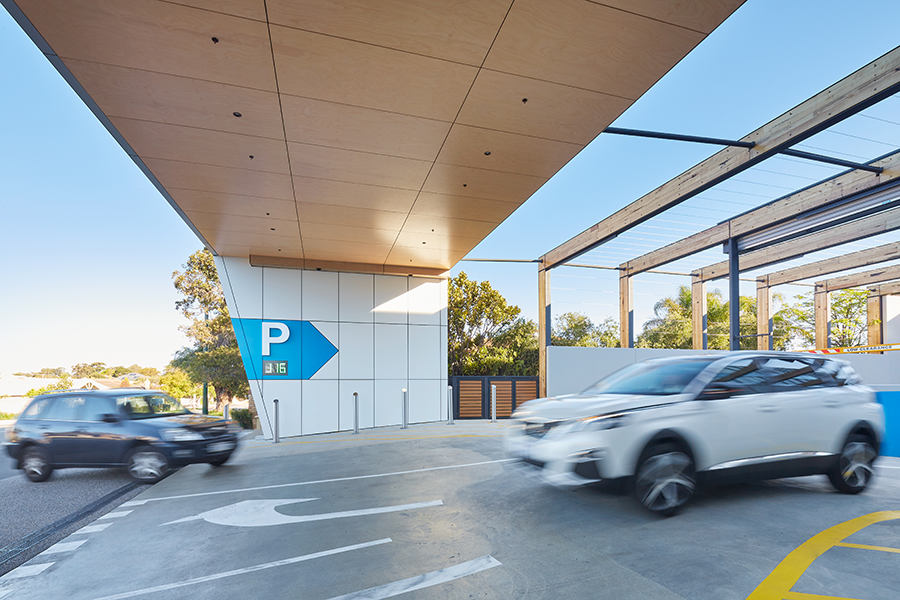
DL: The flow of distance and how people travel in your centre, between their cars and shops, is really important for the viability of retail. Many shoppers still want to be able to park their car and walk to the supermarket on the same level within 20 metres, and we’ve had pushback from tenants around parking not on the same level as the retail. This is harder to achieve in metro mixed-use developments, where there is more underground carparking, access points, pedestrian paths and undercover areas. Steps also present a barrier to accessibility, so that’s challenging, too.
Design can navigate some of these challenges: seamless pedestrian paths, undercover links, and clear signage to shorten perceived distances. This is about providing a diverse, active place that allows people to stay in the community they grew up in, to age in place in the familiar with their friends and family. It equally provides opportunity for people to move into the suburb and create new relationships. Well-executed mixed-use affords us to achieve the best of both worlds, adding value to the residents and the greater community.
Hames Sharley: Finally, what does it take to make these aspirational projects financially viable in today’s market, and where do you see the value in pushing boundaries?
DL: Construction costs are soaring, making stand-alone residential tough, but mixed-use unlocks uplift. We balance yield with curated elements like articulated façades and premium amenities, that justify the spend by accelerating apartment sales and securing strong leases. Retail must match the catchment’s scale for tenant success, while integrated titling streamlines the bottom line. It’s about viewing the project holistically: expenses on activation pay off in identity and longevity.
Success blends commercial rigour with authentic placemaking – studying catchments, fostering cross-disciplinary collaboration in architecture and development. Working with partners like yourselves has been instrumental; their expertise in navigating complexities has helped us steer mixed-use in bold new directions, connecting communities for the long haul. Here’s to more projects that don’t just stack up – they inspire.
- This conversation between Mason Harrison (Associate Director, Hames Sharley), Tim Boekhoorn (Associate Director, Hames Sharley) and Damian Long (Director, LOCUS Property), was first published in SCN magazine.




Add comment