re missing a large-scale destination centred on entertainment.
For The District Docklands, this represented both a gap in the market and a clear opportunity. During the past five years, that insight has guided its transformation from a predominantly retail-led centre into Victoria’s largest entertainment precinct.
At the same time, consumer spending patterns had evolved. Across age groups, we saw discretionary spending increasingly shift towards experiences. People were seeking destinations that offered entertainment, connection and memorable moments, not just places to shop. This trend, coupled with the ‘missing piece’ opportunity, became a key driver of The District Docklands’ repositioning strategy.
The entertainment opportunity
Today, The District Docklands, owned by AsheMorgan, is home to a deliberate curation of more than 20 entertainment experiences, with a further three venues to open in the coming months, including the iconic Melbourne Star, the Southern Hemisphere’s tallest observation wheel.
While entertainment was the focus of the repositioning, The District Docklands is a true mixed-use precinct, developed in stages comprising retail, food and beverage, commercial office, hotel and soon residential with District Living. Located within the city’s Free Tram Zone and on the doorstep of CityLink, the precinct’s connectivity has been a key enabler for activation and transformation.
From the outset, we made the conscious decision to lead with entertainment as the element that would truly differentiate The District. Around that foundation, we built complementary layers, including an enhanced food and beverage offering designed to extend dwell time, a convenience-focused Market Lane and retail mix that serves both residents and visitors, two hotels to support tourism, and new office and education uses that bring daily activity into the precinct.
A five-stage transformation
Together, these elements make up the five-stage approach that underpins the transformation strategy, evolving The District from a typical shopping centre into a destination designed for day and night visitation.
The numbers tell a positive story. The strength of the repositioning is now reflected in trade performance. The precinct draws from a trade area of 3.66 million people, which is about 66 per cent of metropolitan Melbourne, while also attracting a meaningful visitor economy, with 22 per cent of visitation coming from beyond the core trade area. This figure demonstrates the precinct’s ever-growing appeal to tourists and destination-led audiences.
Compounding this, average visitor spend has more than doubled since 2019. Market Lane has become a standout success story, with sales and foot traffic up and occupancy at its highest level to date.
Within our strategic framework, each of the five stages works like a structural backbone, playing a pivotal role in the ongoing and future success of the precinct.
Building an experience-led destination
Our approach to expanding the entertainment offering, Stage One, was deliberate and highly curated, grounded in thoughtful selection rather than scale alone. We set out to reimagine what entertainment integrated with retail could look like. Moving beyond the traditional cinema and bowling alley model synonymous with shopping centres, we first analysed the market to ensure a balanced mix of experiences spanning different age groups and interests.
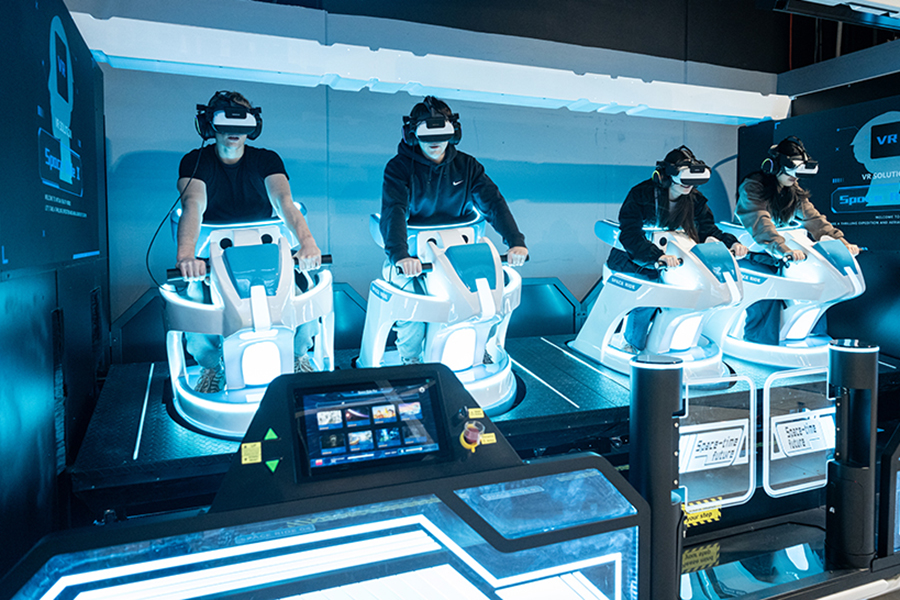
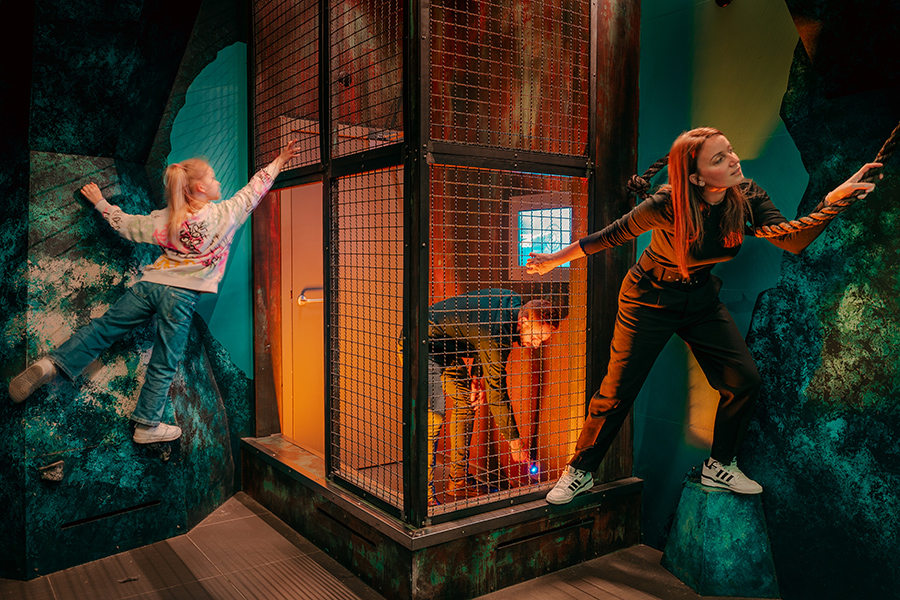
While Hoyts and Archie Brothers were an important part of The District’s existing entertainment mix, the result is a diversified selection of local and international brands – some first to market in Australia – that appeal to varying demographics, energy levels, and motivations for visitation. From high-adrenaline group play and active recreation with Prison Island, Dreamrace, and O’Brien Icehouse, through to immersive and content-rich formats such as ArtVo and exhibitions like the current Body Worlds. O’Brien Icehouse is a truly unique offering. It features two rinks: a stadium for ice hockey and other ice sports and a second rink for recreational skating.
For our retailers, this has had a significant impact on dwell time, with visitors planning half-day, full-day, or overnight trips to The District. In many cases, visitation is now driven by audiences travelling from outside the immediate catchment zone, including school groups, birthday parties and multi-generational family outings.
Another major drawcard is the reopening of Melbourne Star. With experienced operator Skyline Attractions at the helm, the iconic observation wheel is being reimagined to enhance the experience, with thoughtful, community-focused upgrades expected to further strengthen precinct performance and support continued growth in retail trade.
Stage Two focused on upgrading, expanding and reworking the food and beverage (F&B) offering by creating four distinct zones: sit-down restaurants, quick-service restaurants, grab-and-go options, and food production.
Across all four, F&B was positioned as an essential supporting layer to entertainment, designed to extend dwell time and shape the overall visitor experience. This approach has enabled a more dynamic and flexible offering, with operators such as Krabby’s Crab Boil, Bright Palace, Bonza Deli and Urban Alley Brewery providing choice that ranges from quick, casual bites through to full-service dining.
Strengthening everyday relevance
Stage Three, delivered over the past two years, evolved Market Lane from a purely fresh-food marketplace into a broader everyday convenience destination. The goal was to better serve the precinct’s daily community, comprising local residents, nearby workers, hotel guests, commuters, and visitors, by expanding its grocery and services offer. Home to Woolworths, Chemist Warehouse and Dan Murphy’s, the convenience hub supports the community in accessing its daily needs rather than fresh food alone. The results speak for themselves, with Market Lane’s occupancy sitting at 99 per cent.
More broadly, the closure of Costco in late 2024 has proved to be a clear catalyst for growth at Market Lane. Grocery spend that had been leaking out of the precinct has returned. The site’s transition to Sonic Healthcare will soon add a further 800-plus workers on site seven days a week, an injection of daily activity that will further underpin our convenience-led offer.
Further cementing The District as a true mixed-use precinct, Stage Four reworked the under-utilised first-floor space, previously retail, into a mix of education and office uses that bring daily activity and a returning customer base into the precinct. Docklands Primary School, endota wellness college – a national training college – and Melbourne College of Hair & Beauty comprise our growing education portfolio.
The commercial office offer has performed equally strongly, reaching full occupancy. We are now planning the next phase of office space – a clear signal that the precinct’s live-work-play proposition is resonating with the businesses choosing to base themselves here.
The final piece of the repositioning puzzle is under way and will remain a focus for the next 12 months. Having reset the entertainment, F&B, convenience and commercial components, we are now curating a retail mix built around the precinct as it is today – a true mixed-use destination.
The next chapter
As an area of Melbourne undergoing rapid urban renewal, residential development is a critical component of the suburb’s evolution. We’ve identified accommodation as a core growth driver, with the precinct actively expanding its hotel and residential pipeline. Nesuto Docklands Apartment Hotel and Melbourne Marriott Hotel Docklands at The District play key roles in supporting visitation and the broader tourism economy.
This is complemented by District Living, where AsheMorgan is delivering more than 900 apartments, currently under construction. With additional residential projects from developers such as Gurner continuing to expand the surrounding catchment, the precinct’s resident base is set to grow significantly.
Our retail strategy is already translating into leasing momentum. By actively targeting family-oriented brands across key retail categories, we have leased more than 16,000sqm across the precinct in the past two years.
Reflecting on the numbers, we are seeing positive signs that the repositioning strategy is working. What makes this progress more significant is the backdrop against which it was delivered, having unfolded through a sustained run of disruption, testing the resilience of the precinct.
Covid-19 sent Melbourne into one of the most severe global lockdowns, stalling momentum at a critical point. Extensive nearby roadworks restricted access from a key catchment zone for more than two years, and a slow return to offices kept nearby office occupancy at low levels.
Despite encountering those challenges, we persisted and moved the strategy forward – leasing space, opening venues and building visitation. The District has consistently punched above its weight, and it now enters its next phase with those headwinds behind it and genuine momentum ahead.
Our goal was to create something truly unique that resonated with our broad customer base. The District is built to stay in motion. We’ve already seen real uplift in community, occupancy and culture, and with new concepts, further densification and growing tourism still to come, this is a precinct that keeps evolving to meet the needs of our community and benefit tenants.
This article by Jonathan Codman, Precinct Director at The District Docklands features in the latest issue of SCN magazine.







Add comment