

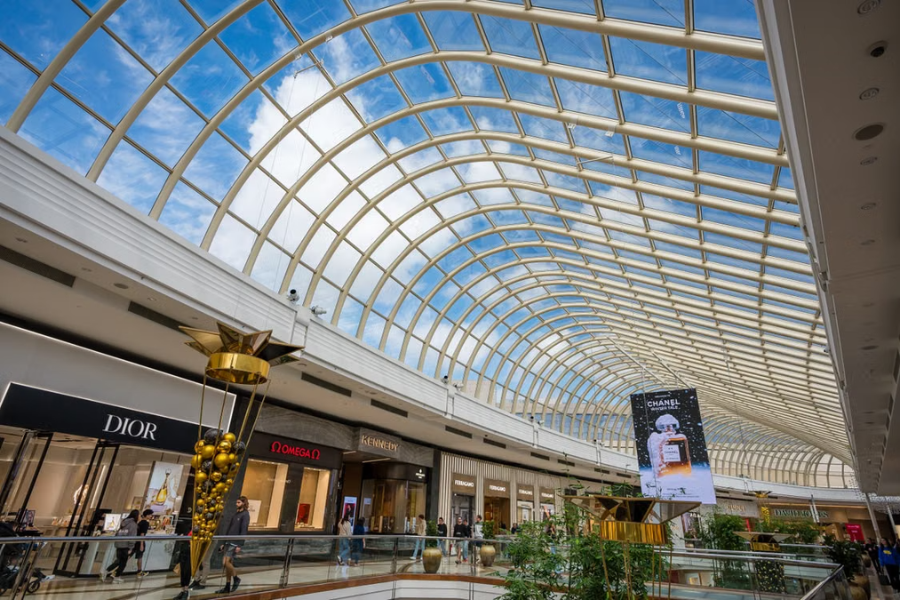

Limited new supply, high occupancy and rental growth are supporting investment in Australia’s regional shopping centre sector, according to JLL’s October Australian Regional Shopping Centre Report.
The sector is entering a new phase following a valuation adjustment cycle between 2020 and 2023. Population growth and household spending continue to support retail demand, while construction costs and land availability are limiting new development. JLL forecasts that annual completions to 2030 will be 68 per cent below the 10-year average.
With supply constrained, occupancy across existing centres reached 98.7 per cent in June this year, above the 10-year average. The low vacancy rate is supporting landlords’ pricing power and rental growth, with A-REIT data showing positive re-leasing spreads for five consecutive financial years. Domestic and international retailers are also continuing to invest in physical stores and in-store experiences as part of their omnichannel strategies.
These market conditions are also reflected in investment activity. Last year, retail property transactions in Australia reached $13.5 billion, up 56 per cent year on year. Regional shopping centres accounted for $5.4 billion across 10 major transactions. Yields for quality centres have settled between 5.5 and 6 per cent following the sector’s valuation adjustment.
The investor base is expanding beyond listed REITs and wholesale funds to include private groups, investment partnerships and superannuation funds. Since 2020, these new investor groups have acquired about $10 billion in assets, representing 57 per cent of the sector’s transaction value.
Private groups and investment partnerships began entering the market in 2021. These include Haben, Fawkner, Hines, Sentinel, JY Group, MA Financial and Assembly Funds Management. Since April last year, superannuation funds CBUS, ART and CSC have also expanded their direct investment in the sector, acquiring regional assets worth about $3.9 billion.
The broader investor base has increased competition for assets. In November last year, Fawkner acquired Erina Fair for $895 million, marking the largest sale of a 100 per cent interest in a regional shopping centre in Australian history.
JLL forecasts that Australia’s population will reach 29.3 million by 2030. Population growth and household spending are expected to support retail demand, while limited supply and low vacancy are expected to sustain occupancy and rental growth.
“What hasn’t changed is what these centres are: a cornerstone of everyday life and fortresses of investment,” Sam Hatcher, head of retail investments for Australia and New Zealand, and Nick Willis, executive director of retail investment at JLL, said.

Add comment