

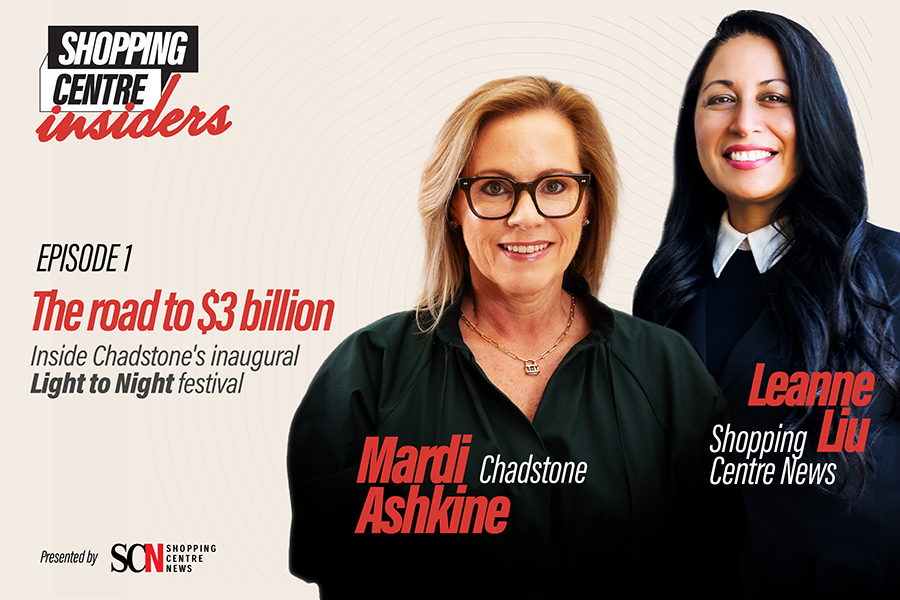

In the pursuit of a $3 billion year, Chadstone has made the bold move to replace the traditional mid-year sales event with an arts and culture centrepiece.
The destination has evolved well beyond its reputation as a fashion precinct. With a hotel, commercial office towers, The Market Pavilion and an expanding night-time economy, the challenge facing the marketing team wasn’t simply driving transactions – it was encouraging customers to experience Chadstone as an integrated lifestyle destination.
That shift in thinking became the catalyst for Light to Night, a four-week winter festival combining art, food, music and wellness programming. More than replacing an annual sales event, the initiative represented a deliberate move towards destination placemaking, designed to achieve multiple commercial objectives through a single campaign.
“We made a really conscious shift away from discount-led campaigns some time ago,” says Chadstone Head of Brand and Marketing, Mardi Ashkine.
“Discounting alone isn’t a compelling enough reason to visit a destination like Chadstone. That’s certainly not our role in the market. Our role is to create reasons to visit.
“Creating experiences that are entertaining, relevant and worth sharing. That’s what drives visitation and spend in a more sustainable way.”
Solving more than one challenge
Rather than designing a campaign around end-of-financial-year retailing, the marketing team identified three strategic priorities.
The first was repositioning Chadstone from its long-held identity as “The Fashion Capital” to a broader lifestyle destination. The second was reinforcing The Market Pavilion as a premium food destination and winning back everyday grocery shoppers. The third was accelerating the centre’s evening economy while creating stronger relevance with younger audiences at Social Quarter.
“A traditional campaign just wouldn’t unlock and deliver on all of those objectives,” Ashkine says.
“We needed something bigger, more layered, and something that had cultural resonance.”
The result was Light to Night – a month-long festival featuring 14 events spanning immersive art, chef-led dining experiences, live music, wellness programming and family activities.
The festival’s hero attraction is HOME, an immersive installation by renowned Melbourne artist RONE, who recreated a 1950s Australian weatherboard house inside a vacant retail tenancy. Elsewhere, the luxury precinct features Through the Looking Glass, a large-scale light installation by Dean Norton and Studio John Fish, while Melbourne Food & Wine Festival partnered with Chadstone to present the World’s Longest Dinner for 400 guests beneath the centre’s iconic gridshell roof.
Alongside these experiences, the program includes intimate dinners with leading chefs, concerts, run clubs, yoga sessions, family workshops and a series of events designed specifically to attract Gen Z audiences.
Five campaigns in one
While the public saw a festival, Ashkine says the marketing team saw something far more ambitious. “We rolled five campaigns into one,” she says.
Initially, it was Ashkine herself who needed convincing.
“When Lisa Sacluna, our Senior Marketing Manager, brought this concept to me, I was a little bit nervous because ultimately we had rolled five campaigns into one. There was a lot to consider.
“But with that – high risk, high reward – and it has paid off.”
Although the concept quickly secured executive support, delivering it required collaboration well beyond the marketing department.
“This was our most ambitious campaign to date – bigger than Black Friday and Christmas, really,” Ashkine says.
“A lot of it we delivered ourselves. We negotiated those partnerships ourselves, made contact with the artists ourselves and conceptualised the whole campaign.
“But it takes a whole centre management team to put on something like this. Operations, guest services, retail – everyone had a role to play.”
That whole-of-business approach extended to structural engineering, compliance approvals, ticketing systems, partnership negotiations and customer operations – illustrating how destination marketing increasingly intersects with asset management and placemaking.
The early results
Just halfway through the campaign, the results suggested the strategy was delivering well beyond event attendance.
Seven of the festival’s 10 ticketed experiences sold out, while bookings for RONE’s HOME exhibition exceeded 36,000.
More significantly, customer research indicated the festival was attracting entirely new visitation.
“Forty-three per cent of people told us they wouldn’t have come if it weren’t for Light to Night,” Ashkine says.
“On average, they’ve spent $260 while they were here.”
The campaign also generated a 52 per cent increase in average dwell time during June, while attracting audiences from well beyond Chadstone’s traditional catchment.
Twenty-five per cent of guests attending the World’s Longest Dinner travelled from more than 15 kilometres away.
Perhaps most encouraging was the diversity of audiences engaging with different elements of the program.
The RONE exhibition resonated strongly with Gen X and Baby Boomers, while several hundred Gen Z visitors attended Chadstone’s first laneway-style concert. Wellness events – including run clubs and yoga sessions – also exceeded expectations, demonstrating demand for experiences extending well beyond retail.
“The program was designed so there would be something for everyone,” Ashkine says.
“What surprised me was just how well it resonated across those different audiences.”
A changing role for shopping centre marketing
For Ashkine, the success of Light to Night reflects a broader evolution in how shopping centres should think about marketing.
Rather than beginning with retailers or campaigns, she argues that the customer should remain the starting point for every decision.
“We always start with the customer – understanding how they live, what they value and how they want to spend their time,” she says.
“Naturally from that evolves product, place and programming.”
The lesson for the wider industry, she believes, is equally clear.
“These are not just marketing events,” Ashkine says. “To deliver something at this scale requires a whole-of-centre management approach.”
As shopping centres continue evolving into mixed-use destinations, campaigns like Light to Night suggest marketing’s role is also changing – from promoting retail offers to creating cultural moments capable of driving visitation, strengthening brand positioning and generating commercial outcomes across an entire precinct.
Light to Night concluded on 12 July, but to look back on all the events that formed part of this program, visit Chadstone’s Instagram: https://www.instagram.com/

Add comment