


As retail destinations compete on more than convenience, Magdalena Uscinowicz explores why brand identity and curated art are becoming as important as tenancy mix in creating places people choose to visit.
Retail development is no longer just about anchors, convenience or tenancy mix. In a market where the same brands appear everywhere, what sets a centre apart is what it stands for. For developers and asset owners, a clear brand and curated artwork aren’t aesthetic choices, they’re commercial strategy – driving foot traffic, leasing demand and long-term value.
A strong brand is becoming just as critical to a retail centre’s success as its leasing mix.
The continued trend of embracing diversity, choice of experience, and conversation within the retail experience has been encouraged and For developers and asset owners, the implications are commercial as much as creative. A clearly articulated brand can influence everything from leasing demand to catchment, while curated art can transform a retail precinct into a destination people actively seek out. The challenge – and opportunity – lies in moving beyond decoration to something more meaningful using strong brand identity and thoughtfully curated artwork. Together, they shape not just the look of a place, but its personality, positioning and ability to connect with its audience – and make it want to return. In an increasingly competitive and homogenised market, a strong narrative wins.
Retail development has undergone a quiet but profound shift. Where once success was driven primarily by anchor tenants, convenience and tenancy mix, today it increasingly hinges on something less tangible but more powerful – identity. In a landscape where consumers can access the same brands, products and services across multiple centres or online, the differentiator is no longer just what a centre offers, but what it stands for.
For developers, this reframes the design process. Delivering a retail development is no longer just about the architecture, it’s about creating a place people recognise, remember and return to. Identity, in this sense, becomes a commercial strategy – a lever for foot traffic, leasing demand and long-term asset value.
Identity as an experience
Brand identity in retail environments is often misunderstood as a purely visual exercise, with logos, colour palettes and signage. But its true impact is much deeper, shaping how people feel, behave and ultimately spend within a space.
“Brand identity has the power to connect with the senses, building core memories and connection beyond the logo and visual application of a brand,” Dan Coman, branded environments lead at i2C Architects said.
“As humans, around 95 per cent of our purchase decision-making happens in the subconscious mind. This means our minds are picking up and forming sensory connections and memories while the static logo or clever marketing line are absent from view. Scent, sound, touch and feel, the ‘vibe’ of a place, all contribute to the wider brand identity and if we harness these in the right way, they can go a long way in building on a positive brand experience.”
For asset owners, this translates directly to performance. A study by Path Intelligence found a significant and positive relationship between dwell time and sales, with a 1 per cent increase in dwell time resulting in a 1.3 per cent increase in sales. In this context, the feel of a place is not abstract, it’s measurable.
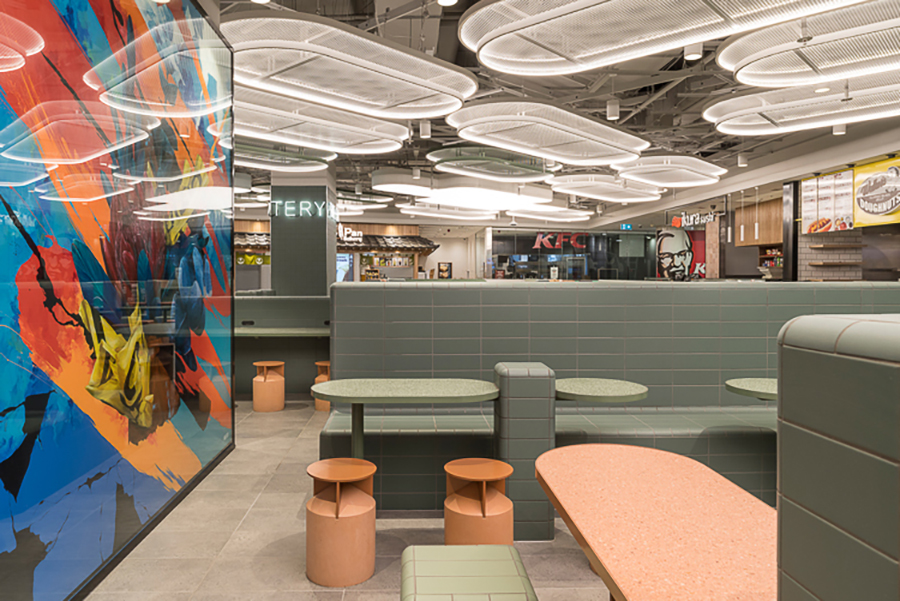
At i2C Architects, our approach focuses on integrating brand identity, interior design, and architecture in parallel, bringing artists and collaborators into the process early on to maximise impact. In our experience, environments designed holistically consistently drive stronger engagement, longer dwell times and more repeat visits.
Art as a commercial lever
Curated artwork plays a critical role in this broader identity framework, but only when it’s approached strategically. Too often, it’s treated as a late-stage embellishment, such as a sculpture in the town square or a mural applied to fill a blank wall. This makes its impact limited and, worse, risks being perceived as tokenistic. When embedded from the outset, curated art can be a powerful commercial tool, one that can influence perception, extend dwell time and create a destination beyond retail.
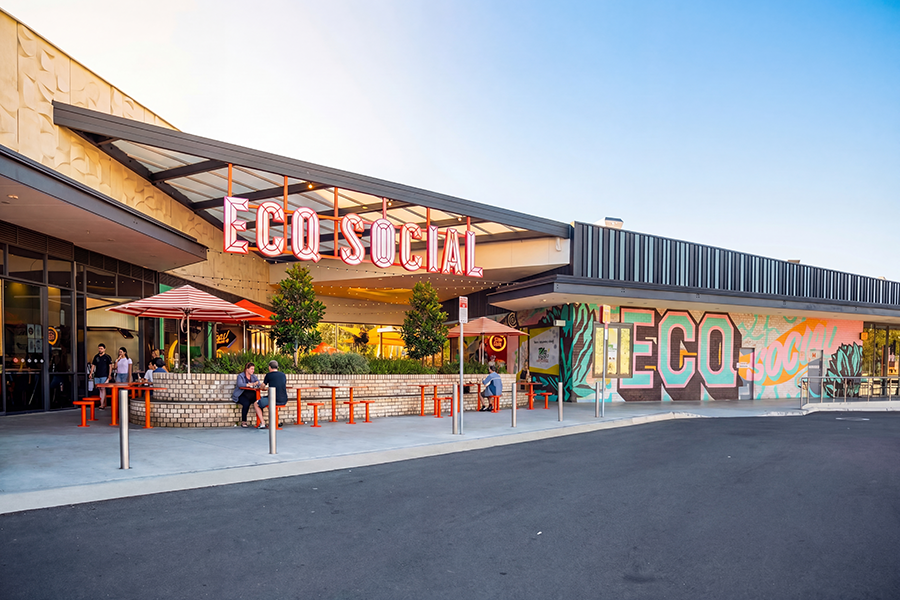
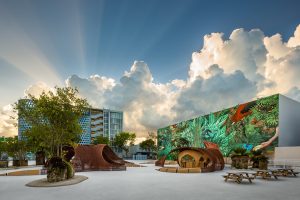
At Eastern Creek Quarter, the approach to the design of the ECQ Social precinct used branding and art in tandem to establish a strong sense of place. Large-scale murals by artist El Oso Negro (The Black Bear), combined with the ECQ Social identity, positioned the precinct as a vibrant, community-focused destination. The artwork wasn’t just decorative, it signalled energy, inclusivity and social connection, directly supporting the precinct’s role as a gathering place.
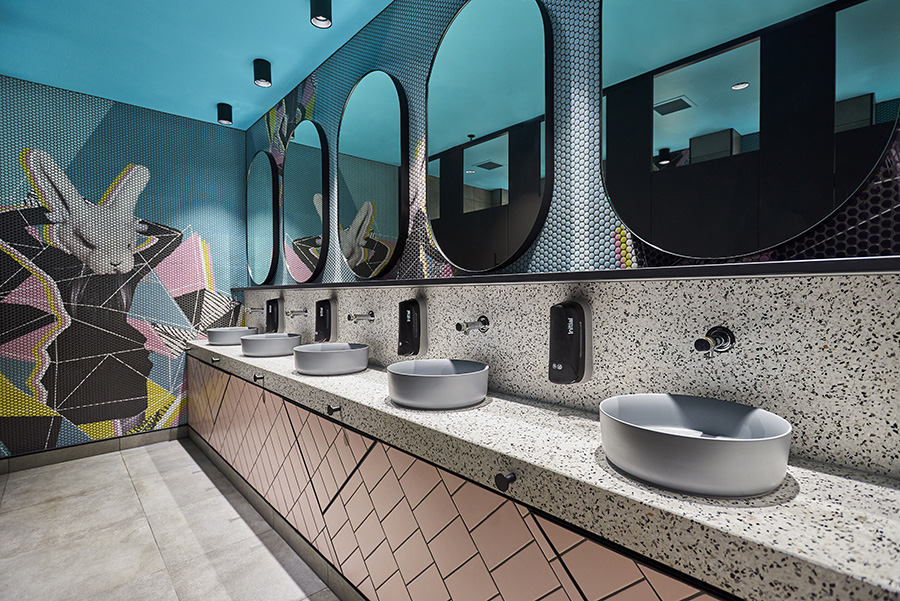
On a much smaller scale at Melbourne Central, our approach to the amenities design showed that even secondary spaces can contribute to a retail development’s identity. The colourful and quirky aesthetic, supported by bold graphic artwork transformed a back-of-house space into a memorable brand moment, reinforcing the centre’s personality.
Developments that incorporate strong branding, and commission artists to tell local stories or create interactive installations resonate more deeply with their communities. They become places people talk about, photograph and share, extending their reach far beyond their physical footprint. These environments shift from being transactional spaces to experiential destinations and prove that art and identity are no longer add-ons, they are part of the core value proposition.
Reshaping perception and repositioning assets
One of the most powerful roles of strong branding and curated artwork is their ability to shift perception.
Retail centres, especially those undergoing repositioning or redevelopment, often carry legacy perceptions that can be difficult to change through leasing alone. Branding and artwork offer a pathway that can signal transformation quickly and visibly, reframing how a place is perceived.
Well-considered branding and art curation can reposition a centre from purely functional to cultural or lifestyle-oriented, embed local relevance through community storytelling, signal value and offering through artist selection, and create memorable landmarks that anchor wayfinding.
In competitive catchments where tenancy mixes are often comparable, these factors can make a huge impact on foot traffic.
A more integrated approach
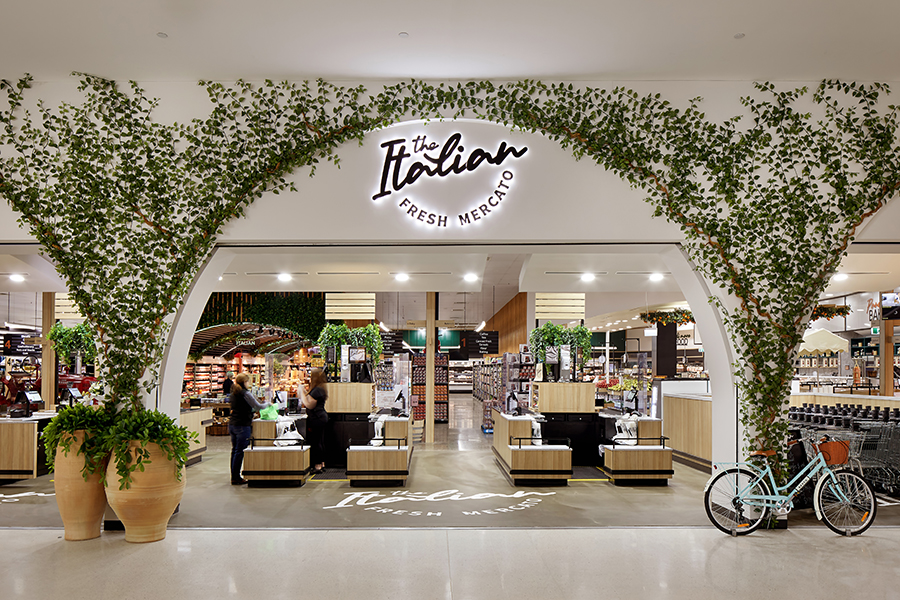
Curated artwork enhances a space when it contributes to a genuine sense of place and aligns with brand, audience and context.
“A curated piece of artwork or collection of art can contribute to the overall identity of a retail development by anchoring the brand in place through the use of local artists. This approach embeds the development within the community and signals to customers that it belongs there,” Coman remarked.
“Another benefit to curating the artwork to align with the brand is the positioning of the brand in relation to value and offering. The choice of artist and artwork can cue customers to the type of retail offer or experience they can expect, such as an economic, convenience-based offering or a luxury, high-end retail experience. There are many ways art curation can expand the brand beyond the logo. The stories we tell through brand, marketing and customer experience can be reinforced by clever art curation to build on memorability and emotional connection. Having diversity within the art curation that evolves over time allows for more opportunities to engage and re-engage customers and provide another reason to return.”
This idea of evolution is critical. Dynamic, changing environments give customers a reason to return, extending engagement beyond a single visit.
Ultimately, what a retail development stands for is becoming just as important as what it sells. The most successful retail developments are those where identity is embedded from the outset – where architecture, interior design, brand and art are not layered independently but developed as a unified strategy.
Brand identity and curated art are no longer optional extras, they are pivotal to how a retail asset competes. The centres that succeed will not simply be the most convenient or best leased, but the most distinctive, memorable and actively chosen by their customers.
- This article by Magdalena Uscinowicz, National Interior Design Manager at i2C Architects was first published in SCN magazine – CBD Guns edition.


Add comment