


Great shopping centres start with great design. But how can design help retailers as well as the broader industry stand out in a competitive environment, plus provide a return on investment?

As part of our new series of Curious Conversations, we invited retail industry expert Daryl Stubbings, to moderate a discussion with retail veteran Gary Horwitz, CEO of the Future of Retail Group, his insights on the value of design and the strength of the hyper-local phenomenon.
Daryl: You were one of the first retailers in Australia to combine concepts across categories on a large scale. What’s your take on the value of design in a retail environment and where did your insights come from?
Gary: I learned retail, homewares and food from the ground up, having had a love for food and a love for people. My first job was as a manager of a diner, then we purchased a delicatessen, and then opened six more Swiss Delis, and after that we built a chain of about 30 Bayswiss lifestyle stores. It was interesting to me that you could come in, smell that waft of coffee, see an amazing chair or sofa and wonder if you could buy both. I realised that we were offering people a taste of what it’s like to buy or try something in store, for the first time.
Then, when I joined Lendlease initially as a consultant and eventually moved into the role of Head of Retail Asset Management and Retail Development, I applied my retail hat to conceptualise space and mix working with the best design teams to create the best-looking retail stores and highly activated places to attract the most traffic. I understood the value of creating a concept in demand by consumers, what that did for shopping centres and how the visual aspect of the design curated in those retail stores somehow paid more dividends.

Daryl: How does design help to differentiate retail, and how do retailers achieve this in a competitive environment?
Gary: Retail success is all about foot traffic. There’s nothing better than seeing people sitting, walking, shopping, enjoying and thriving in spaces, because you are creating happiness for people who want to spend time with you. It’s the same for retailers. People go to shopping centres because they’re social, they feel secure, and it brings a smile to their faces that makes them feel special. I suppose that is ultimately what success in retail is all about — a happy customer.
To attract the footfall and the increased rent, it gets back to 100% commerciality. You must get the right design behind your retail centre. If you have a render from a good architectural firm, you’ll immediately get the interest of the retailer. It starts with conceptualising the ground plane in my head, or physically by walking the space to feel the distances between the proposed built form. Then, layering at ground level by bringing in awnings, incredible shop fronts, bar fronts and street fronts, benches and contemporary lighting, among many others. How you marry those different factors together creates the ultimate successful outcome. Creating great places is done with a methodical approach. You start with research, you plan and design the appropriate spaces for the demographic and ensure you capture the spend available, maximising the opportunity.
Daryl: Good design achieves activation through the human scale of things. How can design create a sense of place that translates into value for developers, and how can this work when faced with tight development margins?
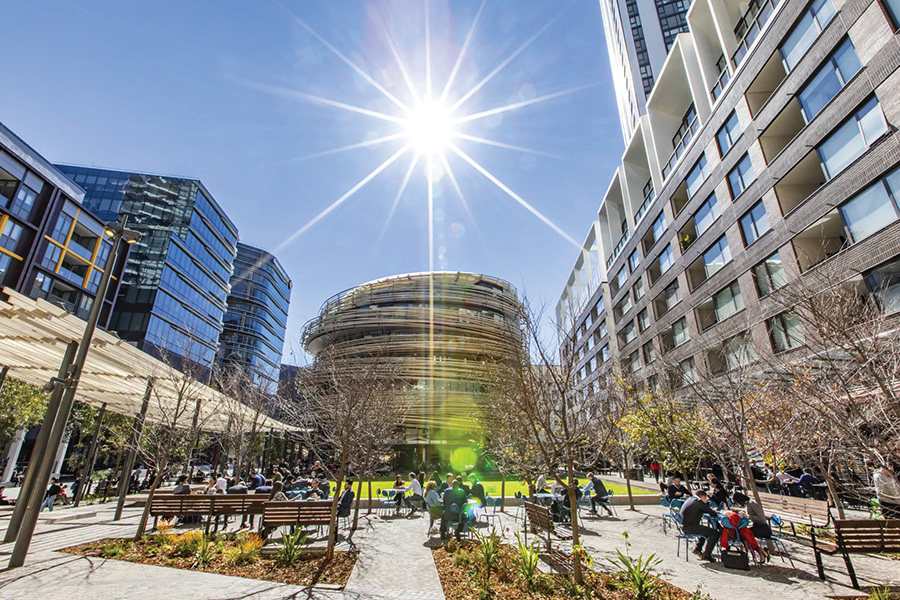
Gary: Two of the things I adore are public markets and mixed-use projects. You can learn a lot from how people interface with retail and how retailers put great presentations together to lure shoppers into spending more. For example, Aker Brygge in Oslo, Norway, is incredible. The development there continues to expand with great new museums, new retailers and new public spaces, enabling customers to touch the water or to sit next to it, and when winter starts, out come the heaters and blankets. In Sydney, Darling Square is another long-standing example. Set in a park, it’s anchored by a multi-million-dollar kids play area, which has attracted high-quality retail, customers – and parents into the precinct.
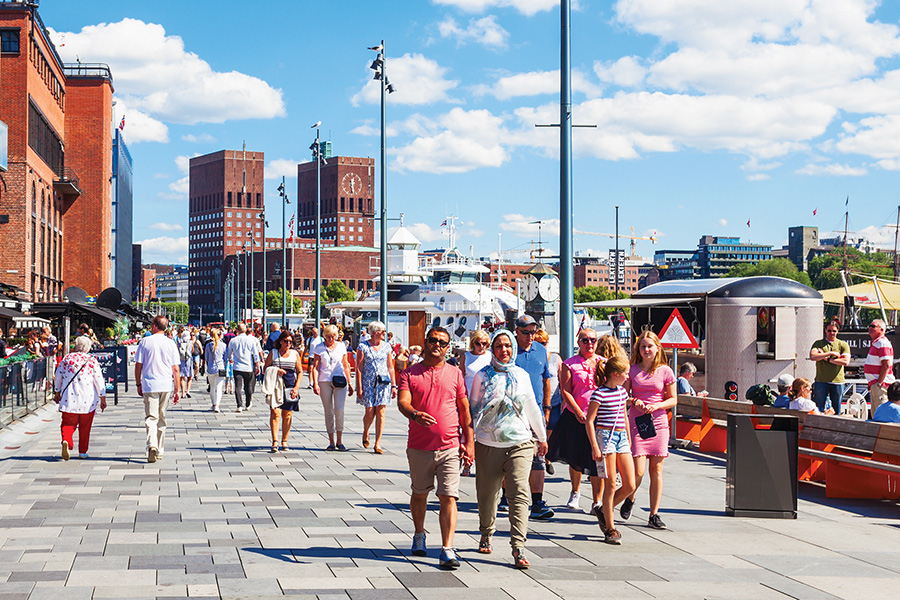
Good design does two things. It will design cost efficiency, and it’ll also create a sense of place, which is the public interface between the public place and the retail space. This interface is essential because if you don’t spend the money on design and you don’t drive that relationship between public and retail effectively, your development is not going to be successful. You need to ensure that you’re spending the right money with the right team to give you the result that you set out to achieve.
Daryl: What about opportunities for our smallest retail centres? As a broad industry, what do we need to understand better to be better equipped for the future?
Gary: I think we’ve got to reset some rents with some of our uses and locations. Ultimately, great design delivers the best retail stores and experiences, but some of our retail has been pushed out the door because rents are being pushed too hard. I think that landlords, developers and mixed-use developers need to come to grips with this, otherwise there’ll be industries that could disappear forever. For example, I think fresh food is priced out of the market and the supermarkets have become too strong. They’re all buying the same products, but the small retailers can’t afford it — and the fresh food retailer is at the heart of everything that we do, and that’s where everything starts.
In response, we need to bring back fresh food to every village, in every shopping centre. Retailers and specialists are disappearing from the market, so if there’s one thing we need to consider, it’s restarting and re-energising this.
For example, one of the world’s best chefs, René Redzepi from Noma launched a hugely successful 10-week pop-up at the Barangaroo precinct in 2015, energising the area and opportunity. When you see some of the best villages in Europe, or in the US, you go into some of the fresh food markets, and that’s where life starts.
They’ve been looked after with low rent, and they’re still alive. Let’s bring more of this back to how it used to be.

Daryl: What does the future look like? How can we be better equipped, and will we see the hyper-local phenomenon continue?
Gary: The future will be design-driven, and it’ll be supported by AI. There is no question now that, as an industry, we can spend more time on the touchy-feely, textural elements and worry less about planning, structure and getting information, because we can source that from AI. We know we can throw a concept, idea or question into ChatGPT and it’ll return with a solution. But ChatGPT will never build a space for you. And it will never, ultimately, design the textures needed to meet the market, design for weather conditions or for the best retailers that you know. Having said that, AI is going to be a big part of the way we go forward, with our ability to use the best of everything at our disposal.
I think retail is still going to continue to grow and the hyper-local phenomenon is fantastic. Mixed-use will remain a big part of our lives for decades to come and, importantly, the revival and the renaissance of our local shops will stay. When you get that balance of the best retailers in the business, or the best hospitality providers or the best health and wellness operators together with the right investment, this is the key to success and more sustainable communities.
This article from Hames Sharley is published in the latest issue of SCN magazine.


Add comment