




Landmark transaction
The year 2025 was obviously a monumental one for the IP Generation business, with its integration into the MA Financial platform. It was the culmination of a long period of due diligence on the part of both businesses, and while it marked a material step-change from IP Generation’s boutique roots, what pleased me most was that it represented a major ‘meeting of the minds’ in terms of how we think about our investors, views on the real-estate sector, and our approach to investment.
To touch briefly on the history of the IP Generation business: It started initially as a club of friends and family focused on opportunistic and small-scale real estate investments, but quickly grew into a fully fledged real-estate funds management platform. This growth was entirely due to what we believed to be a once-in-a-generation cycle to acquire exceptional retail real-estate assets with genuinely asymmetric return profiles. We had enormous conviction in our investment thesis and, pleasingly, our growing investor base also shared our views and remained supportive. I believe we capitalised very well on what was somewhat of a ‘perfect storm’ of factors affecting the whole retail sector, including the perception of online retail risks and the unprecedented flow-on impacts of the Covid-19 pandemic. This was set against a backdrop of very limited market liquidity, coinciding with major redemption windows for wholesale pooled funds, while some large retail landlords were also seeking to recycle smaller assets to re-invest in larger experiential offerings.
The size of the opportunity and the growth of the portfolio dictated that we grow quickly and structure our team accordingly – with in-house retail leasing, asset management, development and funds management and we were fortunate to have been able to attract exceptional talent despite our humble roots. We acquired nearly $3.0 billion in assets over a five-year period, whilst also realising sales of nearly $500 million.
Increased opportunity set
Our conviction in the retail sector has not diminished over the intervening period, but the opportunity set has undoubtedly narrowed with increased competition and capital markets’ renewed focus on the retail sector. As institutional and private capital has renewed its focus on the neighbourhood and convenience-based sub-regional assets, we have been net sellers in these sectors over the past 18 months – and this has allowed us to return capital to investors and outperform our investment targets.
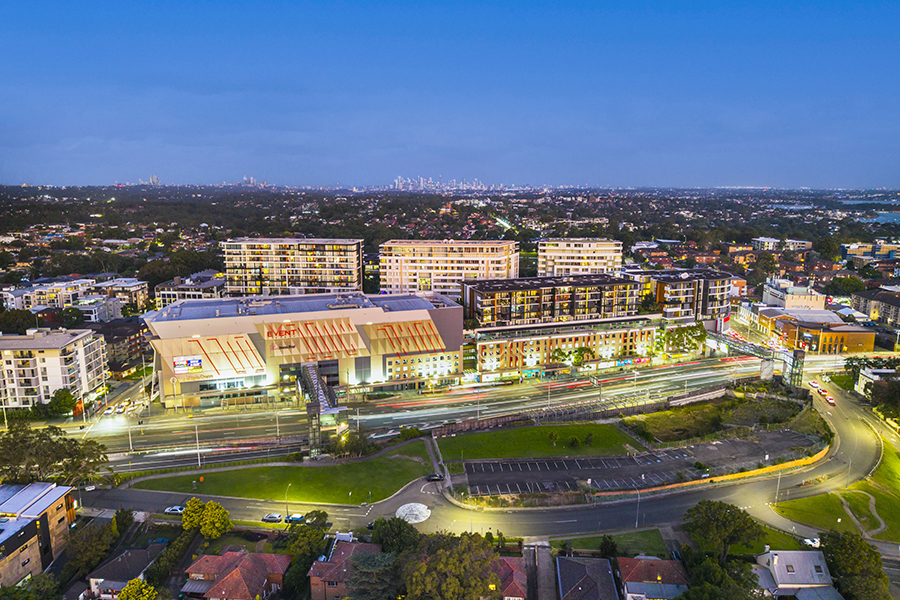
We have seen exceptional value at the larger end of the market – an area in which there is still a limited pool of buyers. Our ability to access these value opportunities has historically been limited by the scale of capital required to unlock such large investments. The timing of our integration into the MA Financial platform, moving from a team of about 30 to a business of over 900 professionals across locations in Australia, China, Hong Kong, New Zealand, the Philippines, Singapore and the US has obviously been fortuitous. It allowed the newly combined business to originate and acquire two landmark retail assets immediately, in Top Ryde City and Logan Hyperdome – collectively valued at more than $1.2 billion. These acquisitions and our capital partnerships are milestones of which we are incredibly proud, underlining the strength of MA Financial’s fully integrated real-estate platform across investment, distribution and operating capabilities.
Market and industry outlook
We anticipate a significant volume of attractive retail assets will come to the market this year. In line with the shift observed in 2025, the majority of these opportunities are likely to be marketed through competitive sales processes. In a strategy that has underpinned the growth across the MA Financial/IPG retail portfolio, we expect to see further opportunity in targeting large wholesale unlisted funds – which must realise assets this year to meet large redemption requests – in addition to the wind up of the Lendlease APPF Retail Fund. As capital markets continue to open up, we also anticipate opportunities in the non-core holdings of the major listed REITs.
As major institutions withdraw from wholesale pooled funds and seek exposure to the sector via direct-management mandates or joint ventures, we expect to further bolster our institutional investor relationships as these groups seek partnerships with fully integrated retail specialists, rather than diversified managers with outsourced management structures.
As a business, MA Financial invests across a broad set of real-estate sectors in addition to the traditional sectors of office, retail and industrial. This includes pubs, accommodation hotels, marinas and specialist disability accommodation across the capital stack. In the Core Real Estate team, our mandate is to focus on the traditional sectors. At present, we see the best-value asset sector remains retail, due to the relative yield spread, retailer productivity and low leasing capital impost. We remain cautious about the office market, given the elevated vacancy rates across all major markets and the diminishing relevance of non-premium stock. However, the countercyclical nature of investing in this sector remains compelling enough for us to continue to actively screen opportunities where presented.
We expect the long-term fundamentals for the industrial and logistics sector will continue to support positive returns; however, this remains a crowded market for institutional investors. With limited appetite for undertaking development activity, we expect this will remain a difficult sector in which to acquire well and deliver attractive risk/return outcomes over the shorter time horizons our investor base typically targets.
Property and portfolio management priorities
As was the case in 2025, the outlook for 2026 suggests that Australia’s commercial property market will not move in unison, but will continue to be fragmented by sector, market and asset quality. Inflation and interest rates are also back in focus, albeit we expect their impact to be less pronounced than in prior years. Like mostof our peers, we employ leverage at the property level, and a rising interest rate environment is obviously less favourable for leveraged returns and income yields. As such, we maintain a cautious and prudent approach to leverage.
With elevated hedging costs, we are also likely to see a reduction in vanilla hedging techniques employed to manage interest-rate risk. The majority of our funds have favourable hedging in place, but maturities of the hedging and level of hedging will be monitored closely. Notably, the interest-rate increases are coming at a time of declining yields, meaning the spread between asset yields and the cost of debt will continue to narrow. In this environment, we expect that more transaction activity will be driven by institutional mandates, rather than by private high-net-worth syndicates where distribution yields are paramount.
In the case of Top Ryde, we partnered with Keppel REIT, a Singapore Exchange (SGX)-listed real estate investment trust and one of Asia’s leading REITs, in a joint venture marking its first foray into the retail real- estate market. This marked a significant endorsement of MA Financial’s fully integrated real estate management platform.
Looking ahead
Our DNA has always been about unique deal origination and delivering liquidity and strong performance for our investors. We now have a fully integrated platform that is well positioned for growth in the portfolio, but we are not a FUM-focused manager. We will remain discerning with respect to new opportunities and always maintain our discipline in realising returns for existing funds where we feel it is in the best interests of the unit holder. I’d like to think we will have originated some truly unique and mispriced opportunities, but, equally, I’d like to take advantage of current market dynamics to deliver returns and recycle capital out of successful existing investments. Property markets are cyclical, so we will always be active in monitoring trends and ensuring we are never idle asset accumulators.
- This article by by Chris Lock, Head of Core Real Estate, MA Financial, was first published in SCN magazine – Big Guns 2026 edition





Add comment