From commercial and industrial property to some of Australia’s most complex mixed-use precincts, John Fairbairn has built a career across a diverse range of asset classes. Now, as Head of Asset Management at Gazcorp, he discusses the importance of staying close to customers, retailers and communities, the growing opportunity in outlet retail, and why curiosity is one of the most valuable qualities an asset manager can bring to the role. Shopping Centre News (SCN): How did you get started in re
tail property, and how has your career evolved?
John Fairbairn (JF): I studied property economics and got my start at Colliers, initially working across property management and commercial leasing in Parramatta. From there, I moved through commercial and industrial properties with Brookfield, eventually managing the World Square commercial precinct, and that opened the door to taking on the World Square retail precinct. That was my retail baptism by fire because it was an incredibly busy, complex CBD asset, but I really enjoyed the fast pace and the customer side of the business. Since then, I’ve worked across mixed-use assets at Mirvac, office at Charter Hall, and now a genuinely varied retail, industrial, commercial and residential portfolio at Gazcorp.
SCN: What types of assets do you currently manage and what are your key priorities?
JF: I have exposure to a wide variety of asset classes, which was one of the things that attracted me to the role.
Sydney Outlet Village is obviously a major focus, particularly continuing its stabilisation after phase two opening in November last year and building momentum across sales, customer experience, catchment growth and the overall brand offer, but there is also the evolution of Gazcorp’s industrial holdings, great opportunities with existing LFR and future mixed-use developments.
SCN: What projects, initiatives or achievements have been the most rewarding throughout your career?
JF: Earlier in my career, there were major commercial projects such as restacking 680 George Street after EY moving to 200 George Street and onboarding new assets in the King Street Wharf precinct after development. There have been some big transactions and leasing outcomes, but the projects I find most rewarding tend to be the ones where you can see a place change and people start using it differently. South Eveleigh is a good example because there was a very clear vision for the precinct and it was satisfying to see that come to life, whether that was opening new spaces, bringing people back after lockdowns, or securing government funding for activation programs that helped build visitation and community acceptance.
Sydney Outlet Village
SCN: What do you enjoy most about asset management, and what continues to motivate you?
JF: I like that asset management never really stands still, every day there is something different to work through and the assets themselves continue to evolve with the market. Retail is changing, industrial demand is being reshaped by e-commerce and logistics needs, customer expectations are shifting, and precincts now have to work much harder across different times of the day. So there is always another problem to solve or opportunity to consider. Working within a private owner environment at Gazcorp alongside Gazcorp Directors Nicholas and Nabil Gazal means I am close to the decision-making process and can have a genuine influence on the direction of an asset. I love that there is a clear commitment to doing things properly for the long term rather than looking for the quickest answer.
SCN: How has the role of an asset manager changed over the past five years?
JF: I’m spending less time at a desk on the numbers and spending much more time being customer focused – on retailers, an office tenant customer, a visitor or someone living in the surrounding community. We are paying much closer attention to changing habits, broader market trends, the 24-hour economy and what is going to make someone choose to come to a shopping centre or precinct rather than stay at home or shop online. Covid accelerated many of those changes, but even as visitation has come back, behaviours are just not what they were, so asset managers need to understand people and place as well as they do a valuation or cash flow.
SCN: What are the most significant opportunities emerging across the retail property sector?
JF: I think outlet retail has a very strong opportunity in the Australian market. The customer appetite for value is growing, but value doesn’t have to mean a compromised experience. Australia is only in the early stage of outlet shopping, and Sydney Outlet Village gives us an opportunity to drive that evolution while responding to what customers are looking for in the current economic climate. The better outlet destinations internationally have shown that you can combine aesthetics, price, brands, experience, F&B and a sense of discovery in a really engaging way.
Sydney Outlet Village
SCN: How do you build strong, long-term relationships with retailers and other stakeholders?
JF: Through daily work! It comes down to regular engagement and making sure there are good people on the ground who know the retailers, understand their businesses and are comfortable bringing feedback back up the line. A strong centre management team is critical to that because they are often the people having those conversations every day.
Relationships get difficult when communication happens only around a lease negotiation, a problem or a rent discussion, so I think you need to stay connected regularly. If you’re asking your customers for feedback, you’ve got to be willing to listen and act where it makes sense to build that trust.
SCN: What trends are having the greatest influence on the way retail assets are managed today?
JF: The sector is interesting right now, because AI and technology are changing how people search and shop while online retail continues to influence what customers expect from a physical store. At the same time, there is a much stronger search for value by customers. Financial pressure is affecting both household spending and investment returns, and sustainability is becoming part of normal asset decision-making rather than a separate workstream. None of those trends are isolated, so the job is increasingly about understanding how they interact and what that means for the particular asset, customer and catchment you are dealing with.
SCN: Many retail assets are evolving into broader community and mixed-use destinations. How is that changing the asset management function?
JF: South Eveleigh reinforced for me that once you move beyond a single-use asset, you have to think about the property very differently because each component affects the others and the customer changes throughout the day. That means asset managers need a much broader understanding of operations, leasing, placemaking and customer behaviour. I am no longer just asking whether the retail is trading well, I am looking at how people move through the precinct, what gives them a reason to stay, what’s happening on site after typical trade hours, how the different uses support each other and what role the destination or precinct plays in the surrounding community.
Sydney Outlet Village
SCN: What qualities make an exceptional retail asset manager?
JF: Curiosity is probably the biggest one because if you look only at what other shopping centres are doing, you are limiting where the next good idea can come from. You need to be open-minded, understand both the macro trends affecting the economy and the very local things happening within your catchment, and be prepared to look outside property altogether. Places like hotels, hospitality, tourism and other customer-led industries can tell us a lot about service and experience, just as technology can tell us something about convenience and personalisation. And you’ve got to have the technical property skills of course.
SCN: Looking ahead, how do you see the role of retail asset management evolving over the next five years?
JF: The role will still be commercially focused, but I think the people who do it well will increasingly combine those financial skills with customer understanding, creativity and a much stronger awareness of what is changing around them.
AI will obviously have an impact on how we manage our assets, but not in replacing judgement. I’m keen to see how it can remove some of the repetitive work that currently takes people away from the retailers and the customers. If technology can handle more of the analysis, reporting and administrative work, that creates more time for asset managers to understand customers, spend time with retailers, look at the market and make better decisions about the future of the property.
SCN: What advice would you give to someone starting a career in retail asset management today?
JF: Build relationships early and take them seriously, because property is a big industry but it is also a surprisingly small one, and the people you work with at the start of your career have a habit of appearing again in different roles and different businesses. Stay curious and avoid becoming too narrow in your experience, because understanding office, retail, industrial, development or mixed-use property gives you different ways of looking at the same problem. You don’t need to become an expert in every asset class, but having a broader view of property and of the world outside property will make you a better asset manager.
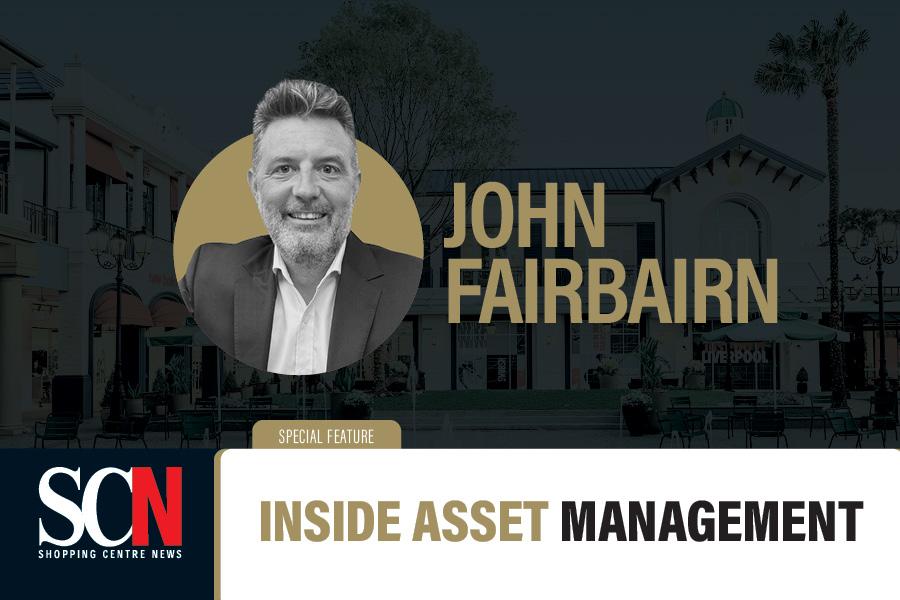
This Q&A with John Fairbairn forms part of the Inside Asset Management feature published in the latest issue of SCN magazine






Add comment