



The pace of change in Australian society over the recent decade has driven a shift in shopper expectations. In 2018, it continues to be all about convenience, allowing our shoppers to access their everyday needs in the most convenient way, and inviting them to shop as often as they please.
As shopper expectations continue to evolve, the Australian retail sector has responded to reimagining what centres offer and how they meet the needs of the communities in which we operate.
Modern-day Australian families continue to be far less likely to do the big once-a-week shop. More and more they are visiting centres every couple of days, often up to three times a week to support the daily needs of family life.
Where once retail landlords were focused on ways to encourage more time in a single visit, changing shopper behaviours, born of an increasingly time-poor population, has meant a bit of a rethink in the way many of us deliver for our customers and how we truly understand what is important to them.
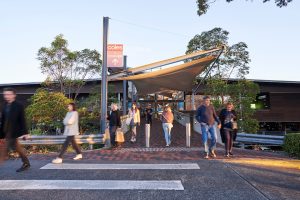
For Charter Hall, that has meant evolving our thinking on what convenience really means. Our focus is on enhancing the ease of the shopper journey with seamless access and egress, providing great amenities, having lots of choice when it comes to grocery, food and everyday services and ensuring our centres have a local feel.
What’s driving this shift?
For one, the family structure has changed. More often than not, both parents are working which means less time (and desire) to spend on a big weekly shop. Adding to this, our choices have evolved and the supermarket industry has matured over the past decade; Woolworths and Coles are now offering more full-line and fresh offers, in step with demand, and Aldi continues to build a strong, national competitive presence. It’s fair to say there has never been a time in Australia where we have had three world-class supermarkets firing at the same time. As a nation, we are choosing better, demanding fresh and desiring choice. Where canned and frozen food were once the staple of the weekly shop, more fresh food is being added to grocery lists more regularly. Now more than 80% of Australians live within 8 minutes of a major supermarket which has also assisted in multiple visits in one week becoming the new normal.
Of course, not all shoppers are families, but the themes are consistent. Parking, location, variety, access and quality amenities are the hallmark demands of modern convenience, regardless of the household composition. Interestingly, the demographic groups that researchers once tipped would turn their backs on physical shopping – Gen Y, millennials and younger – are actually seeking more ways to interact socially, and the local shopping centre forms a big part of that interaction. With the advent and proliferation of social media and online shopping, people are seeking ways to connect socially, in real time environments. There is an increasing human need to see, touch, feel and interact.
This is all positive for convenience-based shopping and the importance of these centres in the community.
Years ago, small private owners often individually managed the local convenience-based shopping centre. The centres themselves were, at times, very basic in what they offered. Fast forward to 2018 and an increasing majority of these convenience-based shopping centres are institutionally owned and professionally managed by major players. There is also an emergent new category of shopping centre that we have coined ‘convenience plus’. This category fits neither the Property Council of Australia’s definitions of neighbourhood nor sub-regional centre.
Convenience Plus centres are the shopping centres that offer between 20,000m2 and 30,000m2 of retail space that are heavily reliant on convenience anchors, typically two to three supermarkets, convenience mini-majors and some unique specialty services tailored to the needs of the community. A good example of this is our centre in Bateau Bay on the NSW Central Coast – over 50% of the retail sales are derived from its three supermarkets. They serve all the convenience of a convenience centre, only on a bigger scale and our tip is that we should expect to see more of them emerge.
Throughout the retail market cycles, these convenience and convenience plus centres have proven themselves resilient. A 2017 Urbis insights report identified that, although retail spend was declining overall as a share of total household consumption, lifestyle and social choices continue to drive a surge in food and groceries, seeing these categories increase their share of a proportion of household consumption.
Supermarkets have always been a part of the mix in Australian shopping centres and the supermarkets across our portfolio trade at greater sales density than industry benchmark, which is due to our investment pursuit of developing and managing assets in high growth catchments that locals can easily access.
So it’s easy to see why convenience centres are experiencing continued and sustained performance. They are meeting the everyday needs of communities through variety of choice, given their mix is typically anchored by two or three major supermarkets, and offering more food experiences and service based retail than even before. It also goes to show why their vulnerability to fluctuations in general retail sales trends is inherently low.
Community and convenience centres now account for around 50% of total shopping centre GLA in Australia. This highlights their continued importance in serving the everyday shopping needs of Australians.
What, then, can we expect for these convenience and convenience plus centres in the future?
Our centres have made a purposeful shift away from discretionary categories such as apparel and homewares whilst we continue to invest in food, services and positive customer experiences. Our specialty retailers are a combination of national chains and local operators, offering more choice. What that looks like is driven by the needs of the community.
At Charter Hall, our commitment to deliver locally for locals remains unchanged. This means having in place our decentralised team that truly places the decision making where it matters most, at the coal face of each of our centres across Australia. With over 70 convenience and convenience plus shopping centres in our portfolio (or more than 160 when you include our significant holding in hardware, automotive and hospitality), we understand that success comes from empowering, developing and supporting our people that run the day-to-day operations at our centres.
Our centre managers and their teams are deeply connected to their local communities, meaning our product offering, place experience and programs are purpose built to support local needs. Whether that’s assisting a bike-refurbishment program for disadvantaged youth in Lake Macquarie, teaching kids in Campbelltown how to swim or providing a standout cafe run by locals, such as the hugely popular Monkey Skins cafe in Singleton NSW.
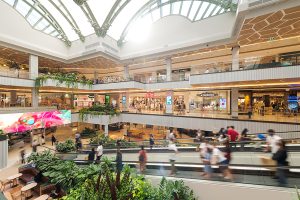
Physically, it means we are investing in the small details. The ones that matter: enhanced parents’ rooms, unique play areas, localised community campaigns, great parking, clear signage, cleanliness and security, and local retailers who know our customers by name.
It also means repurposing spaces, such as adapting old parcel pick-up areas into drive-through click and collect spaces, or converting retail stores into professional services. Other initiatives to maintain centre attractiveness and community inclusion range from short-term pop ups with local artists, splitting larger stores into smaller usages, introducing learning or community spaces and supporting local markets with products that you can’t buy anywhere else.
One of the great examples in our portfolio where we have re-imagined the concept of a neighbourhood centre is at our centre in Secret Harbour, Western Australia. We have increased the volume of food catering from 5% of GLA to 20%, including Dome Cafe as a food-catering anchor spread over two levels and providing more than 300m2 of space. Ten years ago you wouldn’t have seen anything like this from a convenience-based centre, but offers like Dome Cafe are addressing the emergent community need for larger community spaces to meet and relax socially. We’ve complemented this with outstanding convenience – three major supermarkets all with new fit-outs, multiple access points from our car park, a 100+m2 playground, curated works from local artists and a further 12 food-catering providers.
From an investment perspective, we see convenience continue to rise in popularity, for the very simple fact that non-discretionary retail displays greater resilience over time. As an asset class, it should continue to produce low volatility and highly predictable earnings.
What does this mean for Charter Hall?
Our listed Retail REIT launched as Countrywide (ASX:MCW) in November 1995 with 21 assets valued at $125 million. Charter Hall acquired the platform, now known as the Charter Hall Retail REIT (ASX: CQR) in 2010 and today, the portfolio spans across 66 assets valued at $2.9 billion. Our supermarket-anchored shopping centres within the fund deliver strong occupancy of 98% and derive half of total rental revenue from anchor tenants, Wesfarmers, Woolworths and Aldi. CQR is a stable, sustainable investment vehicle, evidenced by the solid performance it has delivered security holders since listing on the ASX 22 years ago.
In addition to the listed REIT, Charter Hall has strong performing wholesale funds and partnerships that invest across shopping centres and other complimentary long WALE retail assets. The Wholesale retail platform includes a $1bn portfolio of 67 hotels leased to Woolworths subsidiary ALH, including 19 Dan Murphy’s with a portfolio WALE of 16.9 years and occupancy at 100%. Charter Hall also co-invests in a $1bn portfolio of 22 hardware assets leased to market leading Wesfarmers owned Bunnings providing fixed rent increases and a WALE in excess of 10 years.
Our whole value chain is based on convenience; it’s stable, predictable, low volatility and has demonstrated that it outperforms in the long term.
We will continue to invest in demographic areas that are growing faster than national average, and we are tapping in to the local community psyche to reimagine our assets as community spaces.
From a retailer perspective, we are more focused than ever on building partnerships. How we engage with our tenant customers in a partnership is of increasing importance to us, and the Net Promoter Score we seek each year gives us additional insight into the quality of our relationships. How we deal with our tenant customer is important and we are extremely proactive in this space to ensure we are building long-term partnerships.
About Charter Hall
Charter Hall Group (ASX:CHC) is one of Australia’s leading fully integrated property groups, with over 25 years’ experience managing and investing in high quality property on behalf of institutional, wholesale and retail clients. Charter Hall has $20.4 billion of funds under management across the office, retail and industrial sectors. The Group has offices in Sydney, Melbourne, Brisbane, Adelaide and Perth.
The Group’s success is underpinned by a highly skilled and motivated team with diverse expertise across property sectors and risk-return profiles. Sustainability is a key element of its business approach and by ensuring its actions are commercially sound and make a difference to its people, customers and the environment, Charter Hall can make a positive impact for its investors, the community and the Group.

Add comment