

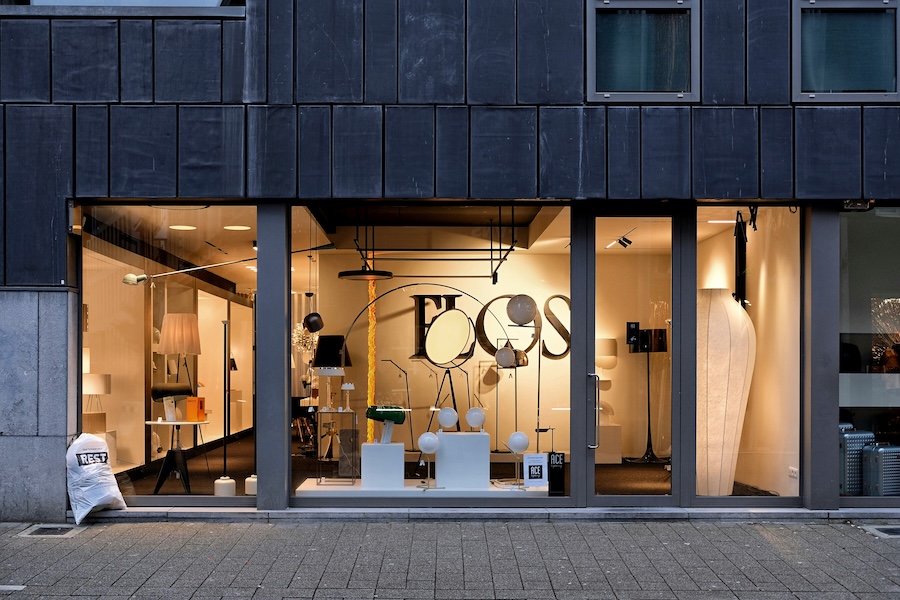

Your store’s entryway serves a powerful dual purpose. It can entice customers with its aesthetic charm while simultaneously serving as a deterrent to threats of all kinds. Over the past few years, retail crime has risen substantially across Australia, with hotspots like Melbourne seeing an 82 per cent increase over the past 12 months.
Some of the most concerning trends in this current wave involve a 66 per cent growth in the use of weapons during retail crime and the presence of organised retail crime networks. A storefront is only the first line of defence in what should be a layered security network, but its ability to prevent or lessen the impact of crime should not be understated.
Design for visibility
The logic behind this is simple. If staff, passersby and, most importantly, cameras, can all see the interior and exterior of a store clearly, you’re less likely to attract offenders. There are a few ways to achieve visibility through your storefront, ranging from the materials used in its construction to smaller, more immediate changes you can make right now.
Glass is obviously great for giving your staff and security a clear, unobscured line of sight to the outside street, and store owners should strive to keep it as uncluttered as possible. That means staying away from window decals and ensuring any displays are kept below eye level. This also has the added benefit of maximising the amount of natural light that pours in during the day, making your retail space more attractive to customers.
For the night, that’s where artificial lighting comes into play. Light alone isn’t enough to fully deter criminals, although it does increase their perceived risk of being caught. Outdoor lighting around your entrances and exits is most effective when combined with obviously placed CCTV cameras. This combination helps prevent break-ins and other forms of retail crime, like vandalism and graffiti, that can make your store more vulnerable to future attacks.
Designing for visibility is about balancing visual appeal for customers with giving your security team and staff the best possible chance to spot suspicious behaviour. Keep your entry points free of clutter and obstructions, and make sure any high-value stock is kept as far from the entrance as possible.
Control your access points
Restricting who can move where throughout your store involves leveraging technology and elements of psychology. The first step is to eliminate any ambiguity about which entrances and exits are for customers and which are restricted to staff or designated as fire escapes. You can do this through clear signage and specific coloured markings, such as yellow arrows or squares, that show where people can and can’t walk or stand.
Access control systems form another layer of security, going beyond the simple lock-and-key approach to protecting storefronts. Retail owners can integrate automated locking systems and customizable credentials to prevent unauthorised access to a store or sections of a store, while keeping legitimate movement by staff, contractors and management quick and easy.
Modern systems give store security a granular level of control through features like:
- Time and role-based permissions that limit access based on shift patterns and responsibilities.
- Remote locking, which can be done from any connected device, no matter where it is in the world.
- Integration with intercoms and video systems for additional layers of verification.
A core benefit of this technology is that it minimises the risk of human error. Staff can forget to lock doors, lose keys or not know if certain individuals are allowed access to restricted areas, which digital access controls mitigate through mobile entry and streamlined credential management.
While certain retail stores, such as jewellers, use access controls at front entrances, most would find them most useful for securing back entryways and staff-only areas within the building. What is universally applicable is the next storefront hack.
Reinforcing doors and windows
‘Target hardening’ is a security practice that involves increasing the effort it takes for a criminal to achieve their goal. The most common ways this occurs in retail spaces include:
- Window and door shutters that protect the store overnight.
- Upgraded window glazing to prevent ‘smash-and-grab’ attacks.
- Steel-reinforced doors that protect against breaching.
These are highly versatile options that can be nearly invisible and blend naturally into your storefront’s aesthetic profile. A protected retail space doesn’t need to look like a fortress to be safe.
Small, practical steps
Retail crime in Australia is a serious problem that shows no signs of slowing down. The Australian Retail Council has highlighted the state of the situation in reports showing that nearly half of all theft in the country occurred in retail stores, and that one in four events involved the use of a weapon.
A smartly designed storefront that maximises visibility and prevents unauthorised and out-of-hours access is a practical way for retailers to protect themselves against common forms of theft and vandalism. It’s important to remember, however, that this is only one step in what should be a layered security infrastructure.

Add comment