

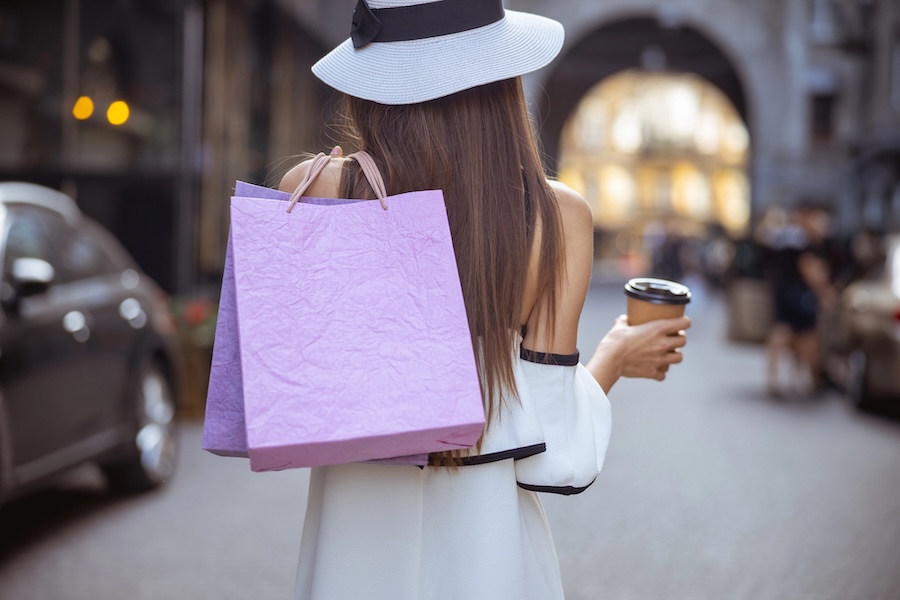

Shopping centres have traditionally been social places: Somewhere to meet, eat, browse, entertain children or spend time with friends and family. But a marked shift in shopper behaviour suggests more customers are now approaching the centre on their own – and with a much tighter brief.
Prescient’s latest The Value of a Customer research finds solo shopping is at its highest level since 2019. The change is significant not simply because more people are arriving alone, but because those shoppers behave differently once they get there.
They tend to spend more cautiously, gravitate towards essential categories and make less use of the spaces designed to encourage dwell time.
The shopper is not necessarily becoming antisocial; rather the shopping trip is becoming more self-directed.
Going it alone
The proportion of shoppers visiting centres alone has risen from 28.6 per cent in the pre-2026 benchmark to 41.3 per cent in 2026.
The increase does not appear to be a short-term anomaly. Solo shopping stepped up during 2025 and remained above 40 per cent throughout the first three quarters of 2026.
That represents a substantial change in the composition of centre traffic. More than two in five shoppers are now arriving without a companion, making the solo visit an increasingly important consideration for landlords, centre managers and retailers.
The research identifies several groups within this audience, including people from single-person households, retirees and parents shopping without their children. Their circumstances vary, but their behaviour points towards a common theme: Greater control over how the trip unfolds.
The social trip is shrinking
The flip side of increasing solo traffic is a sharp decline in adults shopping with other adults.
Shopping with adult family members or friends has fallen from 22.0 per cent to 12.8 per cent, while visits with a partner have eased from 30.3 per cent to 28.2 per cent.
The distinction here is that centres are still places where people gather, but a growing proportion of visits are no longer being built around a shared experience.
That could impact everything from tenant mix to styling customer journeys. A group arriving for lunch, fashion and entertainment creates a very different commercial opportunity from an individual arriving to complete two or three errands before leaving.
A tighter grip on spending
The spending data reinforces the impression of a more controlled visit.
One-quarter (24.9 per cent) of solo shoppers spent $25 or less during their visit in 2026, compared with 15.4 per cent of shoppers visiting with others. At the other end of the spectrum, 28.6 per cent of solo shoppers spent more than $100, against 37.3 per cent of non-solo shoppers.
That does not necessarily make the solo shopper less valuable. Instead, it suggests a more contained mission, with fewer distractions and social prompts that can turn a planned purchase into a broader shopping occasion.
In a value-conscious environment, shopping alone may itself be a way to control expenditure: Fewer detours, fewer additional purchases, and a greater ability to stick to the original plan.
Supermarkets anchor the mission
That sense of purpose is also reflected in where solo shoppers go. Supermarkets were visited by 66.1 per cent of solo shoppers in 2026, compared with 59.9 per cent of those shopping with others.
For centres, the figures underline the importance of everyday-needs retail as an anchor for increasingly functional visits. The challenge is what happens around that supermarket trip – and whether centres can make it sufficiently convenient to complete other errands while creating opportunities for additional engagement.
Clear parking, easy navigation, good signage, efficient circulation and straightforward connections between key destinations become particularly important when customers arrive with a task rather than an afternoon to fill.
Less time around the edges
Perhaps the strongest evidence of the changing visit comes from how solo shoppers use the wider centre.
Only 15.1 per cent used seating areas, compared with 25.7 per cent of non-solo shoppers. Food-area usage was 42.3 per cent versus 57.3 per cent, while entertainment and leisure attracted 8.4 per cent of solo shoppers compared with 18.0 per cent of those visiting with others.
The same pattern extends to play areas, parents’ rooms and centre activations.
The lesson is not that centres should pull back from social spaces. Their role as places to gather remains fundamental. Rather, operators may need to consider how those spaces work for customers who have not arrived intending to linger.
A seating area can accommodate a five-minute pause as effectively as a long catch-up. Food offers can serve a shopper wanting something quickly as well as a group settling in for lunch. Activations can be designed to attract attention without demanding a substantial time commitment.
The broader opportunity is to recognise that solo shopping is about both economic pressure and personal agency. Customers are still coming to centres, but many are exercising greater control over their time, spending and experience.
Understanding that behaviour creates an opportunity to make today’s functional visit easier while finding new ways to turn a tightly managed shopping mission into something more rewarding.
As The Value of a Customer demonstrates, the rise of the solo shopper is only one part of a broader shift in how customers are using shopping centres – and what they expect from them.

Add comment