


Around the world, flagship stores aren’t just selling products — they’re staging spectacles, sparking emotion and becoming cultural landmarks. Harold Perks explores how design trends like retail theatre, human‑centred spaces and hyper‑local storytelling can help transform centres into places people choose to visit — and remember.
During the past 12 months, flagship retail stores across the globe have pushed boundaries — not just in aesthetics, but in purpose. They’ve become part gallery, part performance, part cultural destination. From Paris to Shanghai, global retailers are no longer designing stores simply to sell — they’re building immersive brand worlds that connect with customers emotionally, socially and spatially.
For Australian shopping centre owners and asset managers preparing for their next wave of refurbishments, this moment is a timely invitation: What lessons can we borrow from these global leaders? And more importantly, how can we adapt them to resonate with the Australian public?
Retail as theatre: Creating cultural destinations
One of the most prominent design themes in the past year has been the rise of retail theatre — store environments designed not just to serve transactions but to stage experiences. Consider the Nike House of Innovation in Paris. Part retail space, part training studio, part maker lab, it transforms shoppers into participants. Customers can trial products in dynamic settings, customise gear on-site, and interact with real-time displays that evolve throughout the day. It’s not a shop — it’s an evolving spectacle.
Likewise, the Louis Vuitton flagship in Tokyo’s Ginza district reimagines the retail façade as architectural art. Designed by Jun Aoki, the glass exterior undulates like water, reflecting the city’s changing light and weather. Inside, the store operates as a multi-sensory experience, with a dedicated exhibition space, rotating art installations and bespoke customer services for VIPs.
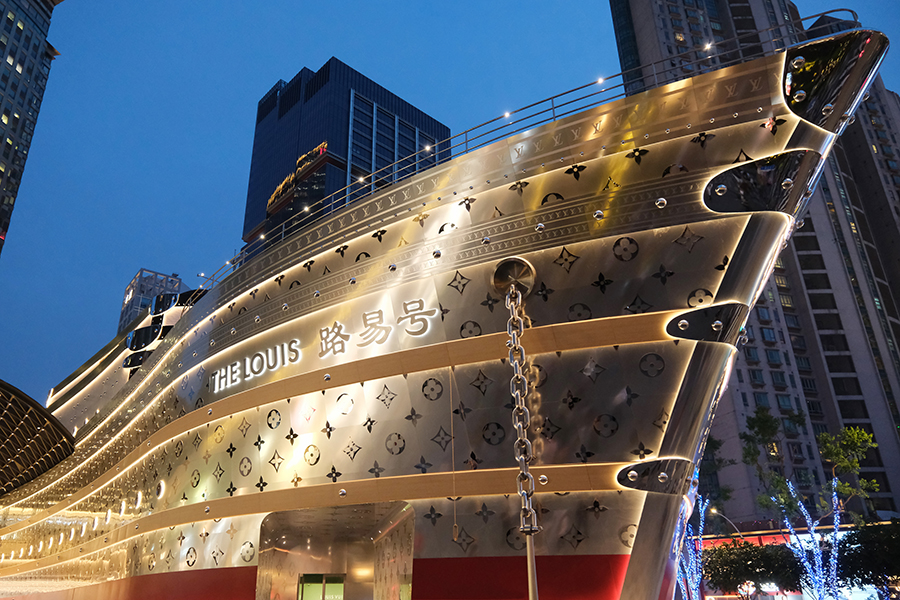
And most recently, the Louis Vuitton Shanghai Maison, opened in 2024, may be the brand’s most ambitious yet. Designed by Peter Marino, the store spans four storeys and fuses fashion, fine art, dining, and hospitality. It includes a private haute couture salon, an exhibition space for contemporary Chinese artists, and a custom-designed restaurant in collaboration with a celebrated local chef. In a city of 24 million, Louis Vuitton has positioned itself not as a store, but as a must-see cultural institution.
The lesson for Australian centres? Reinvention isn’t about cosmetic upgrades — it’s about staging memorable, emotive experiences. The next refurbishment should ask: how can we create spaces that spark curiosity, encourage return visits and make headlines?
Designing for people, not just product
Flagships in 2024 are doubling down on human-centred design. That means environments designed around how people move, gather, socialise and feel — not just how products are displayed. This is especially apparent in wellness and lifestyle brands.
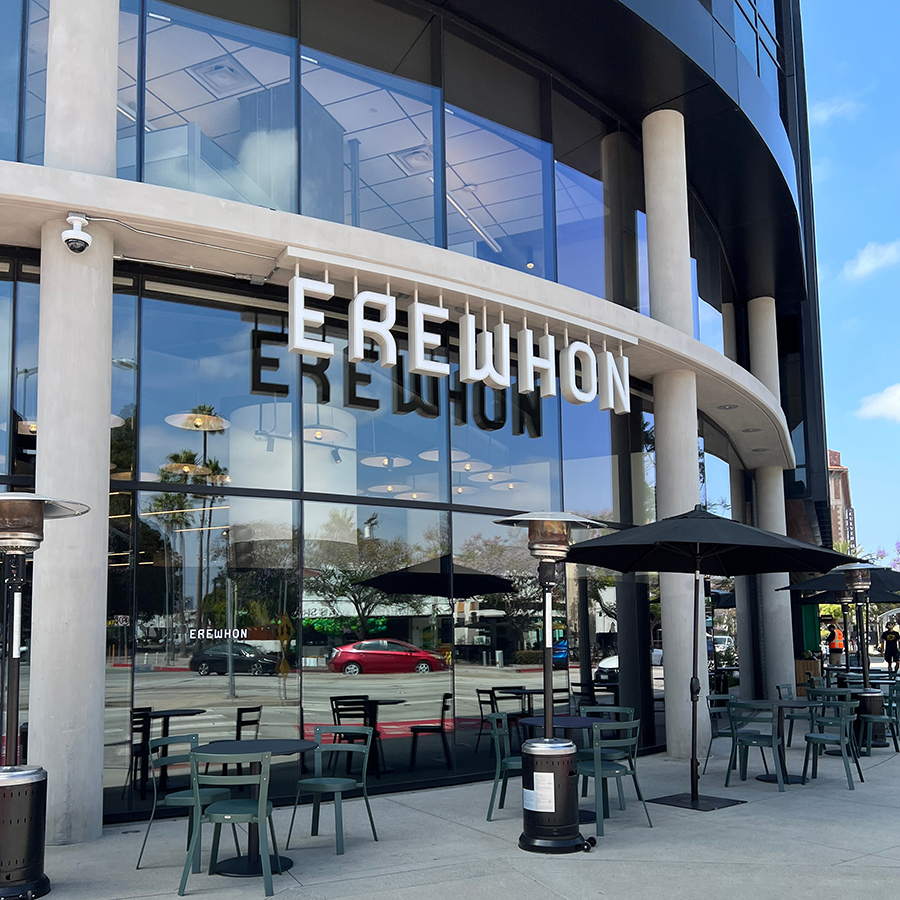
In Los Angeles, cult grocer Erewhon’s latest location is designed as a social nexus, with open community seating, in-store health activations and spaces that facilitate conversation. It’s not just about what you buy — it’s about the scene you’re part of. The smoothie line is where networking happens. The layout encourages lingering.
In New York, Uniqlo’s global flagship on Fifth Avenue incorporates sensory design strategies — quiet zones, adjustable lighting, wider aisles and gender-inclusive changerooms — making it not just easier to shop, but also more enjoyable to be there.
The implication for Australian shopping centres is profound: Refurbishments must go beyond tiling and tenancy refreshes. They must consider how people feel — the acoustics, the circulation, the seating, the shade, the amenities. Every public space should be designed not for maximum footfall alone, but for maximum comfort.
Sustainability as strategy (not slogan)
If 2023 saw sustainability as a talking point, 2024 has made it a foundational strategy. Flagship stores are leading the way — not just in green materials, but in circularity and embedded values.
The Patagonia Amsterdam store, for example, is almost entirely built from salvaged materials and integrates its ‘Worn Wear’ initiative — allowing customers to trade in, repair and upcycle gear directly on site. It’s not just eco-conscious; it teaches a new retail habit.
At the ultra-luxury end of the spectrum, Gucci’s Milan concept store earned LEED Gold certification and features modular displays, low-VOC finishes and fitouts designed to be disassembled and reused. Even temporary pop-ups are now being built with long-term lifecycle in mind.
For Australian centres, there’s a real opportunity here. Retail precincts — especially older centres undergoing repositioning — can lead the way in sustainable design practices.
This includes more than just energy-efficient lighting or solar panels; it means giving tenants the tools and space to participate in sustainability goals, from fitout standards to waste management systems.
A sustainability lens is also a differentiator. Customers increasingly expect brands and landlords to take real action — and reward them with loyalty when they do.
Technology that disappears into experience
One of the more interesting developments in flagship store design is the subtle integration of smart technology — not as a spectacle, but as a quiet enhancement of the customer journey.
In Samsung’s flagship experience centre in Seoul, for example, customers interact with ultra-responsive digital mirrors, try out devices in simulated home environments, and engage with product tutorials that adapt in real-time to their interests. There’s no clunky tech — it’s seamless, ambient, almost invisible.
Similarly, Zara’s Madrid flagship integrates RFID-enabled displays that show real-time inventory, suggest styling tips, and even assist with in-store navigation — without requiring a customer to pull out their phone. This kind of retail tech is highly relevant to Australian centres: smart wayfinding, frictionless Click & Collect, digital concierge services, interactive directories — these aren’t future-facing gimmicks, they’re current-day expectations. The key is implementation that enhances ease, not overwhelms.

Hyper-localisation: one size no longer fits all
Perhaps the most unexpected trend in global flagships is a shift away from global uniformity. Brands are localising design to reflect the culture, climate, and character of each city they inhabit.
Apple Marina Bay Sands in Singapore — a floating orb-like pavilion — takes its cues from traditional Southeast Asian architecture, adapted for the tropical climate.
Starbucks’ Mexico City concept uses regional clay tiles, local artwork, and custom music playlists curated by neighbourhood artists. This trend is a golden opportunity for Australian centres to celebrate local identity.
From First Nations art integration to landscaping with native flora, to material choices drawn from surrounding architecture — refurbishment programs should ask: What is unique about this place and how can our design speak to it?
We have a rich story to tell — think of our multicultural cities, climate-adapted lifestyles and love for indoor-outdoor spaces. These elements are not design constraints — they are untapped strategic assets.
Reimagine the role of the centre
It’s clear that flagship retail is entering a new era — one defined by emotion, performance, sustainability and place. But this evolution isn’t just reserved for the big-brand flagships in global capitals.
Shopping centres are the physical platforms that enable these brand experiences to unfold. For Australia’s ageing centres — many built in the 70s, 80s and early 2000s — this is a moment of reinvention.
Your next refurbishment is not just about staying relevant — it’s about future-proofing your asset by building something memorable, meaningful and magnetic.
Invest in storytelling. Prioritise human needs. Embrace sustainability with conviction. Let technology be helpful, not showy. And above all, design with place in mind. Because the centres that rise to this challenge won’t just be the ones that survive — they’ll be the ones that lead.
This article by Harold Perks, Founder of Perks and Co Architecture, was first published in SCN magazine.


Add comment