

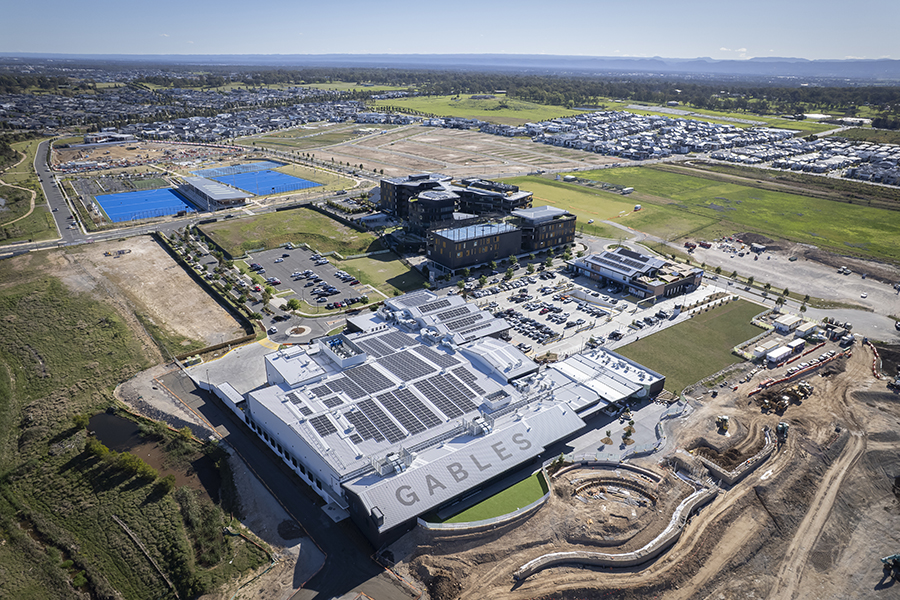

With its specialist retail focus, extensive experience, and a rich pool of data to draw upon, Mainbrace Constructions is in a unique position to understand the current and future state of construction costs and how they will influence the new wave of shopping centre developments. SCN sits down with Rob Doust, Managing Director, Mainbrace Constructions to answer the critical questions.
The burning question on everyone’s lips: Are construction costs still climbing?
The short answer is no. Certainly, the last few years have been a turbulent time for the industry, and the aftermath of the Covid experience has taken time for the industry to work through.
The good news is that, over the past two years, we’ve seen prices plateau and then some begin to decline gently. In many cases, costs are now under downward pressure from the highs of 2022 and 2023.
In construction, around 82 per cent of project costs come from trades (including the materials they install). When subcontractors are busy and labour is tight, their margins rise, sometimes significantly. But when competition increases and subcontractors are chasing work, those margins shrink fast.
At the coalface, we see this shift in real time. Mainbrace submits nearly 300 tenders a year, and we’re constantly engaging with subcontractors. When they’re calling us, negotiating and offering cost-saving solutions, it’s a clear sign that prices are softening. That’s exactly what we’ve seen over the past two years.
Why exactly did Covid have such an impact?
As everyone in construction and development knows, during the Covid years, construction costs surged. Some reports suggest increases of 20, 30 and 40 per cent.
It was a brutal period and unfortunately, there were many builders and contractors unable to navigate the challenges. Everyone in the industry knows someone affected.
While material costs and supply-chain disruptions have been widely blamed, we think that’s the smaller half of the story. The real driver, in our view, was a classic case of supply and demand.
At the height of the pandemic, skilled labour was scarce. Borders were closed, visa holders and international supplementary labour were absent, and many workers retreated from city life.
Yet at the same time, construction activity was booming. Incentives on home building generated residential demand, while at the larger end of the scale, if we just look at Sydney, three massive infrastructure projects – the M8 tunnels, the new Metro from Chatswood to Sydenham, and Western Sydney Airport – were all peaking in manpower demand.
From this perspective, the sharp rise in labour costs was inevitable.
What’s driving the downward pressure on construction costs now?
In summary, the volume of concurrent construction work has dropped noticeably, and total construction activity is down overall.
But all three eastern states are at different stages within the cycle:
- Queensland remains quite buoyant, with activity expected to increase as preparations for the Olympics ramp up. As the most volatile eastern market during Covid, caution and risk mitigation are front of mind for many.
- In NSW, the infrastructure build is slowing, with much of the work complete or nearing completion. While residential is lifting, the number of dwellings under construction remains low. Industrial building has slowed, and commercial is a challenge. Smaller-scale retail has started to rebound. It feels like a neutral market and capacity amongst trades exists.
- Victoria is quiet. Investment is low. Trades and builders are keen to secure work and keep teams busy. Pricing is most competitive in Victoria.
While the supply and demand drive a significant portion of the price movement, there are other variables providing upward pressure.
- Inflation is sticky and construction was not spared.
- Labour costs are up typically, and EBA’s have hardwired increases in each state for trade labour.
Do you expect to see more peaks and troughs in the costs of construction?
While construction costs overall have softened over the past two years, not all pressures are easing. Prices are unlikely to return to 2021 levels, but in our view the dramatic Covid-era spikes are behind us. We feel a close eye needs to be kept on Queensland, but otherwise, prices have certainly stabilised and, for now, that’s good news.
What about retail construction costs specifically?
There can be sector-specific differences in construction costs. Recently, Industrial construction was busy and prices for sheds high (this has now come back a little). Retail didn’t suffer from the same escalation.
The advantage of being a retail construction specialist is working with similar designs and briefs, alongside a more consistent pool of trades. As retail projects often share similar requirements, there’s a natural repetition that translates to efficiencies across all stakeholders. This repetition allows us to track pricing and market movements more accurately, which in turn helps us support and advise clients with accurate and timely insights, opportunities and options.
What are the key trends shopping-centre owners and developers need to be aware of?
We’re cautiously optimistic about the future of retail construction. With CPI easing and the RBA having cut rates, the macro environment is stabilising. Meanwhile, the easing of infrastructure and industrial-sector demand is creating opportunities in the retail subcontractor market.
While challenges remain, we’re seeing more consistency in subcontractor pricing. There’s a noticeable trend of developers leveraging the Early Contractor Involvement (ECI) process to reduce risk and fast-track project commencement.
We anticipate continued growth in ECI projects going forward.
What’s the Mainbrace approach to data collection and analysis, and what does it mean for your clients and their projects?
Our focus on retail gives us a deep understanding of construction costs specific to this sector. The insights we gain from the hundreds of tenders and projects we deliver, year on year, are far more detailed and granular than the broad market headlines suggest.
Like the ball tracker technology that tracks every serve and volley of the ball in a tennis match, we’re constantly collecting data on pricing and performance. That means we can spot trends well before they show up in industry indices and other research sources.
- This feature article with Rob Doust, Managing Director at Mainbrace, was first published in SCN magazine




Add comment