

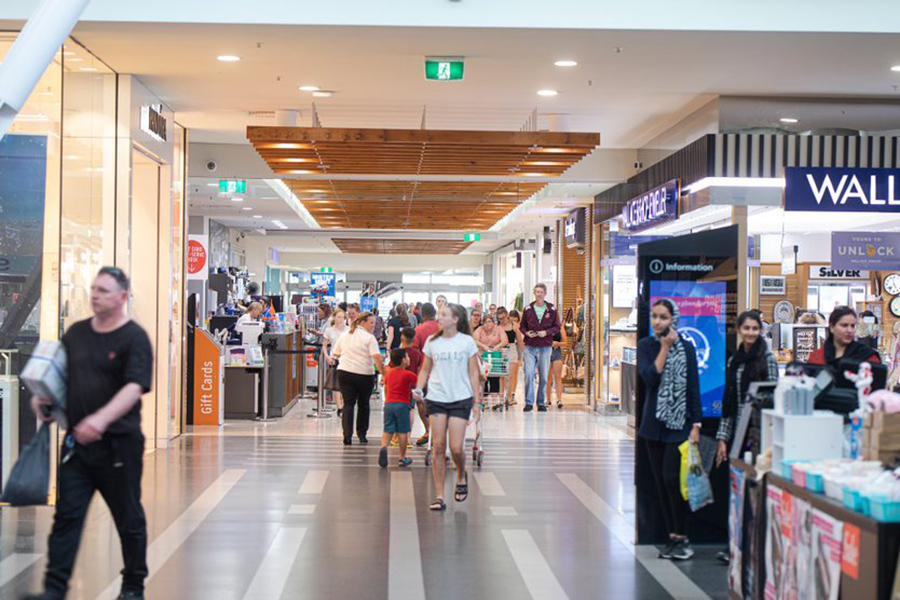

The composition of shopping centres across Australia is changing, with the space allocated to department stores and their contributions to overall sales declining, according to the new Urbis Retail Insights report.
Released in tandem with the Shopping Centre Council of Australia (SCCA), the report said that overall retail sales grew by 3.3 per cent between July and September 2026. By state, WA led with a 5.9 per cent growth, followed by SA at 3.9 per cent.
The report shed light on the changing 20-year trend of floor space in shopping centres. From 2006 to 2026, food and beverage businesses grew their retail floor space by 165 per cent, mini-majors by 64 per cent and entertainment businesses grew by 53 per cent.
The share of total retail floor space for department stores declined from 24 per cent in 2006 to 15 per cent in 2026. Their share of shopping centre retail sales fell from 14.4 per cent to 5.9 per cent over the same period.
“Our latest data also reinforces the important role our industry plays in the economy and community, with strong customer foot traffic growth, and incredibly productive retail spaces that provide a backbone to strong retail sales and employment,” said Angus Nardi, CEO of the SCCA.
Foot traffic across shopping centres increased by 2.6 per cent in the July to September quarter, above the population growth of 1.4 per cent.
“Twenty years of industry data show how the role of department stores has shifted,” added Ian Shimmin, director of Urbis.
“As large-format and specialist retailers grow and centres take on broader roles, department stores – with some exceptions – are no longer the foot traffic drivers or ‘anchor’ tenants they once were.”
“Repurposing vacated or consolidated space gives shopping centres a major opportunity to improve value for customers and their customer experience, create more retail jobs, and lift overall productivity.”

Add comment