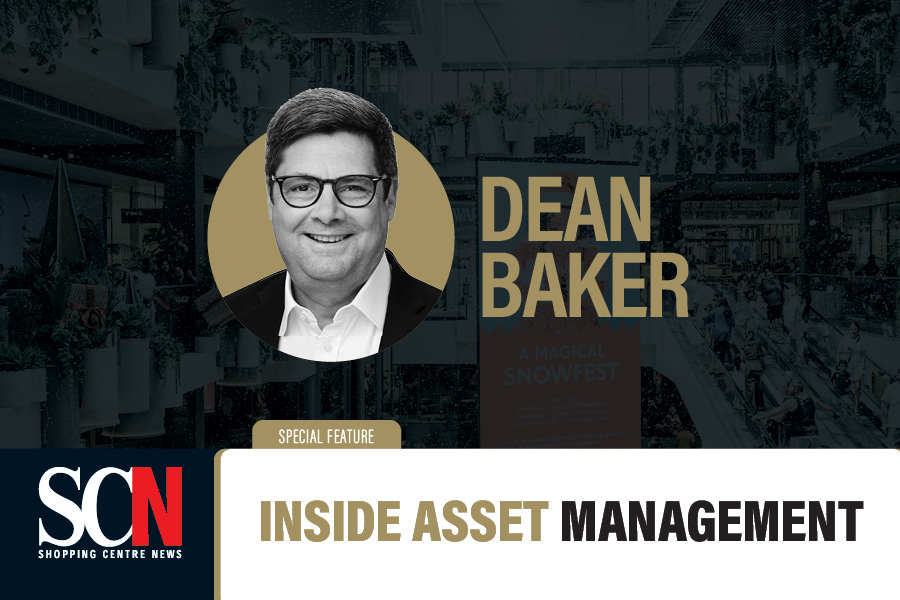
With more than 25 years’ experience spanning centre management, asset management, investment, leasing and development, Dean Baker has seen retail property from almost every angle. As General Manager – Asset Management at Haben, he draws on that breadth of experience to explore how asset managers can balance commercial performance with long-term relevance, and why the best assets are those that continue to evolve alongside their communities. Shopping Centre News (SCN):How did you get started
in retail property, and how has your career evolved?
Dean Baker (DB): My career in retail property spans more than 25 years and started on the ground in centre management. That early experience as a shopping centre manager was invaluable. Working directly with retailers, customers, contractors and local communities gave me a practical understanding of how shopping centres operate and what makes a centre successful. Over time, that experience led me into more strategic asset management roles.
As my career progressed, I became more drawn to the commercial and strategic side of the industry, which led me into asset management and investment-focused roles with QIC, Challenger, LaSalle Investment Management, AMP Capital and now Haben. Each role has built on that operational foundation and broadened my focus from individual assets to portfolio strategy, capital investment, value creation and long-term performance.
SCN: What types of assets do you currently manage and what are your priorities?
DB: I lead the team responsible for the strategic and operational performance of our retail property portfolio. My role is focused on developing and executing asset strategies that create long-term value, support sustainable income growth and ensure our assets remain relevant to the communities they serve.
I work closely with our executive, development, leasing, property management, finance and capital transactions teams to identify opportunities, unlock value and deliver initiatives that enhance asset performance across the portfolio. This includes everything from annual business planning, leasing and capital investment through to redevelopment opportunities, marketing, portfolio optimisation and improving operational performance at a granular level.
Townsville Shopping Centre welcomes MECCA
A key part of the role is balancing long-term strategic thinking with practical execution. Each asset needs a clear plan, usually looking 12-18 months ahead, that identifies value creation opportunities, prioritises investment and aligns the team around a shared view of growth. That mix of commercial discipline, collaboration and hands-on delivery is what I enjoy most about the role.
SCN: What projects, initiatives or achievements have been the most rewarding throughout your career?
DB: My start as a shopping centre manager was more than 25 years ago. That foundation has shaped the rest of my career. Over time, I moved into more strategic asset management and investment-focused roles. Each step has broadened my focus from individual asset performance to portfolio strategy, capital investment, value creation and long-term growth, while still drawing on that early operational experience.
SCN: What do you enjoy most about asset management, and what continues to motivate you?
DB: What continues to motivate me is finding the opportunity in an asset that may not be immediately obvious. Sometimes that is a leasing opportunity, sometimes it is through development intensification, a shift in the catchment, or a new use that can change the way people engage with a centre. That is what makes asset management interesting. It is part commercial discipline and part problem solving.
Retail assets are constantly changing, and the best outcomes often come from being willing to look beyond the traditional model. I enjoy working out how an asset can perform better for investors, while also becoming more useful and relevant to the community around it. When you can unlock value in a way that strengthens both the commercial outcome and the role the centre plays locally, that is the part I find most rewarding.
Westpoint Black Friday Snowfest
SCN: How do you balance convenience and customer experience when making asset management decisions?
DB: Convenience and customer experience are strongest when they work together, but they play different roles. Convenience is what gets customers through the door. It removes friction, saves time and makes a centre the natural choice for everyday needs. Customer experience is what deepens engagement, encourages longer stays, increases spending and creates reasons to return.
Customer habits are hard to build and easy to lose, so loyalty is incredibly important. While convenience drives habitual visitation, experience creates emotional connection and differentiation. In a market where customers have more choices than ever, convenience alone can become a commodity. The centres that outperform are those that combine ease and efficiency with a compelling reason to visit.
The role of asset management is to continually remove friction from the customer journey while enhancing the elements that create value and relevance. That might be through the right retail mix, stronger dining and leisure offers, better services, improved amenity, easier access, or experiences that strengthen the centre’s connection to its community.
From an asset management perspective, the balance is about protecting the everyday convenience that drives visitation while continuing to evolve the asset in ways that support occupancy, sales growth and long-term asset value. Convenience ensures customers can choose the centre; experience gives them a reason to prefer it.
Townsville Shopping Centre Travelator opening
The best assets make the easy choice feel like the better choice.
SCN: What metrics do you look at beyond sales and occupancy when measuring the success of a centre?
DB: Sales and occupancy are important, but they are only part of the picture. We also look at visitation, frequency of visit, dwell time, market share, retailer productivity, customer sentiment and how the centre is performing within its catchment. The key is understanding the quality of that activity, not just the volume.
For us, success is about attracting the right customer, encouraging the right spend and building habits that support long-term loyalty. A strong centre is not just busy; it is relevant. If customers are visiting more often, engaging with the offer, spending in the categories that matter and choosing the centre over alternatives, it gives a much clearer read on the long-term strength of the asset.
SCN: Looking ahead, how do you see the role of retail asset management evolving over the next five years?
DB: I expect the role to become even more strategic, data-led and partnership-driven. With land becoming harder to secure in many established markets, asset managers will need to think more creatively about how existing retail assets and surrounding land can evolve to meet broader community needs. That will mean looking at mixed-use opportunities, public-private partnerships and closer collaboration with councils to create destinations that bring together retail, services, recreation and community infrastructure. The focus will increasingly be on creating resilient, adaptable assets that can perform commercially while also playing a more meaningful role in the communities they serve.
SCN: Is there a retail asset or precinct, either in Australia or internationally, that you admire? What makes it stand out?
DB: I have been fortunate to work on assets such as Pacific Fair, Macquarie Centre and Indooroopilly Shopping Centre, and each has offered something different in terms of learning and growth.
Pacific Fair stands out for the way it blends indoor and outdoor environments to create a true resort-style retail experience, which was quite unique in the Australian market. Macquarie Centre showed how a retail asset can evolve to serve a much broader catchment, including residents, workers and students. Indooroopilly was another strong example of how new uses beyond traditional retail and thoughtful repositioning can strengthen an asset’s relevance and performance over time.
What I admire most are assets that continue to adapt. The best precincts are not static; they keep responding to their customers, their communities and the way people want to shop, work, gather and spend time.
Wollongong Central opens the Illawarra’s first Yo-Chi
SCN: What advice would you give to someone starting a career in retail asset management today?
DB: Build breadth early and get as much exposure as possible to how a shopping centre works at ground level. Centre management is a great foundation because it gives you insight into retailers, operations, customers and the practical realities of running an asset.
Retail asset management draws on many disciplines, from leasing and development to finance, marketing, operations and stakeholder management. The best asset managers can connect those areas into a clear strategy, while also building strong relationships along the way. It is ultimately a people business, so curiosity, collaboration and trust matter just as much as technical capability.
I would also encourage anyone starting out to take opportunities that stretch them, whether that is a development, redevelopment or repositioning project. Stay curious, think long term and keep looking for ways assets can evolve to remain relevant to their communities.
This Q&A with Dean Baker forms part of the Inside Asset Management feature published in the latest issue of SCN magazine





Add comment