Major tenants are one of retail’s quietest sources of value. The centres that thrive won’t just have strong anchors – they’ll know how to turn those relationships into opportunities to strengthen the asset and keep it evolving. In our industry, we tend to talk about major tenants in the language of certainty. The supermarket is secured. The cinema is locked away. The discount department store is on a long lease. It’s the comfortable end of the business, the part that feels done. But sp
end enough time in the seat that negotiates and nurtures these relationships, and you’ll find that the day a major tenant lease is signed is not the finish line. It’s the opening of a partnership that will shape the asset for decades.
That distinction matters more than ever. The market has never been more constructive for well-run retail. Sentiment has turned decisively positive, vacancies are low, and constrained supply is underpinning investor confidence. Yet the value on offer is increasingly won at asset level, through hands-on management rather than market tailwinds. Nowhere is that more true than with the anchors that draw the crowd, underpin the income and set the tone for the whole centre.
The anchor is more than a lease
Major tenants are the gravitational pull of any shopping centre. About 94 per cent of Australia’s regional and sub-regional centres are anchored by at least two daily-needs supermarkets*, and it is those anchors, alongside the discount department stores, department stores and cinemas, that determine visitation, underpin specialty performance and shape valuations. The anchors are also the tenancies most exposed to structural change: e-commerce penetration is forecast to keep climbing; supermarket networks are being reshaped by click-and-collect and direct-to-boot; and cinema and entertainment operators are reinventing their formats around experience.
This is precisely why the anchor cannot be treated as a line item to be renewed and filed. A major tenant lease is a 20- to 40-year business relationship, not a five-year transaction. The retailer’s business will evolve many times over that term. The owners who create the most value are the ones who evolve alongside them, turning every rent review, upgrade and option date into a moment to strengthen the asset rather than simply administer it.
The best anchor relationships aren’t managed at the lease expiry. They’re managed every year in between.
At Haben, this thinking sits at the heart of how we manage the portfolio. Across our roughly $3 billion in assets under management across 13 shopping centres, one or more major tenants anchors every single one, so we treat major tenant strategy as asset strategy. Three recent projects show what that looks like when the partnership, not the paperwork, leads.
IMAX at Hoyts Westpoint
Reinvesting in the entertainment anchor
At Westpoint in Blacktown, co-owned by Haben and Hines, our cinema anchor, Hoyts, was already performing well. We had a strong relationship with Hoyts that pre-dated our acquisition of the centre. The easy path was to maintain the status quo. Instead, out of that dialogue came a better question: How could we work with Hoyts to make the offer genuinely unmissable?
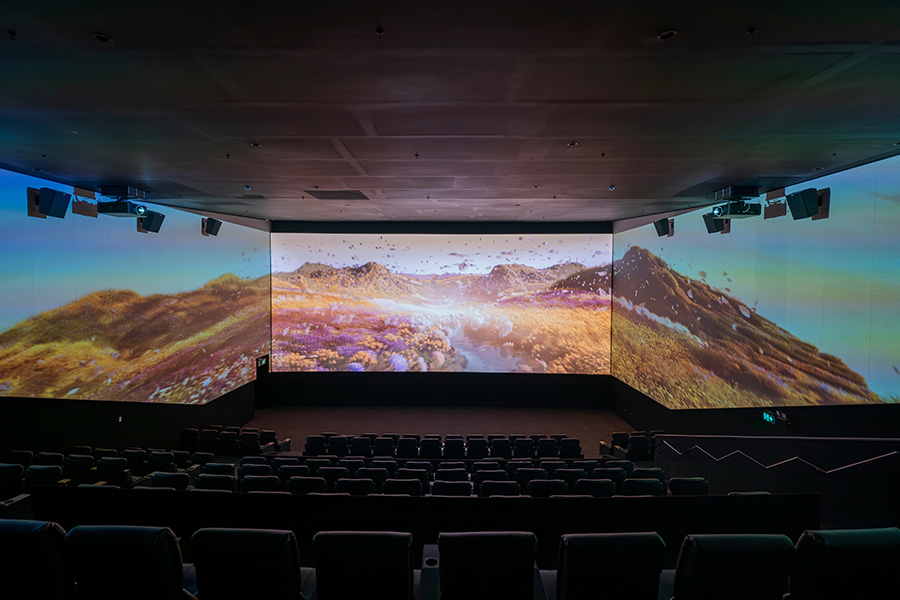
The answer was to partner with Hoyts to introduce two premium formats – IMAX with Laser and ScreenX, making Westpoint the only destination in NSW to bring IMAX, ScreenX, Xtremescreen and D-BOX together under one roof. The commercial structure was deliberately aligned for shared success: Hoyts invested in the format conversions and timed delivery with blockbuster releases, and our centre team wrapped a co-ordinated launch campaign around it, converting Black Friday retail spending into trial of the new premium cinema formats.
The results made the case for partnership better than any deal memo could. In its first full month, Hoyts Westpoint delivered a significant lift in admissions and climbed the national rankings, capturing market share from competition across the catchment. Several months on, we’re also seeing stronger performance in the surrounding entertainment and leisure precinct. A stronger retailer, a better customer experience and a more valuable, differentiated asset – all from choosing to reinvent the anchor.
Forest Hill Chase, VIC
When the anchor and asset move together
At Forest Hill Chase in Melbourne’s east, Coles is an anchor in the Level 1 Fresh Food Mall – the heart of a major repositioning of the centre. The temptation in these situations is to run the supermarket deal and the redevelopment as separate workstreams. We deliberately brought them together, so the anchor and the asset moved as one.
Coles delivered a new-look store while we transformed the surrounding mall, including new flooring and lighting, a feature ceiling at the Coles entry, refreshed entries and new furniture – all completed ahead of Christmas trade. The effect is a fresh-food precinct that reads as a single, modern destination rather than a good store in a mall that would benefit from renewal. Just as importantly, that momentum gave surrounding specialty retailers the confidence to reinvest and renew alongside the transformation, reinforcing the precinct and its long-term income.
That alignment between a major tenant’s plans and the owner’s strategic planning is where a great deal of quiet value is created.
Two anchors, one asset strategy
Elsewhere in our portfolio, at a dual-supermarket centre anchored by both Coles and Woolworths, the craft was in the sequencing. We began by partnering with Coles on a mall ambience upgrade, refreshed entry statements, better lighting and wayfinding, and a cleaner, brighter presentation, delivered alongside Coles’ own store refurbishment.
With that momentum established, we negotiated a new long-term lease with Woolworths that unlocked a substantial store refurbishment and a new direct-to-boot facility. Critically, the commercial structure also maintained flexibility for the asset over time, allowing the centre to respond to future customer, tenant and development opportunities. It’s a clear example of how a well-managed anchor renewal can deliver an uplift today while keeping tomorrow’s options open.
The Pines Shopping Centre, VIC
The power of partnership
Different centres, different anchors, different deals but the same handful of principles run through all three:
Treat the lease as the start, not the end: The signature opens the relationship; the value compounds in how you manage it from there.
Align the anchor’s plans with the asset’s strategy: A store upgrade or renewal is a chance to lift a whole precinct or centre, not just one tenancy.
Know the anchor’s business and the asset deeply: These are long-term relationships, often with the same people. That continuity and knowledge matter.
Structure for shared success: The best deals give both sides a stake in the outcome, not just a position at the table.
Keep future flexibility on the table: Great renewals deliver income today while protecting redevelopment and repositioning options for tomorrow.
Back the deal with delivery: A strong commercial outcome is amplified when leasing, marketing, centre management and development all work together.
Long-term thinking
The fundamentals of retail are as strong as they have been in a decade; the differentiator now is execution. The centres that will thrive over the coming years won’t simply be the ones with the strongest anchors on paper, they’ll be the ones whose owners work in genuine partnership with those anchors to keep the offer fresh, the customer experience strong and the asset evolving. That’s the art of the anchor. At Haben, it’s how we think about our majors; not as leases we’ve signed, but as partnerships we’re actively shaping.
* Source: CBRE 2026 Outlook
This article by Caitlin Sandford, National Manager – Major Tenant Leasing at Haben, features in the latest issue of SCN magazine





Add comment