

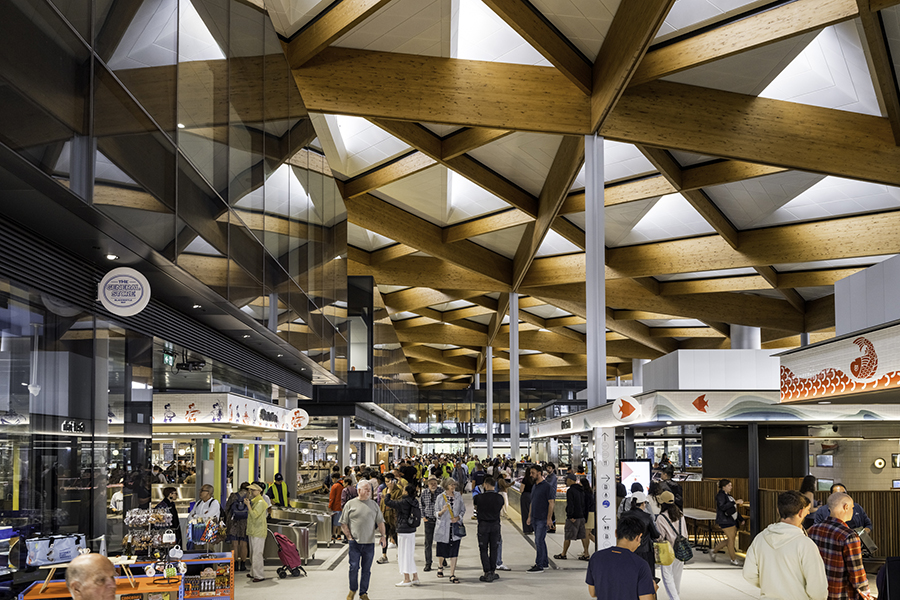

Few projects in Australia have attempted to redefine the intersection of retail, tourism and working infrastructure at the scale of the Sydney Fish Market.
Officially opened in early 2026, the $800 million-plus redevelopment at Blackwattle Bay represents far more than a relocation of an iconic institution – it is a fundamental repositioning of the market as a world-class destination. Combining wholesale operations, fresh-food retail, hospitality, cultural programming and public domain, the new precinct doubles retail capacity and introduces a curated, experience-led offer designed to attract both locals and global visitors.
At the heart of this transformation is a deliberate retail strategy, one that balances authenticity with aspiration, and operational complexity with customer experience. Appointed to lead the retail curation and leasing, Retail Strategy Group – under the direction of Angela Bonnefin – has played a critical role in shaping how the precinct will trade, evolve and differentiate in an increasingly competitive experiential retail landscape.
In this exclusive interview with SCN, Bonnefin shares insights into the thinking behind the leasing strategy, the challenges of curating a “working market” at scale, and what this landmark project signals for the future of retail destinations.

The new Sydney Fish Market has been positioned as both a working market and a global destination. How did that duality shape the retail and leasing strategy from the outset?
From the outset, we were completely focused on delivering a world-class, uniquely Sydney experience, ensuring that we balanced the range of fresh produce with a diverse array of eating and dining experiences.
What were the key principles guiding the curation of a precinct that needed to feel both authentic and world-class?
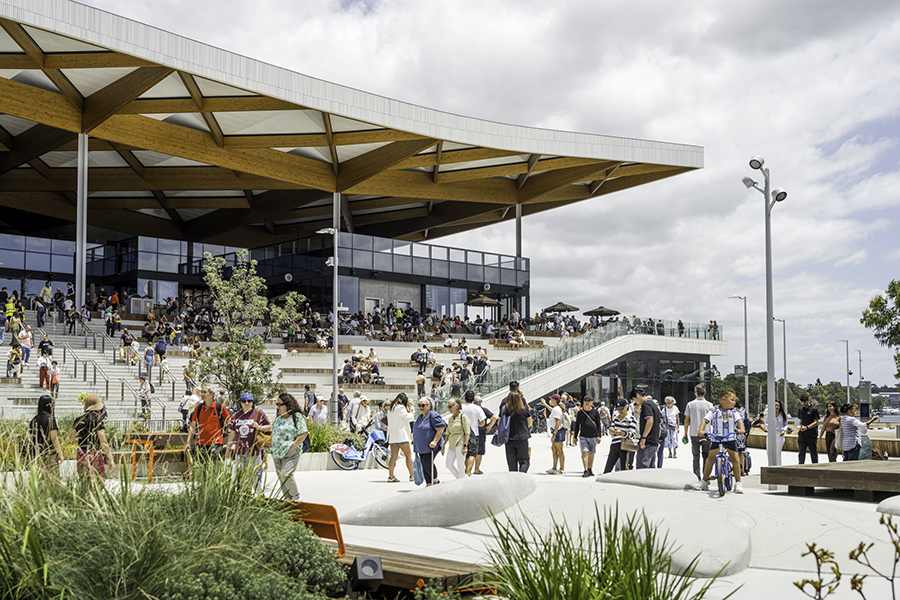
We needed to ensure that the market appealed to a broad range of customers and that, most importantly, it felt inclusive. Waterfront gave us an authentic Sydney experience and having a Northwestern aspect gave the perfect backdrop for creating a day-to-evening hospitality precinct with perfect sunsets over Blackwattle Bay. We wanted wherever possible to partner with passionate experienced foodies, who could deal with large volumes of customers while still retaining high levels of food knowledge, presentation and a love for the market-style trading.
With about 12,500sqm of retail and a mix of legacy operators and new entrants, how did you approach balancing continuity with renewal?
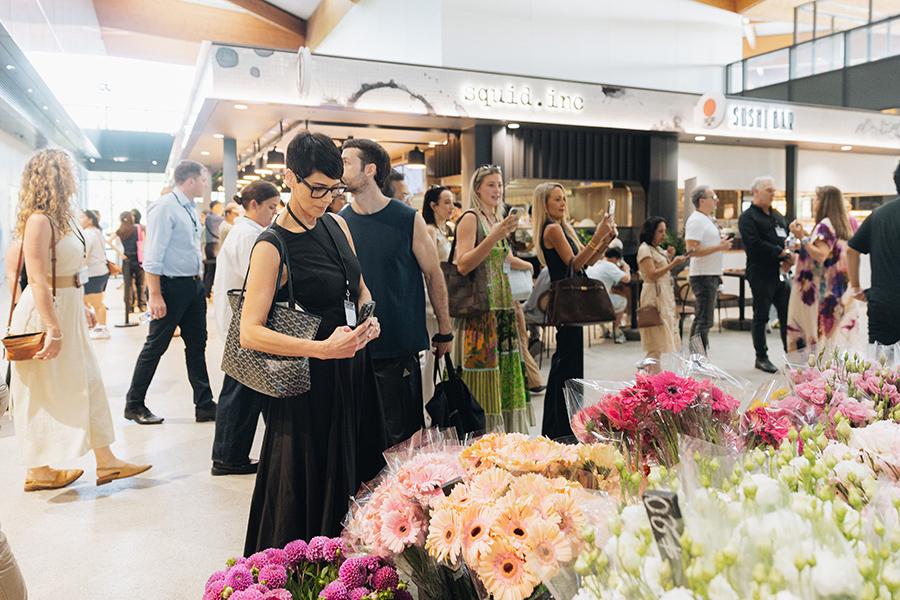
The fresh seafood operators were the foundation for the market and we then built a vision and strategy to complement a layering of fantastic food experiences. It was important for us to engage with the local community and ensure a range of everyday needs were met, be it a bunch of flowers, a punnet of strawberries or your favourite bottle of olive oil.
What defines a “best-in-class” operator in the context of this project, and how did that influence tenant selection?
Every operator brought a unique product and concept to the market. It was also extremely important that each partnership was backed by an experienced team with the ability to deal with the high pressure of day-to-day selling in a very busy market environment.
How did you structure the tenancy mix across dayparts – from early morning trade through to evening dining – to ensure consistent activation?
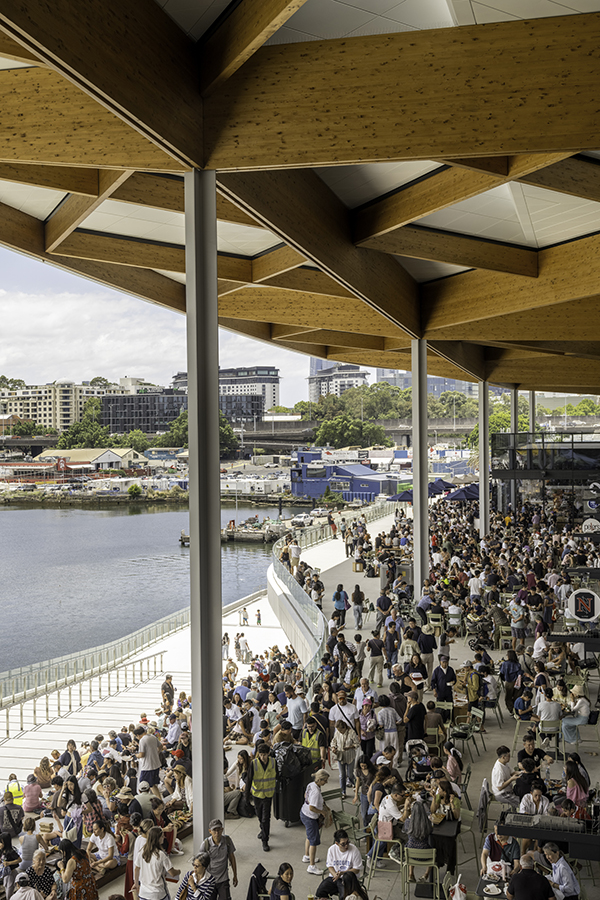
The market was designed so that the external waterfront would always be activated by a range of licenced day-to-evening operators having generous outdoor dining spaces to capture the sunsets and water views, while the internal spine of the market featured fresh-food operators, ensuring the market operated from 5am through to midnight.
This is not a traditional shopping-centre environment. How did you think about customer journey and dwell time within a market format?
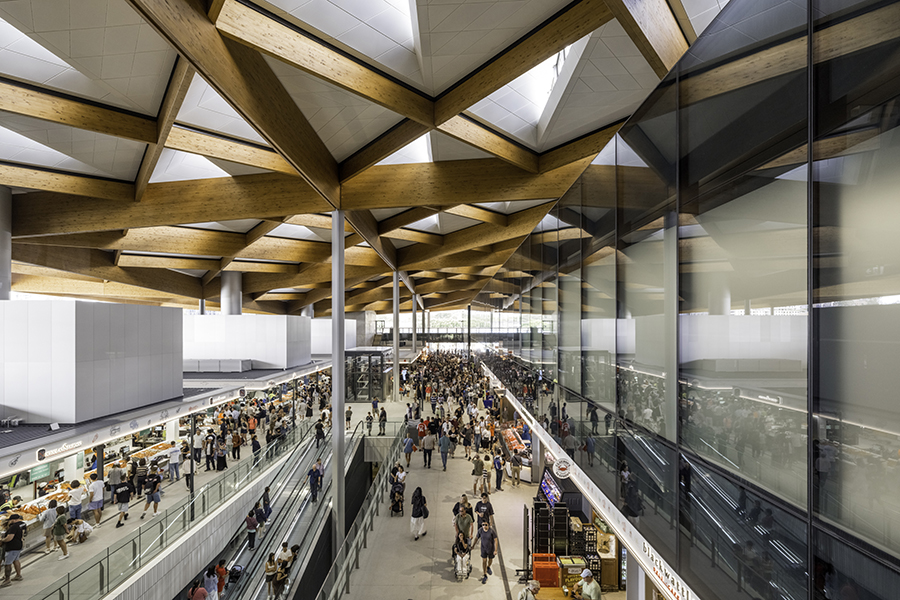
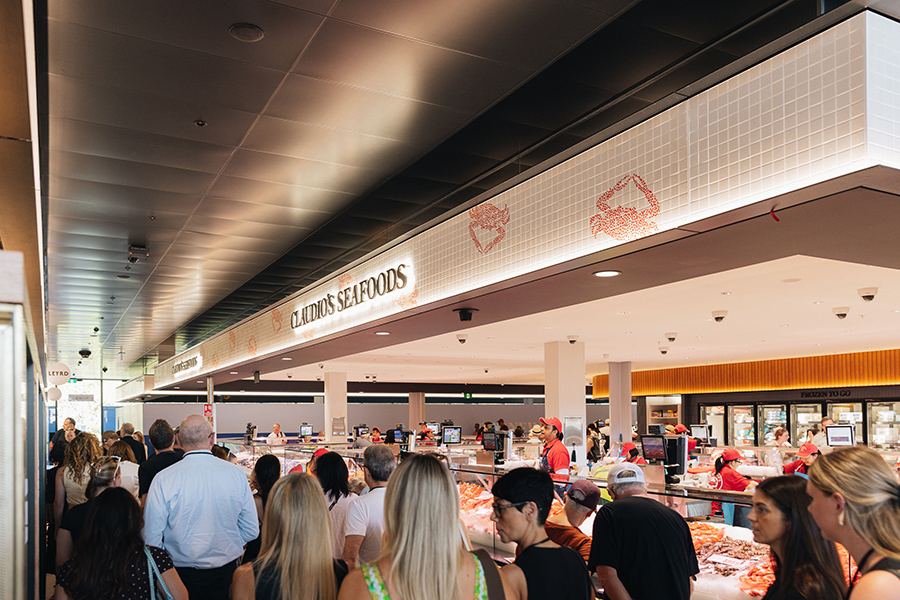
The design had to be an intuitive journey, which is why the main north-south pedestrian link is permeated with a series of east-west laneways, creating open sight lines while still allowing a sense of discovery. With four main lift cores that service the car park and retail levels, together with centralised travelators and easy navigable grand stairs at either end of the market, customers have a great arrival experience. The dwell time changes according to why you’re there, one day for fresh food, flowers and a take-away coffee, the next visit for after-work drinks and dinner.
To what extent did the waterfront location and public domain influence leasing decisions and the overall retail experience?
The generosity of the public realm design is one of the most loved things about the retail experience. Sitting on the steps, enjoying the view and soaking up the atmosphere without necessarily needing to spend a lot of money is a great outcome for the community.
A working fish market introduces logistics, supply-chain and operational constraints not typically seen in retail. How did these factors impact leasing strategy and tenant design?
One of the challenges we faced was there was no storage provision for our retailers, which meant ensuring highly functional shop design, while being supported by incredibly efficient loading and logistics, managed by the market. There are two giant hoists that deliver all the fresh seafood from the wholesale market below. The general retail level is serviced by four cores, which gives us great flexibility in the logistics.
What does success look like for a project like this – beyond traditional retail metrics such as turnover and foot traffic?
Success for me is how you make your customers feel when they walk through a space, not only from a design perspective but how they react to the retailers, who are a highly interactive, great bunch of people. The customers love the tastings, the nuts, smelling the coffee and the flowers. It’s a beautiful sensory experience and there is nothing like it in Sydney. Seeing the retailers continuing to evolve their product lines, listening to their customers and adopting a seasonality to the offering keeps the market interesting and gives locals a reason for weekly visitation.
How do you expect the precinct to evolve over time, particularly as it establishes itself as both a local amenity and a tourism driver?
Retail is always a dynamic environment so the operators that can pivot based on customer feedback and needs, and who lead with product knowledge and great service, will always thrive in a market environment. I think there will be opportunities in the future to further layer the experiences in the public areas with tastings, product launches, TV series, events, music and activations. And that is what makes a great market.
What lessons from the Sydney Fish Market can be applied to other mixed-use or experience-led retail developments?
Being clear about the strategy and understanding the customer aspirations is a good foundation. And when things get tough, as they do in the delivery of every project, be strong, lead with conviction and stay on course.
Do you see this project as a blueprint for the future of food-led precincts, and if so, what are the key takeaways for retail landlords?
The vision and strategy has to be 100 per cent supported by the right design, layout, services provisioning and functional back-of-house. Our business has been built on three decades of development experience, so ensuring those elements are embedded into each project so that the vision and strategy can be delivered is always the priority. Adopting a curatorial approach to the leasing and delivery takes a lot of time. Working closely with retailers to fine-tune the offer allows the development of a true partnership between the tenant and the landlord.
Looking back, what has been the most complex or rewarding aspect of delivering the leasing strategy for a unique and high-profile project?
Managing all the details and expectations from both clients and retailers was challenging, as is common in large-scale developments. However, the most rewarding aspect was curating a precinct, adding value through the delivery and seeing opportunities to improve the bottom line. Opening day was a great moment for our team, when thousands of people lined the streets. We spent the day talking to customers and people were so excited to be there and surprised at the huge variety of stores, the quality and impressive presentation, while still feeling like they were in an authentic market.
- This exclusive interview with Angela Bonnefin was first published in SCN magazine – CBD Guns edition



Add comment