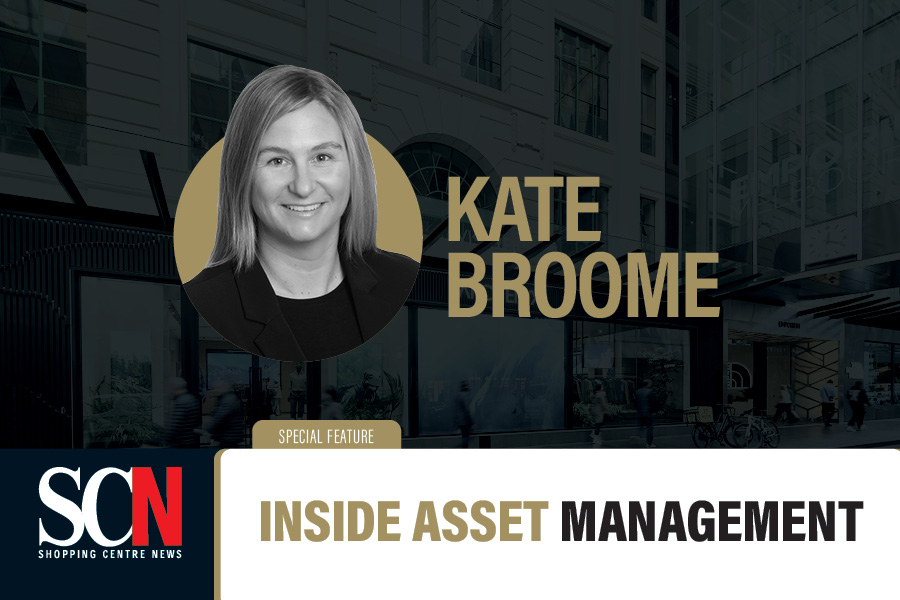
Kate Broome’s career has taken her from retail property law to the retailer side of the industry and, ultimately, into senior shopping centre leadership. That breadth gives her a unique perspective on the relationship among landlords, retailers and customers. As Regional General Manager – Victoria and Tasmania at Vicinity Centres, Broome reflects on the importance of understanding the customer, making commercially sound decisions and finding practical ways to continually improve the experien
ce.
Shopping Centre News (SCN): How did you get started in retail property, and how has your career evolved?
Kate Broom (KB): I started in retail property as a lawyer at QIC, so my first exposure was through the legal and leasing side of the industry. From there, I moved to Uniqlo as chief legal officer, which was a fantastic experience because it gave me a retailer’s perspective. At the time, Uniqlo was already one of the world’s biggest retailers, but in Australia it still felt like a start-up. We were expanding quickly and building understanding of the brand locally, so I saw first-hand the pressures retailers face and what it takes to connect with customers.
I joined Vicinity about seven-and-a-half years ago and have been fortunate to work across several parts of the business, including legal, data insights and innovation, and regional shopping centre management. I was very open internally that I wanted to broaden my experience beyond legal leadership, and I was fortunate to have opportunities at Vicinity to move into different parts of the business. Those roles have given me a practical view of how the business works, from strategy and systems through to the day-to-day operation of our centres.
SCN: What types of assets do you currently manage and what are your priorities?
KB: My portfolio includes Vicinity’s Victorian and Tasmanian centres outside Chadstone and the DFO portfolio. It ranges from CBD premium assets through to regional and sub-regional centres, with a total of 16 assets. The mix is one of the things I enjoy most because every asset has a different role in its community and a different set of opportunities.
My priorities are to support our centre managers and their teams in running strong, customer-focused assets, while ensuring each centre is managed commercially and efficiently. Every asset is different, so a big part of my role is helping teams understand their customers, support their retail partners and make the right investment decisions to make sure they are maximising the value of the assets. It sounds simple, but those fundamentals matter – knowing what customers want from a visit, what will help retailers perform, and where we can keep improving the experience without adding unnecessary cost.
Emporium Melbourne
SCN: What projects, initiatives or achievements have been the most rewarding throughout your career?
KB: There are a few that stand out. At Uniqlo, being part of the team that helped grow the Australian business from three stores to around 15 in a relatively short period was a great experience. It taught me a lot about operations at scale, brand-building and the importance of being clear on what matters to customers.
At Vicinity, our response through Covid was one of the most challenging and important periods of my career. I was leading the legal team for leasing at the time, and we reworked around 8,000 leases while the legislation was changing constantly. It was intense, but it showed the strength of the business and the way teams can come together quickly when they need to do so.
More recently, moving into the shopping centre team has been a real highlight. It is the heart of Vicinity’s business. You are close to the centres, the retailers and the customers, and you can see how the decisions you make influence asset performance, and the experience people have every day.
SCN: What do you enjoy most about asset management, and what continues to motivate you?
KB: I enjoy being close to the action. In asset management, you are working with the teams that bring the centres to life and with retailers who are dealing with customers every day. That immediacy is motivating.
Vicinity has great assets and a clear strategy, and our centres are constantly evolving. That is what keeps it interesting – there is always something new to respond to, whether it is changing customer expectations, retailer needs or the role our centres play in their local communities.
SCN: How has the role of an asset manager changed over the past five years?
KB: The role is broader and more insight-led than it was five years ago. Commercial fundamentals still matter, but there is now greater focus on how each decision contributes to long-term asset performance – from the retail mix and customer experience to operational efficiency and investment priorities.
Customers have more choices than ever. They can research, compare and purchase online very easily, so our centres need to give them a reason to visit. That means thinking carefully about the full experience – the retail offer, food and beverage, services, entertainment, convenience and the role each centre plays in its local community. The physical experience matters enormously, and an asset manager’s role is increasingly about bringing those elements together in a way that works commercially for the asset and feels relevant for customers and retailers.
The Glen
SCN: What trends are having the greatest influence on the way retail assets are managed today?
KB: Technology is a big one. AI, automation and robotics all have the potential to change how we manage assets, whether that is through operational efficiency, better guest experience or more effective use of information. I think we are only at the beginning of understanding what is possible.
Consumer insight is just as important. The better we understand our customers, the better our decisions will be – from leasing and marketing to operations and investment. People are very informed, and they expect more from a centre than a collection of stores. They want convenience, atmosphere, food, entertainment and experiences that feel worth leaving home for.
SCN: What’s one initiative – large or small – that delivered an unexpectedly positive outcome for one of your assets?
KB: One that stands out is digitising centre operational checklists. It sounds small, but it made a real difference. Previously, teams were dealing with a lot of paperwork and manual administration. Moving those processes onto a digital format reduced effort, improved consistency and made it easier for teams to complete and manage routine tasks.
For me, that type of initiative is a good reminder that innovation does not always need to be large scale to be valuable. Sometimes the most useful improvements are the ones that remove friction for teams and free them up to focus on customers, retailers and the asset.
SCN: Is there a retail asset or precinct – either in Australia or internationally – that you admire?
KB: I’m impressed by DFO Eastern Creek (formerly Eastern Creek Quarter) in Western Sydney because it brings together retail, food, entertainment and outdoor spaces in a way that gives people multiple reasons to visit and stay. It is not just about shopping; it is about creating a place where people can eat, spend time, watch a movie or visit with their family and friends. As a recent addition to the Vicinity DFO portfolio, it expands our footprint in Western Sydney and is a strong example of the type of destination that reflects how customers want to use retail spaces today.
DFO Eastern Creek
I also love destinations like London’s Borough Market, where food, atmosphere and activity come together. What stands out is the sense of energy and the way the environment encourages people to wander, explore and linger. Placemaking is increasingly relevant for shopping centres as we think about how to create places where people genuinely want to spend time.
SCN: What advice would you give to someone starting a career in retail asset management today?
KB: Be curious and take the time to understand the asset, the broader business context and the market it operates in – not just what is happening in your own centre, but across the portfolio and with your competitors. Understand what drives performance and spend time learning what helps retailers succeed. Also, be open to different opportunities that arise, as there are so many different roles within retail asset management. I am an example of not having a linear career path.
Retail asset management is a very practical, commercial and customer-focused role. The best decisions come from combining data with a strong understanding of people, including customers, retailers, centre teams and communities. If you can keep all of those perspectives in mind, you will be well placed to make a meaningful contribution.
This Q&A with Kate Broome forms part of the Inside Asset Management feature published in the latest issue of SCN magazine






Add comment