In this special feature for SCN magazine, Alison Flemming, General Manager – Portfolio Management, Retail and Build to Rent at Mirvac, reflects on the growing importance of integrating community, wellbeing and mixed-use outcomes. Retail is no longer defined by rows of stores or traditional tenancy models. Across Australia, the most successful shopping destinations are being re-imagined as multifunctional precincts and places that combine commerce with wellbeing, community, work and everyday li
fe.
At Mirvac, repurposing retail spaces helps to broaden a centre’s role. As an integrated property group with expertise across retail, residential and commercial development, we see retail centres as community hubs that bring services, wellness facilities, experiences and shared spaces together with shopping to strengthen both relevance and resilience.
Embedding essential community services: HOPE Hub at Orion Springfield Central
One of the most powerful examples of retail repurposing is the integration of essential social infrastructure into shopping centres. Mirvac’s Orion Springfield Central is home to one of Queensland’s new HOPE Hubs, which provide a highly accessible, safe and discreet location for victim-survivors of domestic and family violence to seek support within an everyday, trusted setting.
Delivered as part of the Queensland Government’s $7.8 million investment in three HOPE Hubs across the state, the Orion hub is operated by Beyond DV and offers support services including social, health, housing, legal and financial assistance, available seven days a week. Locating the hub within a major shopping centre reduces barriers to access, removes stigma, and ensures support is available where people already spend time as part of their daily lives.
Orion Springfield Central
Mirvac’s partnership with the HOPE Hub reflects a longstanding commitment to listening to local communities and responding with practical support where it is needed most. It is one example of a broader approach to community investment that recognises shopping centres as more than commercial assets. Increasingly, these places are functioning as civic infrastructure, providing safe, inclusive environments that support wellbeing alongside retail and services.
Placemaking through play: the turtle playground at Kawana
Repurposing retail is not only about tenancy mix, but also about how space is allocated, experienced and connected to place. At Kawana Shoppingworld, the turtle playground demonstrates how thoughtful placemaking can transform underused space into a meaningful community asset that extends well beyond play.
Inspired by Kawana’s coastal environment and its proximity to one of the region’s most significant turtle nesting sites, the playground offers a nature-based play experience that resonates deeply with the local community. Through storytelling, design and artwork by Indigenous artist Sheri Skele, the space introduces children and families to the journey of local turtles, blending play with education and reinforcing a strong sense of place. Located within the dining precinct, the playground has become a natural gathering point for families, encouraging longer visits and shared experiences. It also reflects broader collaboration with local environmental groups and Sunshine Coast Council’s TurtleCare program, ensuring the space aligns with ongoing conservation efforts and raises awareness of simple actions the community can take to protect local wildlife.
Kawana Shoppingworld
More than an amenity, the turtle playground strengthens Kawana Shoppingworld’s identity as a family-friendly destination grounded in its local context. Play spaces of this kind support longer stays, repeat visits and emotional connection, outcomes that are increasingly important as retail destinations compete with online convenience and alternative leisure options.
Experiential retail at scale: rebel ‘House of Sport’ at Broadway Sydney
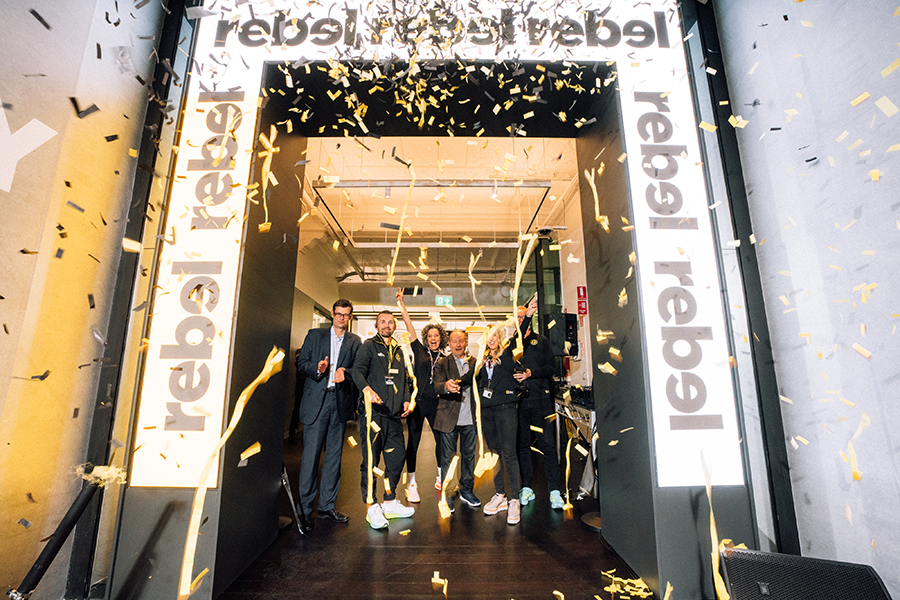
The evolution of large-format retail is on full display at Broadway Sydney, where rebel has opened its newest concept store, House of Sport, within the restored Model and Moxham building. Spanning 2900sqm across three levels, the store demonstrates how established retail footprints can be transformed into destination experiences that blend brand, space and engagement.
Delivered as part of Broadway Sydney’s broader restoration works, the result is a highly immersive retail space that brings together digital integration, interactive zones, and a full-range product offer, encouraging exploration, participation and extended dwell time.
Positioned within one of Sydney’s busiest urban shopping destinations, the House of Sport reflects a shift in how major retailers are using space to build deeper relationships with customers. The store functions as a brand showcase as much as a point of sale, combining performance products with experiential elements that invite customers to test, learn and engage in ways that cannot be replicated online.
This approach highlights the growing importance of experiential retail within retail centres. Rather than operating as isolated shops, large-format stores like rebel’s House of Sport become anchor experiences, strengthening Broadway Sydney’s position as a destination and reinforcing the value of physical retail as a place for connection, discovery and engagement.
Rebel Broadway
Reimagining retail space: Pickleball at Broadway Sydney and Saboteurs at Orion Springfield Central
Repurposing retail is also about having the curiosity and conviction to see potential beyond traditional tenancy models. At Broadway Sydney, the rooftop carpark has been transformed into a dedicated pickleball facility, responding directly to one of Australia’s fastest-growing participation sports and creating a compelling new reason to visit that extends the centre’s appeal into active lifestyle and social connection.
At Orion Springfield Central, a carpark activation continues a long tradition of destination-driven experiences at the centre. Saboteurs brings a fast-paced, social, in-person game experience inspired by the global phenomenon of the game “Among Us”. Set within a moon base-themed game zone, players take on the roles of Crew and Impostors, completing physical and mental challenges across themed areas while alliances form, accusations fly and the mission unfolds. Immersive, social and entirely physical, it offers something that cannot be replicated online or at home.
Both examples reflect a willingness to back bold ideas early, unlocking new value for each centre while reinforcing the centres’ identity as destinations for experience, not just shopping.
The advantage of an integrated model
What unites these examples is Mirvac’s ability to leverage its integrated development, design and asset-management capability across retail, residential and commercial sectors. This allows us to repurpose space with intention by aligning tenancy, placemaking and community uses to local context and long-term demand.
Retail destinations that succeed in the years ahead will be those that are flexible, experience-led and deeply connected to their communities. By broadening the role of retail and embedding it within mixed-use ecosystems, centres can remain relevant, resilient and socially valuable.
Repurposing retail, in this sense, is not about replacing shops. It is about redefining what retail can be, recognising its potential to support community services, wellbeing, work and social connection alongside traditional retail. When approached through an integrated, mixed‑use lens, retail becomes more resilient, more relevant and far more valuable to the communities it serves.
This article by Alison Flemming was first published in SCN magazine – CBD Guns edition




Add comment