

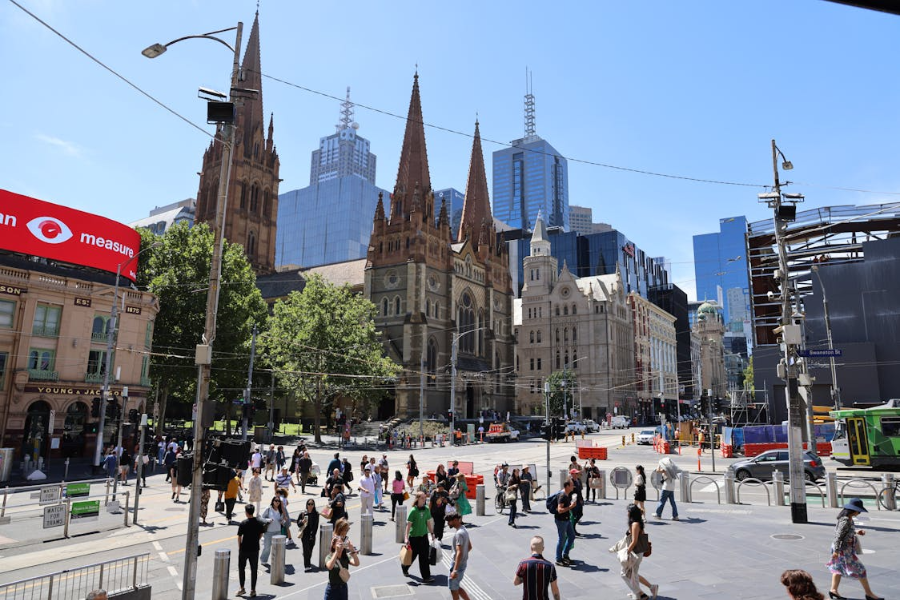

Retail vacancies in Melbourne’s CBD fell for a fourth consecutive year, declining from 6.1 per cent to 4.6 per cent over the past year, according to Fitzroys’ Walk the CBD report.
The figure marks a long-term low, although vacancies had exceeded 30 per cent during Covid-19 lockdowns.
The decline has been supported by the return of foot traffic and spending, along with new infrastructure, retail and hotel supply, and major events. The Metro Tunnel is bringing about 50,000 additional people into the city each day.
Fitzroys division director – agency James Lockwood said consumer patterns are shifting towards full-day visits, with spending concentrated in peak periods to offset lower activity earlier in the week.
Hospitality and entertainment account for 49.4 per cent of tenancy mix, while service retail eased to 13.5 per cent and specialty retail lifted to 31.2 per cent.
“The reshaping of Melbourne’s CBD has translated into long-term lows in vacancies, a new retail landscape, and an unmistakable newfound buzz,” Lockwood said.
Demand for smaller spaces of around 20sqm to 50sqm has increased, particularly for lower-capital formats operating around peak periods. These spaces are filling up quickly in high-traffic areas.
Vacancy rates declined across most precincts, with only two of 17 recording increases. Swanston Street and Little Bourke Street remained at low levels, while dining areas, including Chinatown and Flinders Lane, recorded declines supported by increased visitor numbers.
Collins Street’s ‘Paris end’ recorded a slight increase in vacancies, with redevelopment works at the Grand Hyatt and the Town Hall Metro station expected to support activity. Bourke Street Mall recorded a vacancy rate of 4.0 per cent, with the opening of a Mecca flagship store contributing to foot traffic.
Events and tourism continue to support retail demand. Major events, including the Australian Open, the F1 Grand Prix, the AFL season and the Melbourne Cup, continue to draw visitors throughout the year. Concerts by Coldplay and Ed Sheeran also contributed to hotel occupancy.
Hotel supply has increased while occupancy levels have remained high. Occupancy reached 93.2 per cent during the Australian Open.
The office market continues to be affected by the rise of working from home, though the CBD workforce remains a source of retail demand.
“Even with the huge retail and infrastructure activity that has taken place recently, the CBD still harbours a fantastic potential,” Lockwood said.
Add comment