

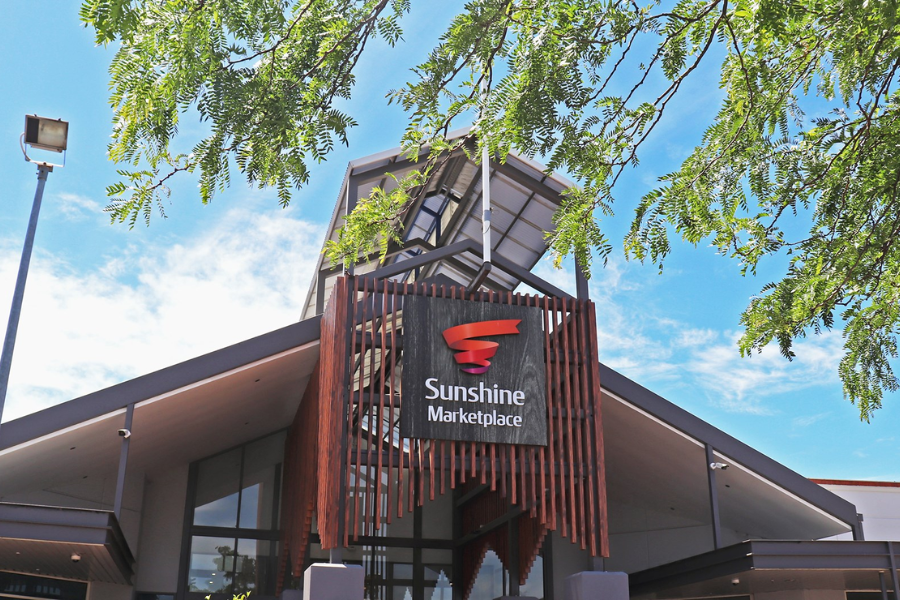

A 50 per cent interest in Sunshine Marketplace in Melbourne has been sold for $71 million. The transaction takes place amid ongoing capital allocation to retail assets in metropolitan areas.
Sunshine Marketplace is located approximately 12km from the Melbourne CBD on a 12.3ha site and services residential catchments across Melbourne’s western suburbs.
The asset adjoins the Melbourne-Bendigo rail corridor and is anchored by Woolworths, Big W and Village Cinemas. It comprises 33,997sqm of gross lettable area. The centre has masterplan approval for the development of approximately 190,000sqm of mixed-use floorspace across the site.
The transaction was managed exclusively by JLL’s Sam Hatcher and Nick Willis through a direct off-market process to a private investor.
Sam Hatcher, head of retail investments Australia and New Zealand at JLL, said opportunities to acquire metropolitan shopping centres close to the CBD are limited along Australia’s east coast.
“Sunshine Marketplace marks just the fourth sub-regional shopping centre to trade in Melbourne on a 12ha-plus land holding in the last 15 years,” he said.
Nick Willis, executive director of retail investments Australia and New Zealand at JLL, said capital allocation to Australian retail has increased following renewed activity in global markets, including the US.
“We are now beginning to see major investors re-enter the market across all retail sub-sectors,” he added.
State and federal governments have committed more than $120 billion to infrastructure investment across Melbourne’s western region, including the Suburban Rail Loop and the Melbourne Airport Rail, which will run through Sunshine.
According to JLL, sub-regional shopping centres recorded the lowest transaction volumes among traditional retail formats last year, with supply down 32 per cent year-on-year.
Total retail property transaction volumes increased by 56 per cent over the same period. Reduced supply has resulted in increased competition for assets and yield compression.
Willis said the market is entering a phase in which institutional investors, unlisted funds, and private capital are seeking acquisitions simultaneously.
“Sub-regional assets, due to their price point and typically stronger liquidity, are the beneficiaries of the majority of capital inflows; however, restricted supply throughout 2025 is challenging the deployment of capital into the sub-sector,” he said.

Add comment