

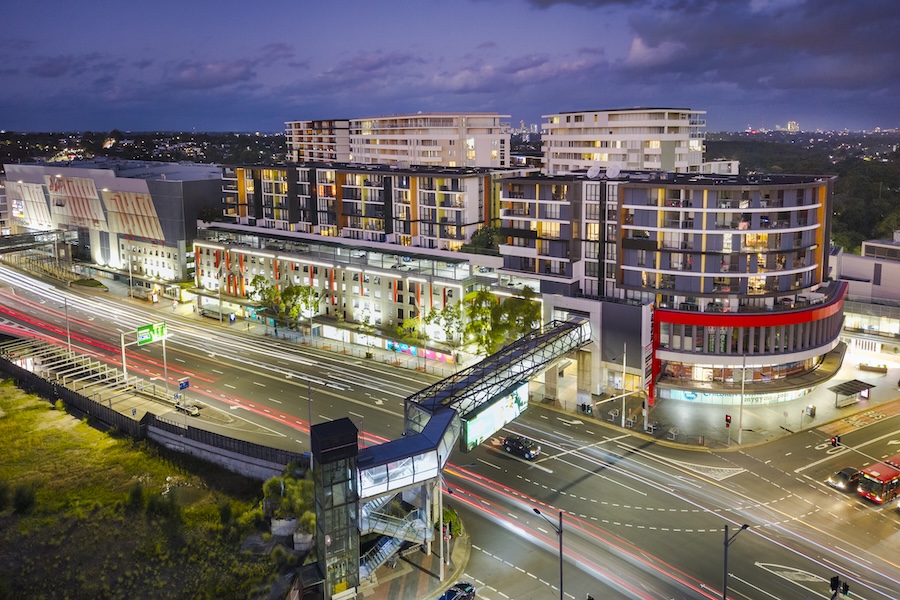

Sydney metropolitan shopping centre Top Ryde City has been sold for $525 million to a partnership between MA Financial and Singapore-headquartered Keppel REIT.
MA Financial will assume management of the centre.
According to Colliers and JLL, who brokered the deal, the on‑market sale is the first of its kind in more than a decade and underscores the scarcity of investible metropolitan retail of this scale.
“Top Ryde City is one of the most significant retail transactions of the year and underscores strong investor demand for well‑positioned, defensive metropolitan shopping centres,” said Lachlan MacGillivray, MD, Asia Pacific and retail capital markets at Colliers.
“Assets of this scale are effectively irreplaceable given density, land values and construction costs that constrain new supply. Core metropolitan assets of this calibre remain tightly held, and this is the first on‑market sale of a 100 per cent interest in a Sydney metropolitan regional shopping centre in more than a decade, reflecting the appetite for long‑term exposure to defensive retail in the right locations,” MacGillivray said.
Since Top Ryde was acquired in 2012, a targeted program of redevelopment and operational improvements has been implemented to shift the offer toward food, services, and entertainment. Colliers and JLL said the outcome achieved for investors recognises that work, positions the centre well for the future and anchors the asset as a key piece of social infrastructure for the local community.
Located on the corner of Devlin Street and Blaxland Road, 14 km northwest of the Sydney CBD, Top Ryde City has been strategically repositioned over the past 12 years to deliver a defensive, convenience-led offer anchored by Coles, Woolworths, Aldi, Kmart, Big W and Event Cinemas alongside 23 mini-majors and 152 specialty stores.
The centre serves an affluent, family-based catchment of around 477,000 and records a total centre MAT of $487 million. The centre’s scale, tenancy mix and recent capital works drove strong domestic and international demand, and the sale transacted at a fully leased initial yield of 6.7 per cent.
“Opportunities to acquire 100 per cent interest in a regional shopping centre of this calibre in Australia are exceptionally rare,” said Sam Hatcher, head of retail investments, Australia and New Zealand, with JLL.
“Over the past 15 years, only two other 100-per-cent interests in regional-sized shopping centres have been sold in NSW. Major institutional capital is increasingly looking to re-weight back towards the retail sector in Australia, driven by the strong fundamentals and consistent performance of the sector globally.”
Chua Hsien Yang, CEO of Keppel REIT Management, said the investment marked Keppel REIT’s strategic expansion into the retail sector, which it considers offers attractive yields and strong growth potential.
“Underpinned by sustained consumption growth and a rising population, we are confident that this investment will enhance Keppel REIT’s long-term portfolio resilience and overall returns.”
Chris Lock, head of core real estate at MA Financial, described the partnership with Keppel as on “very attractive terms”.
“The social infrastructure characteristics of the shopping centre provide a defensive foundation for investor returns at a point of time that we believe the tailwinds for the real estate cycle are very favourable,” he said.
Competition intensifies
Meanwhile, Nick Willis, executive director, retail investments, Australia and New Zealand at JLL, said competition for major regional shopping centres is intensifying as a growing weight of capital seeks to reweight back towards the sector.
“This shift in investor sentiment is being buoyed by the performance of the US retail market and is providing the catalyst for many investors to make their first foray into the sector, as evidenced by the sale of Top Ryde, with Keppel REIT making its first shopping centre acquisition globally.”
According to Colliers’ Q3 snapshot, retail has been a standout asset class this year, supported by resilient household spending, constrained retail floorspace and population growth, with year‑to‑date transaction activity and average sale prices materially higher than prior periods, a trend Colliers expects will continue.
nice