



Our industry owns and operates more car parking spaces in Australia than anyone else – some 585,000. Surprising therefore, that Standards Australia, a non-government body, has for some 18 months been working on car parking standards, and during this time, never contacted the shopping centre industry through the SCCA. This article by Oliver Everett, Policy Adviser at the Shopping Centre Council of Australia (SCCA) is published in the recent edition of SCN magazine.
Australians love their cars. They also love the convenience of driving to their local shopping centre, where they can easily and safely find a space to park.
According to the Australian Bureau of Statistics, the average number of motor vehicles per household is 1.8, with 91% of households with at least one vehicle and more than 55% reporting having two or more. It’s not surprising then, that convenience and common sense sees millions of Australians driving their cars to shopping centres.
Car parks have always been a critical feature of shopping centre operations, so are closely monitored and managed.
With new brands and vehicles regularly appearing in car parks across Australia, the variety of cars is expanding, yet shopping centre car parks remain safe and efficient for customers whom need to park their car. There are minimal issues with newer vehicles using shopping centre car parks, and minimal complaints about the design of shopping centre car parks.
Now, enter Standards Australia, the non-government organisation that has commercialised the development of standards through their licensing and sale.And what are they proposing? Bigger parking spaces!
As the saying goes, this is a solution in search of a problem.
For 18 months, a committee at Standards Australia has been working on revising its off-street car parking standard, with the aim of increasing the minimum length of car parking spaces in off-street car parks from 5.4 metres to 5.6 metres.
This proposal to revise the standard has left us scratching our heads.
When we look at the data, our industry receives minimal complaints about the length of vehicles in our car parks, and very few ‘long vehicles’ enter shopping centre car parks to warrant such a proposed intervention.
At no point during the last 18 months did Standards Australia seek to engage with us, which is perplexing given that the shopping centre sector owns and operates the most number of car parking spaces in Australia.
SCCA members alone own and operate more than 585,000 car parking spaces.
To be fair, Standards Australia is now engaging with us after the SCCA was approached by the media and we in turn made some queries. However, had we been engaged earlier, we could have helped Standards Australia understand the unwarranted justification and impacts of a seemingly minor change. Namely:
- Not all car parks are the same. For example, shopping centre car parks are larger than other commercial car parks and are designed for a ‘short-stay’, high churn rate, unlike other commercial car parks which are ‘long-stay’, and cars primarily sit in place for entire workdays,
- The high churn rate in shopping centre car parks makes efficient circulation and circulation safety all the more important for customers,
- Increasing the car parking space length will cause a reduction in the width of car park roadways, turning two-way roadways to one-way, creating more congestion in shopping centre car parks,
- New build car parks will become more costly to develop if longer parking spaces need to be accommodated, and
- A revised standard can have implications for existing car parks, as planning and development bodies often impose the standard as part of development approvals for modifications to existing sites.
Even more galling is that the material impacts from a revised standard are totally unjustified.
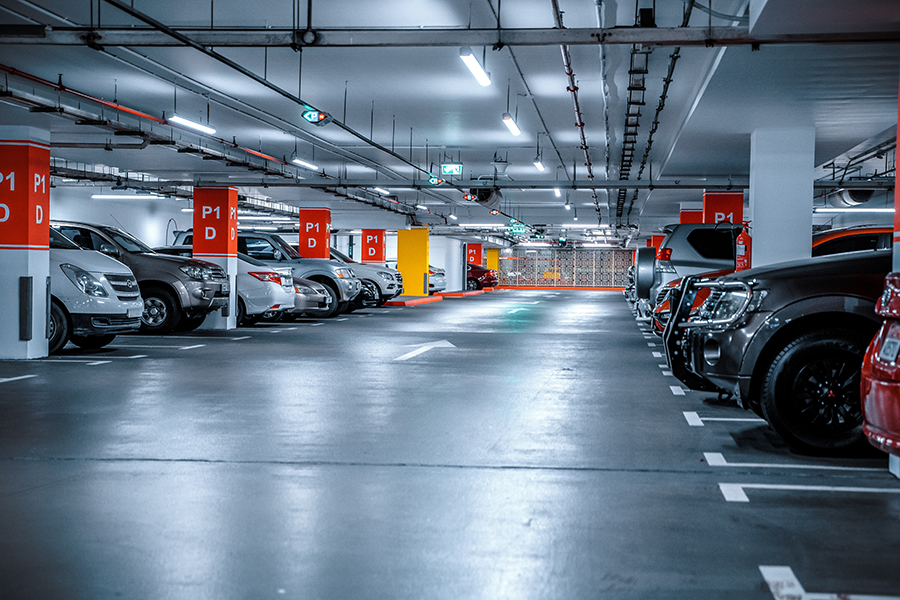
An analysis of our members’ centres shows that long vehicles account for between 1.2% and 2.2%. That is a drop in the ocean for the average shopping centre car park that has well over 1,000 spaces.
Further, analysis of customer feedback and complaints data show that issues with larger vehicles in shopping centre car parks account for only 1% of all complaints.
To upend the smooth operation of shopping centre car parks, creating costs for owners and inconvenience for customers, to fix a problem that doesn’t exist simply does not pass the pub test.
The SCCA is continuing to advocate to Standards Australia to limit their revised standard to sectors that have a need for longer car parks, if they exist.
But this latest Standards Australia foray into public policy highlights some broader issues that are plaguing public policy-making in Australia.
Firstly, the issue of private organisations engaging in policy, or on the fringes of policy, including giving the impression they are a policy and regulatory body, is a concerning trend.
Whether it’s Ad Standards – the non-government body that calls itself an ‘industry self-regulator’ – or Standards Australia, the encroachment on other businesses by non-government bodies seeking to impose particular standards and rules is hard to stomach.
Secondly, if a non-government organisation is going to masquerade as a policy and regulatory body, they should at least meet acceptable standards of public policy development. This issue is equally relevant for both non-government organisations and governments.
Although intended for the Australian Public Service, the Australian Government Guide to Policy Impact Analysis (the Guide) should be a first port of call for government and non-government policy makers alike.
The Guide sets out principles that should be followed to achieve well-considered public policy outcomes and the questions that policy-makers should ask themselves before accepting that intervention is required.
Through both the principles and the questions detailed in the Guide, policy-makers are encouraged to identify whether a problem exists and define it using data and evidence. Once a problem is defined, any policy intervention needs to be justified – that is, is the problem so serious that it requires a policy or regulatory solution?
Critically, the Guide aims to have those developing policy consider the “the total effect of the proposal (positive or negative) on the community”.
For those who follow closely, it would hardly be a surprise to see the SCCA raising concerns about red tape.
But the falling standards of public policy don’t occur in a vacuum. They have consequences beyond just shiny documents proselytising “best-practice” or a dense piece of legislation.
Poor public policy inhibits business and enterprise, drives up costs for companies and consumers, and creates unnecessary and frustrating barriers in everyday life.
So back to Standards Australia’s revised car parking standard. There seems to be very little alignment between the development of the revised car parking standard and the Guide.
We’re still searching for the problem that increasing car parking space length is addressing, let alone the data that would back it up.
Standards Australia might point to vehicle registration data showing more long vehicles than there used to be, but that does not provide evidence of a problem.
It might point to “broad stakeholder and community interest”, with more than 1,000 comments on its public consultation and several media interviews. This might be impressive, but it’s not convincing, and nor is it considered or rigorous.
The reality is that not all “stakeholders” who respond to policy proposals are equally impacted. Prudent public policy development would see stakeholders who are materially affected given greater weighting when feedback is considered.
In the case of the car parking standard, the shopping centre sector, as the largest owners and operators of car parks in Australia, is one of the most significant stakeholders for a policy change of this nature. Accordingly, the evidence we provide should not be given equal weighting those who don’t have skin in the game.
We would wear the capital and operational risk, and all for problems that don’t exist.
The information we have now provided to Standards Australia answer the questions they should have asked themselves.
Is there a problem with longer vehicles in car parks? The answer is no.
Should there be a policy intervention to deal with longer vehicles in car parks? The answer no.
These answers are clear for shopping centres. Stakeholders for other car parks might think differently, but it is incumbent on policy developers to recognise that one size often does not fit all. At the very least the revised standards should not apply to shopping centres.
As a non-government body, Standards Australia sits on an interesting fence, by developing standards that it does not then apply or enforce.
It rightly points out that only governments are able to impose regulation and then washes its hands of any responsibility for a standard once it’s been released.
The trouble is that Standards Australia knows that the standards it develops are often adopted and imposed by governments and regulators.
It has a Memorandum of Understanding with the Australian Government for just this purpose, and in addition to engineers, the technical committee responsible for the revised standard includes representatives from local government associations and transport departments.
Developing a standard without having any regard to the implications of it would be entirely irresponsible.
Ultimately, although the Standards Australia process is well-advanced, there is still time for a solution to be found.
The SCCA is grateful that the Standards Australia is now engaging with us, and we’re working to see the proposal either dropped, or refined so that the scope of any revised standard does not apply to shopping centre car parks.
Anything short of those outcomes would be sub-standard.
View this article and more in the latest issue of SCN magazine.




Add comment