

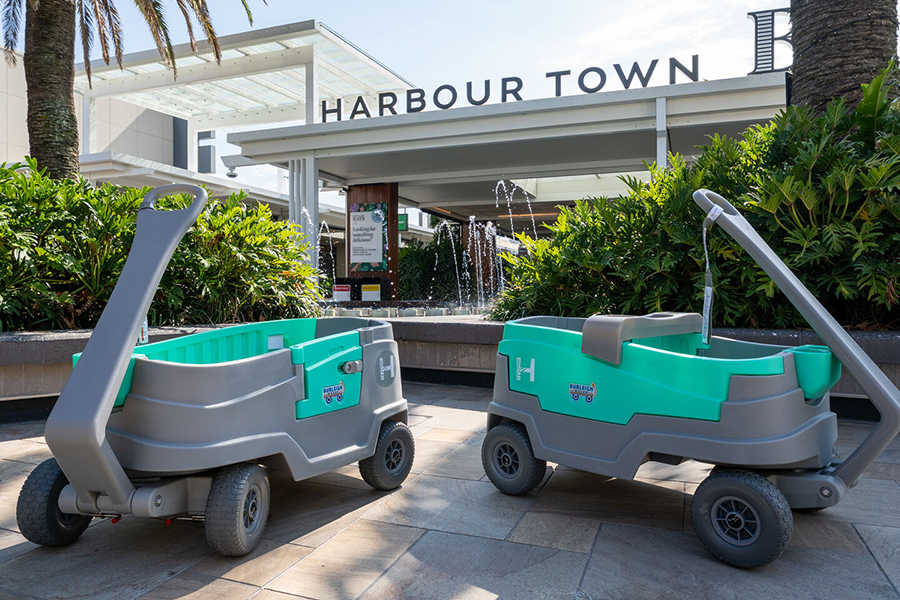

In this opinion piece for SCN, Meredith Hayes, Head of Retail at Lewis Land, explores why physical retail’s future won’t be won on speed or convenience, but on experience — and why centres like Harbour Town Gold Coast are doubling down on dwell time to stay relevant in the age of Amazon and Uber Eats.
Bunnings recently announced it will list 30,000 products on Uber Eats for home delivery within the hour. Amazon Prime has partnered with Harris Farm Markets to bring groceries to your door. The message from the industry seems clear: if it can be sold, it should be deliverable.
And yet, three in five Australians still prefer to shop in-store for non-essential products, with in-store weekly shopping outpacing online by more than 30 per cent, according to Resonate CX’s 2025 research. People are still choosing to show up.
So the question isn’t whether physical retail will survive the rise of quick commerce. The question is: what is it actually for?
The retail industry has been answering that question poorly. For the past decade, the dominant response to e-commerce has been to make physical stores feel more like websites. Faster checkout, AI personalisation, frictionless journeys, omnichannel everything. We have been so focused on competing with digital on its own terms that we have forgotten what stores actually offer that a screen never can.
The advantage of physical retail is not convenience. It never was. It is sensory. It is social. It is the feeling of being somewhere designed for human beings rather than transactions.
At Harbour Town Gold Coast, we have built a centre around exactly this philosophy. Open-air laneways. Natural light. Palm-lined walkways. Shaded seating. Spaces that slow people down rather than funnel them through. The design is not decoration. It is a commercial strategy. When people feel comfortable and unhurried, they stay longer, spend more, and come back more often.
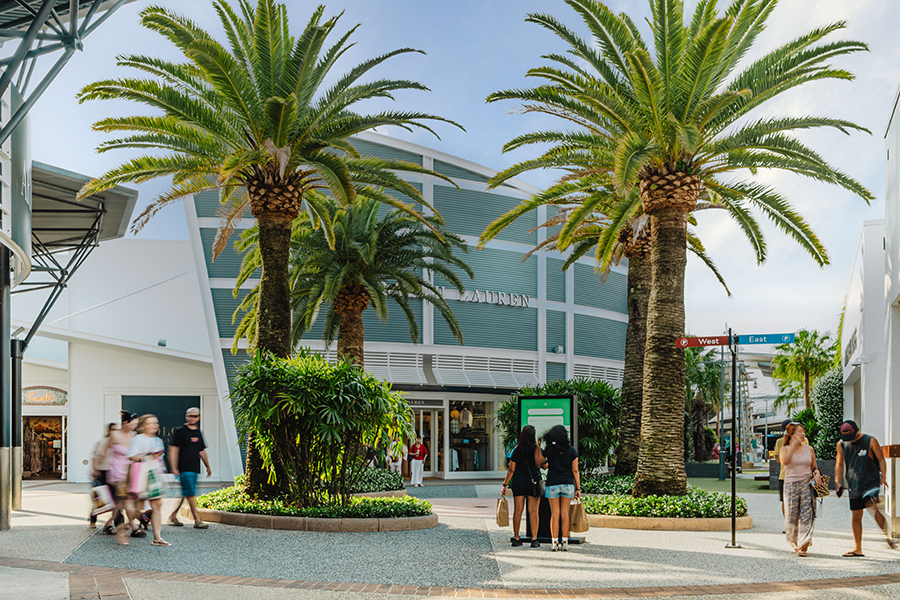
Even Bunnings, in announcing its Uber Eats partnership, acknowledged that many customers still value coming into the store. For the browse, the conversation with staff, the sausage sizzle. That is a telling admission from the retailer doing the most to compete on delivery: the in-store experience is a fundamentally different product.
The split of retail is already happening. On one side: speed, utility, delivery. On the other: experience, environment, reason to be there. These are not competing models. They serve different needs at different moments. The mistake is trying to be both things at once and ending up as neither.
Too many retail developers are still chasing the wrong metric. Optimising for footfall when they should be optimising for dwell time. Investing in digital integrations when they should be investing in landscaping, natural light, and spaces where someone might sit longer than they planned. The centres that thrive in the next decade will not be the ones on every delivery platform. They will be the ones people actually want to spend time in.
You cannot deliver sunlight through a canopy. You cannot Uber Eats the moment a family lingers over coffee longer than they intended, or the particular pleasure of finding something unexpected in a well-curated store on a warm afternoon.
That is what physical retail is for. And if we keep trying to compete with Amazon on Amazon’s terms, we will keep losing. Not because retail is dying, but because we forgot what made it worth saving.
- This article by Meredith Hayes, Head of Retail at Lewis Land, was first published in SCN Magazine – Big Guns 2026 edition.


Add comment