

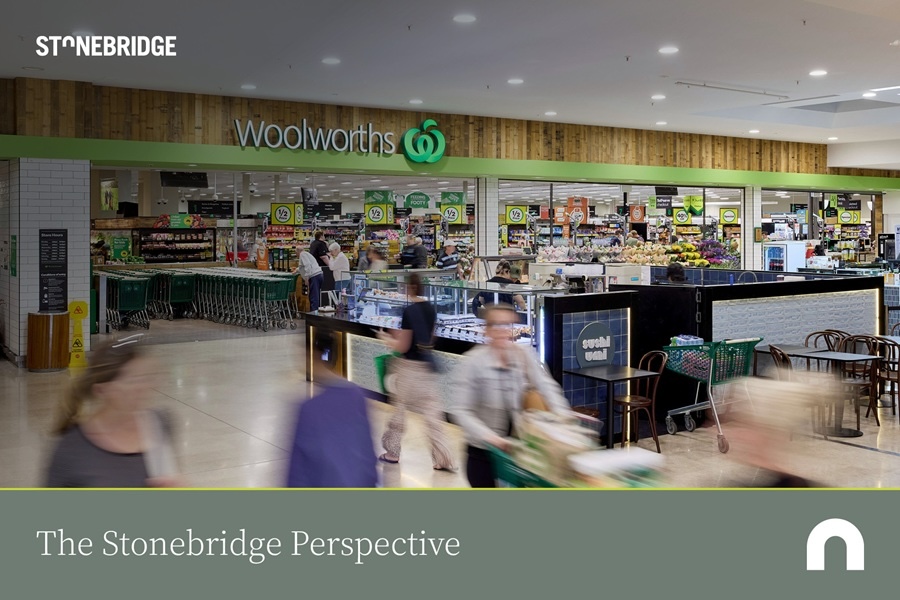

Across the shopping centres Stonebridge manages, the most welcome number on the dashboard has finally turned the right way: Foot traffic. The recovery is real – and Stonebridge brings an owner’s standpoint to it, a slightly different lens from the typical external agency.
Here is the reality that gets less airtime. Every extra person walking through a centre is also someone who can slip on a wet floor, trip on a lifted tile, or be caught in a car park incident. The traffic counts everyone wants to grow are driving one of the fastest-moving lines on an owner’s P&L: Insurance.
Contrary to popular treatment, insurance premiums aren’t purely a market evaluation – set by the cycle, the perils and available capacity – a large and growing portion of premiums are dictated by the management approach of the centre. Success has a premium – and how a centre is managed decides how much of it the owner pays.
The Stonebridge asset management team takes this very seriously. We work closely with our insurance advisor, Vision AdvisoRE, who recently surveyed 30 insurers and found the biggest driver of outcomes wasn’t the building, but the mindset behind it. When an underwriter assesses a centre, they also assess the people running it. Are they proactive about identifying exposures? Do they invest in mitigation before they are forced to? Are they transparent in what they disclose, and quick to act on the feedback insurers give them?
The risk a manager carries
Insurance for a shopping centre stacks up. The owner insures comprehensively across public liability and industrial special risks; the manager carries its own public liability; and the cleaning, landscaping and security contractors each carry theirs. For a single incident, the same risk can be insured several times over.
The manager sits at the centre of that structure, taking on an asset at a single point in time and inheriting exposures built up long before its watch – some well outside its original control. You can inherit a four-decade-old defect and still wear the claim, which is why catching latent issues like these early is where active management earns its keep.
Managing and mitigating those inherited risks is a core part of the value a manager brings. The managers, however, have a stronger incentive to keep a clean claims record because unlike the owner, who recovers insurance through outgoings, the manager and its service partners wear those premiums directly.
Where the risk actually sits in retail
For retail specifically, the exposures that move the needle are unglamorous and almost entirely operational:
- Contractual risk allocation – how risk is shared and transferred across service agreements.
- Slip-and-trip governance – how often surfaces are tested, and whether the testing drives action. Beyond a tick-a-box exercise, the best managers fix a surface that fails under wet conditions; they don’t just file the result.
- Cleaning regimes calibrated to peak trade rather than a generic roster. The busiest trading hours are the highest-risk hours – and that is exactly when standards (and people) tend to slip.
- Inspection routines before and during trading, documented as they happen.
- Incident reporting that is fast, well-evidenced and properly investigated – not reconstructed weeks later when a claim lands.
- Post-incident engagement – how quickly and how well a claim is managed once something has gone wrong.
None of this is exotic. It maps onto the disciplines a good manager controls every day and it is exactly what rising customer foot traffic stress-tests. A centre that grows visitation on the same tired cleaning schedule and patchy incident records, is manufacturing the claims that consume the centre’s success.
What good management looks like in the numbers
When Stonebridge repositioned Castle Mall in Castle Hill, foot traffic rose 9.8 per cent, vacancy fell from 15 per cent to 2 per cent, and eleven new retailers joined the centre. More tenants, more trade, more people through the doors. But our visibility of the increased operational risk meant we were able to pivot critical infrastructure to mitigate this increase and dissolve any potential threats to the success of the centre.
The job of asset management is to do both at once: Grow the numbers and contain the exposure that comes with them. A repositioning that lifts visitation but lets standards drift hasn’t created value – it has just moved the problem from the leasing schedule to the insurance schedule. The centres that hold their terms in a hard market are those managing risk as deliberately as the rent roll.
“Everyone celebrates foot traffic going up; fewer people connect it to the claims line. A busier centre is a higher-risk centre, and the manager’s job is to grow the first number without growing the second,” said Peter Cortis-Jones, managing partner, asset management, Stonebridge Property Group.
Doubt equals dollars
In insurance, there is a well-worn phrase: Doubt equals dollars. Where insurers see uncertainty, they respond with stricter terms and higher pricing. The antidote isn’t a better story at renewal – it is a better evidence trail across the year. A manager who can hand an underwriter a clean, structured record of inspections, incidents, maintenance and compliance turns doubt into discount.
And it is the same record a buyer’s due diligence will demand: insurance-ready is sale-ready. At Stonebridge, every asset is managed to be both – the discipline that earns sharper cover today is the discipline that protects value at exit. Purpose-built platforms like Vision RECap make that evidence continuous and visible to the insurers an owner invites in.
The centres winning on foot traffic are the ones to watch. The owners winning on returns will be those who remember that every extra visit is both an opportunity and an exposure – and want management that acts on this mindset.



Add comment