

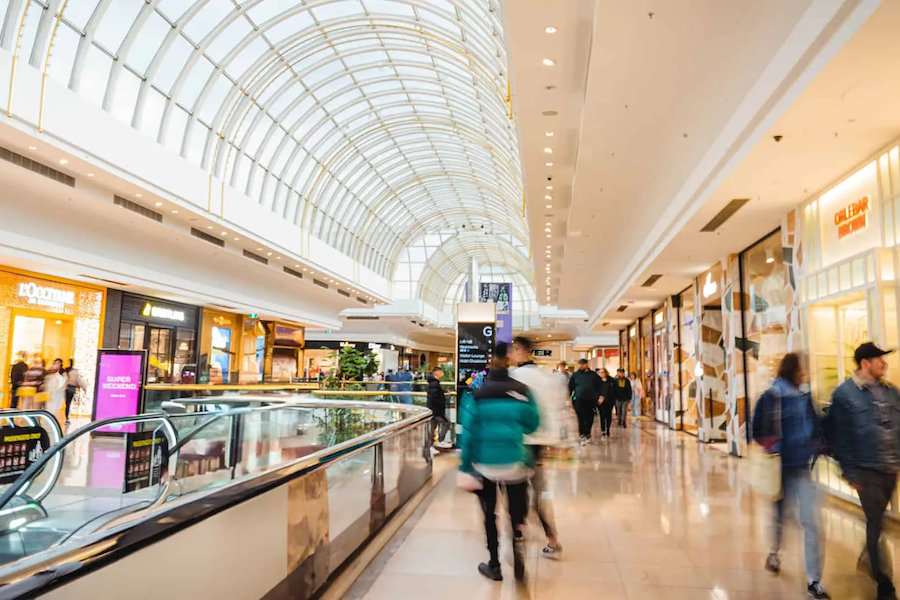

Over the past 24 months, the Australian retail property industry has celebrated a remarkable recovery. Vacancy rates have tightened, leasing spreads have strengthened, foot traffic has returned, and investor confidence has visibly improved.
Shopping centre owners have successfully navigated one of the most challenging economic periods in recent history, and many of Australia’s leading retail assets are once again reporting strong operational performance.
From the outside, the sector appears healthy. Yet beneath the headlines, a critical and nuanced conversation is taking place around boardroom tables across Australia’s retail landscape.
While asset performance metrics are tracking positively, a shifting macroeconomic environment means that the ultimate measure of long-term health for both sides of the lease remains fundamentally tied to one thing: Sustainable retailer profitability.
At BDC Property, we work exclusively on behalf of retailers – from global brands entering the Australian market to established national chains managing mature store networks. From this vantage point, our goal is not to look at leasing as a zero-sum game, but to highlight how the modern retail ecosystem requires an evolved definition of mutual success.
The core principle remains unchanged: A shopping centre asset cannot outperform for the long term unless the businesses operating within it are built on sustainable financial foundations.
The evolving definition of affordability
Historically, the industry has relied on occupancy cost as the primary measure of affordability. If rent sits within an acceptable percentage of turnover, the assumption is that the retailer is operating successfully. For decades, this model served the market incredibly well.
Today, however, the ledger is far more complex.
A retailer paying a 12 per cent occupancy cost today can easily be under more pressure than a retailer paying an 18 per cent occupancy cost a decade ago. This isn’t because of rental structures alone, but because the broader cost of doing business has shifted dramatically.
Landlords do not control a retailer’s profit and loss statement, nor are they responsible for the external inflationary pressures facing modern businesses. Yet, those pressures are undeniable:
- Labour and compliance – Sequential award wage increases continue to impact retailers employing large numbers of junior and casual staff, alongside rising superannuation obligations.
- Operational overheads – Sharp escalations in insurance premiums, freight, and utility costs continue to squeeze operating margins.
- Digital transformation – Heavy capital investments in technology are no longer optional; they are required to stay competitive.
Most importantly, retailers are now expected to operate seamlessly across both physical and digital environments. The modern store is no longer simply a place of transaction. It is a showroom, a fulfilment centre, a click-and-collect hub, a customer acquisition channel, and a brand experience centre all at once.
This omni-channel evolution means retailers are absorbing significantly higher operational costs. While the landlord successfully delivers the platform – the foot traffic, the premium environment, and the customer eyeballs – the math behind converting that traffic into a profitable margin has fundamentally changed.
The consumer reality of 2026
At the same time, consumers remain highly cautious. Despite signs that inflation is moderating, Australian households continue to feel the impact of cumulative cost-of-living pressures, utility hikes, and mortgage repayments. Discretionary spending remains tightly managed.
Retailers are competing harder than ever for every dollar spent, particularly within fashion, footwear, specialty retail, and discretionary categories where customer demand has become increasingly promotion-driven.
As a result, strong sales turnover no longer automatically translates into strong profitability.
Across the industry, conversations naturally gravitate toward turnover growth, leasing spreads, and occupancy costs. These remain vital metrics for asset valuation and institutional investment. However, to ensure long-term stability, the metric that deserves equal commercial focus is the financial resilience of the tenant.
A retailer generating high annual sales but producing limited profit cannot sustainably reinvest in staff, marketing, technology, or premium store presentation. Over time, that lack of reinvestment impacts the vibrancy and relevance of the shopping centre itself.
Balancing flexibility with institutional stability
This is where Australia has an opportunity to look at global shifts and adapt them to our unique market structure.
In international markets, we are seeing an exploration of more collaborative leasing frameworks – such as turnover-aligned components, structured performance arrangements, or flexible renewal pathways.
In Australia, institutional landlords operate under strict mandates to maintain asset valuations, secure predictable income streams for superannuation funds, and manage debt requirements. Shifting entirely to volatile or short-term models is neither realistic nor stable for the broader property market.
However, the path forward lies in acknowledging that landlords and retailers are not opposing forces; they are commercial partners in a shared ecosystem:
Landlord investment (premium space and traffic) -> Retailer execution (conversion and customer experience) ->Mutual result (sustainable profitability and asset value).
When a retailer operates profitably, the landlord benefits directly through long-term tenancy stability, reduced vacancy risk, consistent customer visitation, and enhanced asset value. When a retailer struggles under the weight of compounding operational costs, the consequences – such as delayed capital expenditure, deferred store refurbishments, or eventual vacancies – are ultimately shared.
Co-creating value for the next chapter
Some of the most progressive retail environments are already embracing a broader philosophy. Rather than viewing shopping centres solely as real estate assets designed to maximise rent per square metre, they view them as dynamic community hubs blending retail, entertainment, wellness, and workplace uses.
The objective is to maximise relevance.
The next generation of successful Australian shopping centres will be those that create the strongest, most resilient ecosystems. They will be centres where retailers can invest confidently because there is a transparent, predictable pathway to profitability.
This does not suggest landlords should accept lower standards or absorb the operational inefficiencies of retailers. Quite the opposite. Profitable retailers should absolutely be expected to deliver world-class store fit-outs, invest heavily in customer experience, and contribute actively to the overall success of the asset.
But that level of investment requires sustainable economics.
As an industry, the question we should be exploring together is a collaborative one: What optimal balance of occupancy cost and operational structure allows a retailer to remain highly profitable, so they can continuously reinvest back into the landlord’s asset over the next decade?
That is a conversation based on a long-term partnership rather than a short-term transaction. It acknowledges the realities of asset management while safeguarding the financial health of the tenants who bring those assets to life.
The future success of Australian retail property will not be defined by extracting value from one side to benefit the other, but by working together to co-create it.
Continue the conversation
Sustainable retailer profitability is becoming one of the most important indicators of long-term asset performance.
If you’d like to discuss occupancy costs, network strategy, lease renewals, or retail growth planning, connect with the team at BDC Property.
About the author: Keith Doyle is CEO and partner at BDC Property.
- Visit BDC Property: bdcproperty.com.au.

Add comment