As Chadstone evolves beyond the traditional shopping centre model, Mardi Ashkine, Head of Brand and Marketing at Chadstone, explores how culture, connection and experience are reshaping the role of Australia’s largest retail destination. Chadstone has evolved to a scale where defining ourselves merely as a traditional shopping centre no longer captures the ambition, complexity or cultural role we now embody. While retail remains core to what we do, it doesn’t fully define how we are present
in people’s lives nor the opportunity ahead of us.
Since opening in 1960, Chadstone has grown into Australia’s largest retail destination, attracting more than 22 million visits each year and generating about $2.7 billion in annual turnover. That level of visitation and performance places us in a different category to most Australian centres. We are not simply competing on retail offers or promotional cycles. Increasingly, we are competing for time, attention and relevance.
At the same time, the way people engage with destinations like Chadstone has changed. Our customer is no longer defined purely as a shopper. They are also an office worker, a diner, a visitor seeking entertainment, or someone seeking connection and shared experience. With more than 25 per cent of our tenancy now dedicated to non-retail uses, including 54,000sqm of office space and a daily working population of over 6000 people, Chadstone now operates more like a small city than a single-purpose asset.
This shift has required a fundamental rethink of how we present and program the destination.
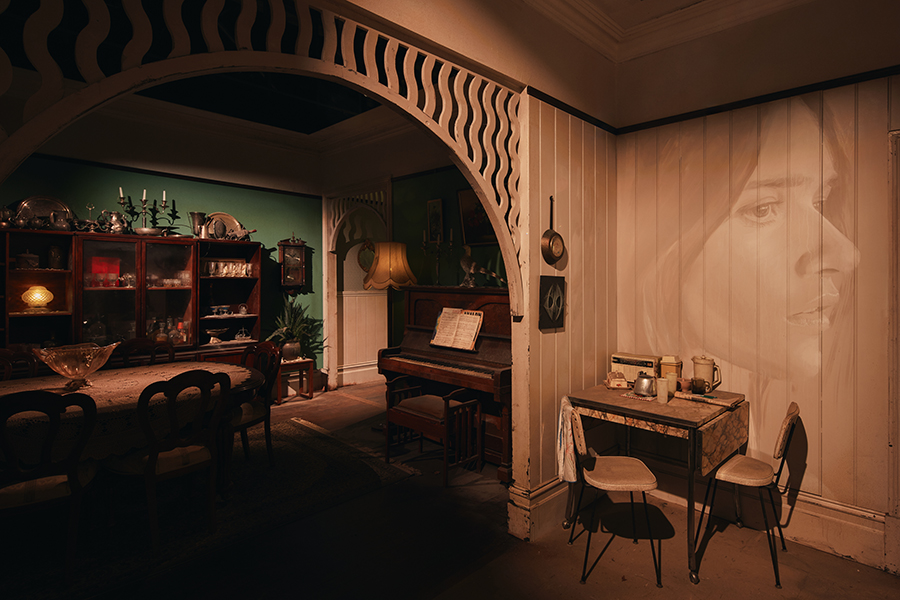
“HOME” by Rone
More than a shopping centre
The opening of Chadstone’s revitalised fresh food and dining precinct, The Market Pavilion, in early 2025, was the catalyst for a master rebrand of the asset. It followed the opening of The Social Quarter in 2023, Hotel Chadstone in 2019, and the development of three commercial office towers. Chadstone’s joint owners, Vicinity Centres and Gandel Group, acknowledged the iconic destination has reached a pivotal moment in its history. The brand and value were now encapsulated in one word: Chadstone.
Already synonymous with world-class experiences and a first-to-market promise, the rebrand marked Chadstone’s evolution as it expanded beyond “The Fashion Capital” tagline that defined it for a generation. Chadstone is now so much more. The broadening of the brandmark acknowledges Chadstone as a gathering place where families and friends come together to celebrate, share meals, enjoy entertainment, and uphold traditions across generations. Creative and cultural programming was the natural progression.
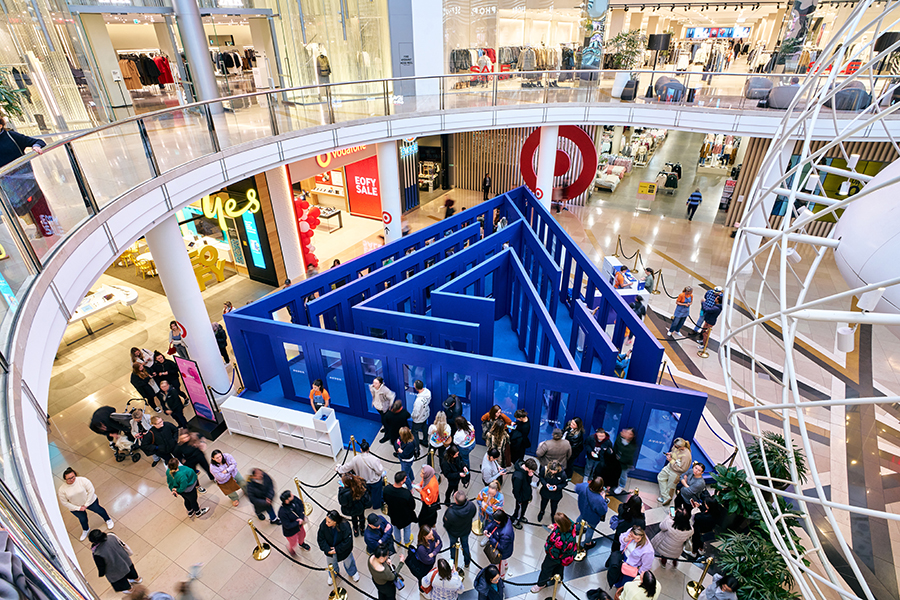
“Through The Looking Glass” by Dean Norton and Studio John Fish
“Through The Looking Glass” by Dean Norton and Studio John Fish
Programming for connection
Rather than focusing solely on peak retail moments, we are increasingly investing in experiences that give people a reason to stay longer, return more often and engage more deeply. The ambition is to create a place people feel part of, not just a place they visit.
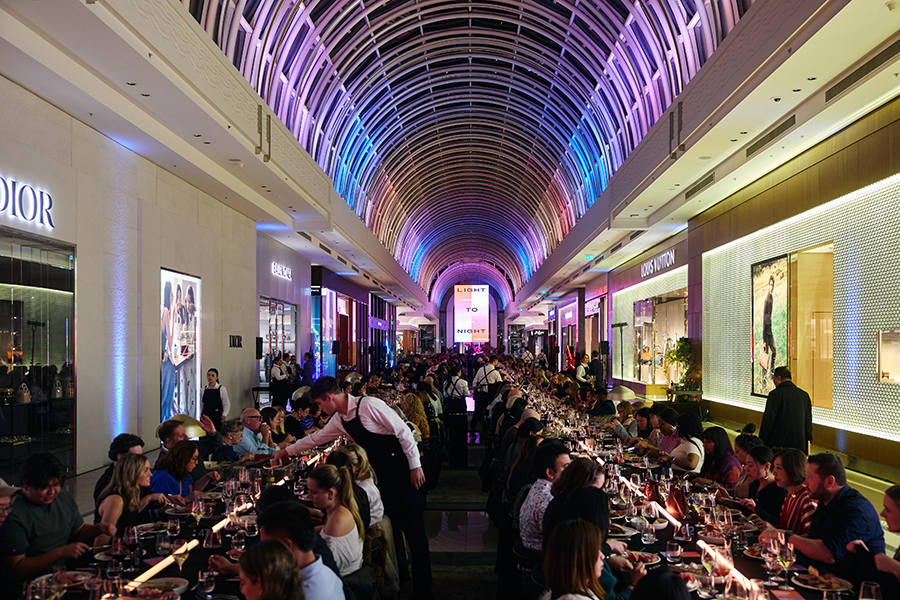
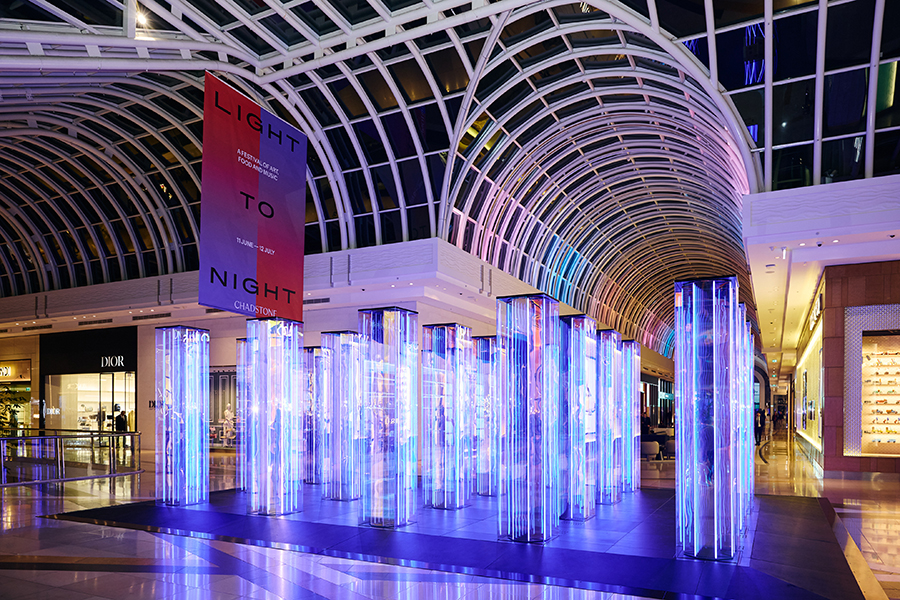
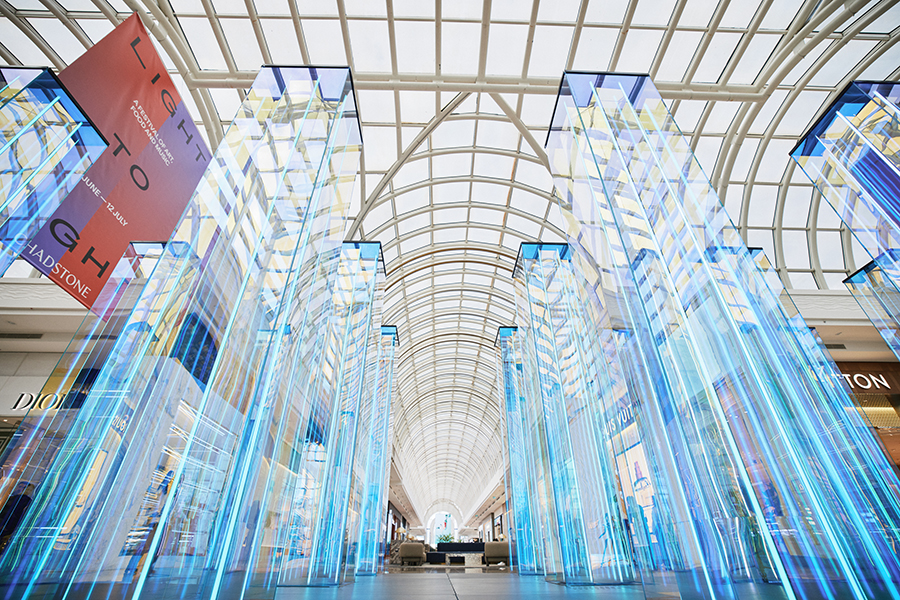
The clearest expression of this approach is “Light to Night”, Chadstone’s inaugural arts, food and music festival. In the pursuit of our next phase of growth, we made the deliberate decision to replace the traditional mid-year sales period with a large-scale cultural program. It is not a small change. Mid-year sales are a well-established retail moment, but we saw an opportunity to create something more enduring.
“Light to Night” is designed as a first-of-its-kind for Australia. It brings together immersive art, curated dining, and live music across a month-long program that transforms how the centre is experienced, particularly after dark. The name reflects the transition that takes place under our gridshell roof from day into evening, and the behavioural shift we are encouraging. We want people to explore, linger and experience Chadstone well beyond traditional retail hours.
The after dark music series
At its core, the festival is about connection. Rather than driving short-term spikes in transactions, it is designed to bring people together through shared cultural experiences. Light to Night attracted more than 100,000 visitors across the program, but just as importantly, it signals a broader shift in how we see the role of Chadstone within Melbourne.
We often describe this as the emergence of a second city. Not in a literal sense, but as a way of capturing the mix of uses, activity and community that now exists within the precinct. Retail sits alongside dining, workplaces, art and entertainment. Increasingly, people are spending extended periods of time here across different parts of their day. Light to Night brings that to life in a way that is visible, accessible and uniquely Melbourne.
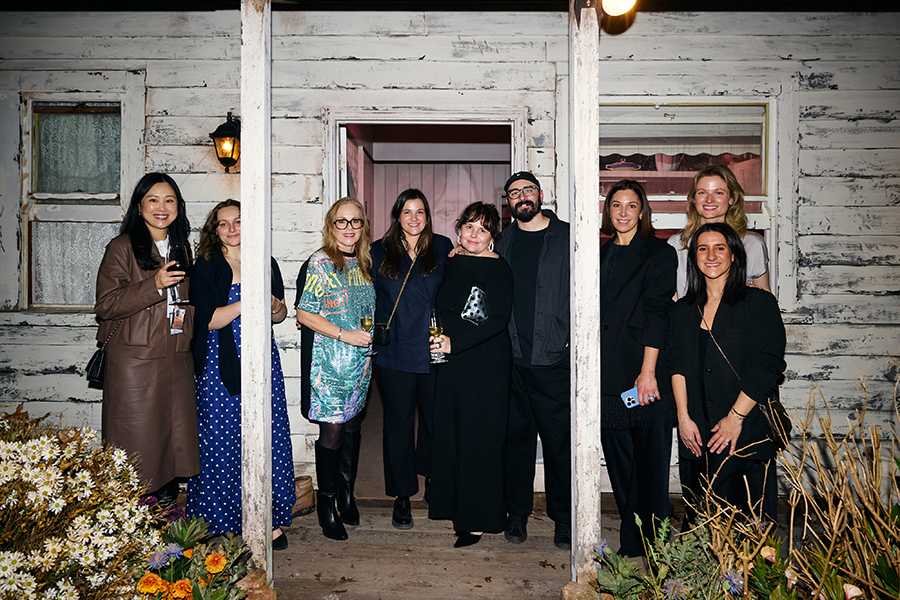
A centrepiece of the festival is “HOME” by artist Rone, a full-scale weatherboard house constructed within the centre itself. The installation is both familiar and unexpected. A suburban home, complete with front porch and backyard elements, sits within the carefully controlled environment of a major retail flagship. It is a meditation on memory, decay and the passage of time, and it creates a moment of contrast that encourages people to pause and reflect.
Projects like this play an important role in shaping how Chadstone is experienced. They invite a different kind of engagement and create cultural moments that connect with people on an emotional level. They also generate interest and conversation that extends well beyond the physical footprint of the centre.
“HOME” by Rone
“HOME” by Rone
Experience that delivers results
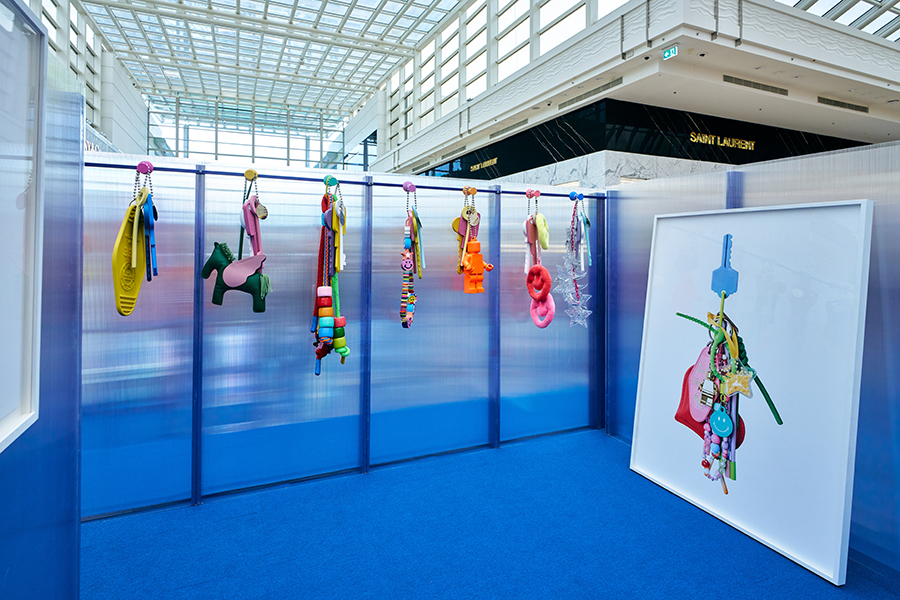
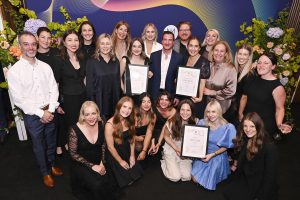
This evolution is not happening in isolation. It is being recognised on a global stage. Earlier this year, Chadstone received five honours at the International Council of Shopping Centres Global MAXI Awards in Las Vegas, including the overall Best of the Best accolade for “Lost + Found” with artist Cj Hendry. Selected from 68 finalists worldwide, this recognition reflects the strength of work being delivered here and the impact it is having.
The “Lost + Found” activation leveraged Cj Hendry’s cult-like fanbase to expand visitation and uplift Chadstone’s global reputation. The campaign set new benchmarks for engagement and brand impact. Across three activations, “Lost + Found” attracted over 27,000 participants and had the halo effect of generating $3.3 million in incremental sales.
For us, the significance of those awards goes beyond the accolades themselves. They reinforce that culturally driven, experience-led programming can deliver both brand and commercial outcomes. They also position Chadstone as part of a global conversation about the future of retail destinations, rather than a purely local one. This is important because the changes we are making are not short term. They are part of a longer-term strategy to support sustainable growth.
As Chadstone continues to evolve, initiatives like “Light to Night” will play a key role in unlocking our ambition towards a $3 billion year.
‘Lost & Found’ immersive exhibition by Cj Hendry
‘Lost & Found’ immersive exhibition by Cj Hendry
The next chapter for Chadstone
There is sometimes a perception that focusing on experience and culture comes at the expense of commercial performance. Our view is the opposite. By creating a destination that people actively choose to spend time in, we strengthen the fundamentals that drive performance. Increased visitation, longer dwell time and deeper engagement all contribute to better outcomes for our retailers and partners.
Looking ahead, we see Chadstone continuing to redefine what a retail destination can be. It will always be a place to shop, but it will increasingly be a place to connect, to experience and to participate in culture. That shift reflects not just our ambition, but also the expectations of the audience we serve.
“Light to Night” is an important step in that journey. It is an invitation for people to experience Chadstone in a new way, and a signal of where we are heading next.
This article by Mardi Ashkine, Head of Brand and Marketing at Chadstone features in the latest issue of SCN magazine



Add comment