As shopping centres become increasingly integrated into everyday community life, wellbeing is emerging as an important design consideration. Mary Jacobson, Senior Interior Design Leader, i2C Architects, explores how thoughtful design can transform the shopping centre experience. The future of shopping centres is moving beyond retail to create places that support how people live, connect and experience their community. Shopping centres are evolving from destinations built around consumerism into
vibrant community hubs where retail, dining, healthcare, entertainment and social connection come together. Increasingly, successful centres are functioning less like traditional malls and more like mixed-use neighbourhoods, places people visit several times a week to shop, meet friends, access services, exercise and dine.
Retail becomes one layer within a richer experience, with greater emphasis placed on connection, comfort and community. The result is a centre designed not simply to attract people, but to give them reasons to stay, return and engage.
The new retail therapy
We are all familiar with the concept of retail therapy as a temporary escape from the pressures of everyday life. But a new form of retail therapy is emerging, one that focuses on improving emotional and social wellbeing through the experience of the place itself.
Rather than simply selling wellness products or services, the next generation of shopping centres can create environments that support relaxation, human connection and everyday wellbeing . Putting the therapeutic back into retail therapy means creating spaces that engage the senses, encourage social interaction and provide opportunities to pause and recharge.
Neighbourhood activity centres are uniquely positioned to lead this shift. They are already embedded within daily routines as places where people buy groceries, meet for coffee, attend appointments and spend time with family and friends. The opportunity is to quietly integrate healthier choices and restorative experiences into these everyday journeys.
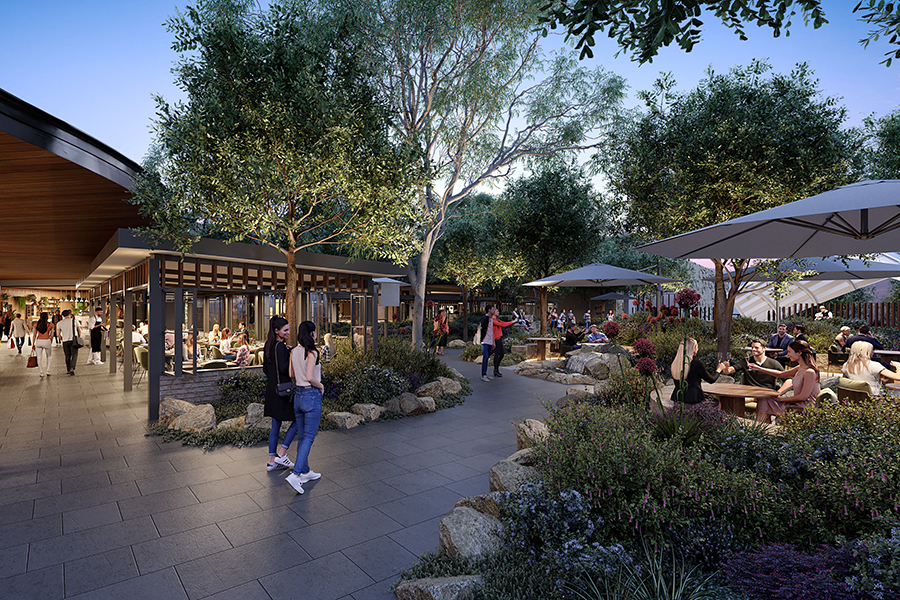
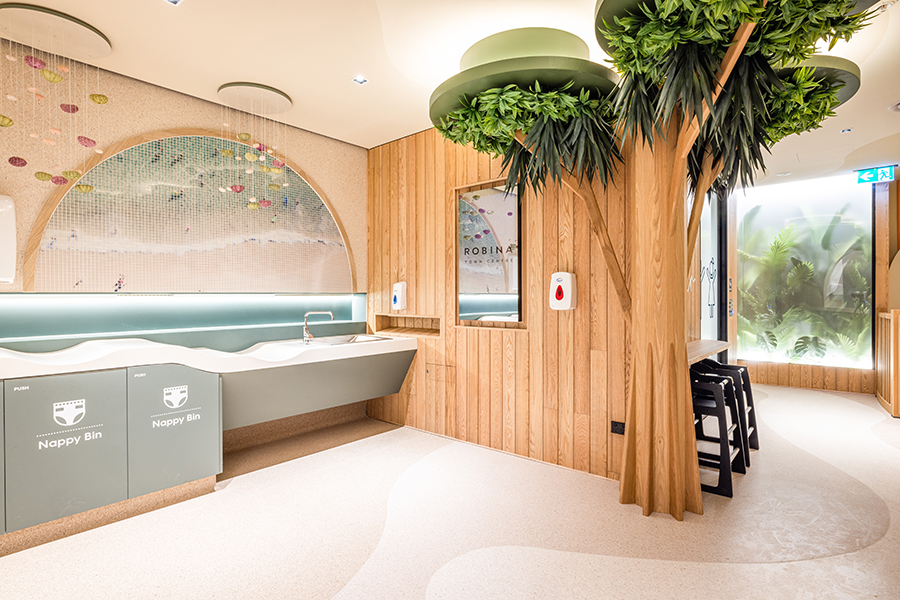
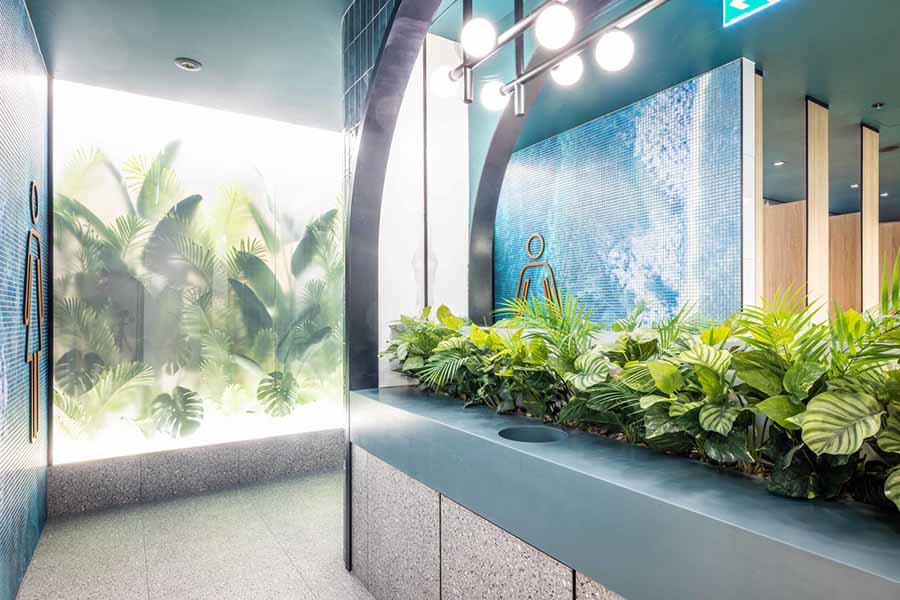
Robina Town Centre, NSW
Robina Town Centre, NSW
Designing for everyday wellbeing
A healthy centre begins with movement. Walkable connections, pedestrian-friendly circulation, bicycle facilities, visible stairways and thoughtfully landscaped pathways can transform movement from a necessity into a more enjoyable part of the experience. Shade, planting and seating encourage people to spend more time on foot and engage with their surroundings.
Light is equally powerful. It can fundamentally change how a space feels and influence our perception of comfort, energy and atmosphere. Daylight, skylights, clerestory windows, glazed façades and open-air connections can blur the boundary between inside and outside. Filtered light and changing patterns of shadow can create softer, more comfortable environments, while carefully considered artificial lighting can establish atmosphere and support different experiences throughout the day.
Nature also plays a vital role. Biophilic design principles incorporating greenery, natural materials, daylight, water and organic forms can bring a sense of calm and restoration to commercial environments. Landscaped pedestrian routes, green thresholds, courtyards, internal planting and views to nature can all contribute to a stronger sense of place.
Acoustics are another important, but often overlooked, element of wellbeing. Shopping centres can be highly stimulating environments, with hard surfaces, background music, mechanical services and large volumes of people, contributing to sensory overload. Acoustic treatments, soft furnishings and considered spatial planning can help manage reverberation, while quieter seating and retreat spaces provide opportunities to step away from the intensity of the main circulation areas.
An outdoor terrace, a bench beside planting or a communal seating pod can provide a welcome opportunity to pause and recharge. These moments can be particularly valuable for parents with young children, older visitors, neurodiverse users or anyone simply seeking a moment of calm.
Ultimately, wellbeing is about choice, giving people the ability to move between activity, social interaction and quiet reflection.
Colour and materiality also influence how a centre feels. Strategic use of colour can support both wellbeing and wayfinding, with vibrant tones activating social spaces and softer, nature-inspired palettes creating calmer environments. Natural timber, stone and tactile materials introduce warmth, familiarity and authenticity, helping commercial environments feel more human and connected to their local context.
Food can also contribute to a healthier experience. Fresh produce markets, healthy cafés and welcoming dining environments encourage positive lifestyle choices, while natural light, planting and outdoor seating create places where people want to linger, socialise and connect.
Westpoint, NSW
Designing for connection
Perhaps the greatest opportunity lies in creating places where people can connect.
Community tables, cafés, play spaces, libraries, shaded seating and flexible gathering areas all encourage informal social interaction. These everyday encounters help transform a shopping centre from a collection of tenancies into an extension of the community itself.
As loneliness and social isolation become growing public health concerns, designing spaces that facilitate connection is no longer simply a placemaking exercise, it is a wellbeing strategy.
Wellness as a design principle
The future of the healthy shopping centre is not a dedicated wellness precinct or a collection of health-focused tenants. It is an environment where wellbeing is embedded into the experience of the entire centre. It’s a fundamental design principle that influences how the entire centre is planned, experienced and remembered.
Healthcare, fitness and healthy food will remain important components of the healthy centre, but the greater opportunity lies in the spaces between them. The arrival experience, pedestrian connections, entrances, corridors, seating areas, landscaping, lighting and acoustics collectively shape how people experience a place.
These seemingly ordinary spaces can encourage movement, reduce sensory stress, provide moments of calm and create opportunities for connection. When wellbeing is considered across the entire journey, rather than confined to a particular tenant or amenity, the centre itself becomes a health-supportive environment.
A wellness-led approach also recognises that people experience a centre differently. Good design, therefore, provides choice and flexibility, places to be active or still, social or private, stimulated or calm.
This is where wellness moves beyond aesthetics. It becomes about how a place supports human behaviour.
The future neighbourhood centre shouldn’t look like a wellness retreat. It should simply feel better. More connected. More comfortable. More human. Wellbeing shouldn’t be a destination. It should be built into the everyday experience. From arrival to circulation, seating, lighting, nature and social spaces, every design decision can support how people move, connect and feel. The healthy centre isn’t about adding more. It’s about designing better.
This article by Mary Jacobson is featured in the latest issue of SCN magazine





Add comment